Most people think selling an old phone is simply about recovering some extra cash before upgrading. Once the device is packed and sent away, very few stop to think about what actually happens next.
Does the phone get resold? Repaired? Recycled? Thrown away?
The reality is that modern smartphones often continue through several stages after being sold, and in many cases, they remain useful far longer than owners expect. Understanding this process matters because electronic waste is becoming one of the fastest-growing environmental challenges worldwide. Selling or trading in an old device responsibly can play a much bigger role in sustainability than many people realise.
Your Phone Rarely Reaches the End of Its Life Immediately
A phone being “old” for one person doesn’t necessarily mean it’s unusable for someone else. Many devices are replaced simply because users upgrade to newer models, want better cameras, or need improved battery performance.
That means thousands of perfectly functional phones enter the second-hand market every day. Devices that may no longer suit one owner are often still suitable for students, travellers, first-time smartphone users, or businesses needing affordable devices for staff.
This is why refurbished phones continue to grow in popularity across Australia and globally. Extending the life of an existing device reduces the need for immediate manufacturing of a replacement, which has a significant environmental impact.
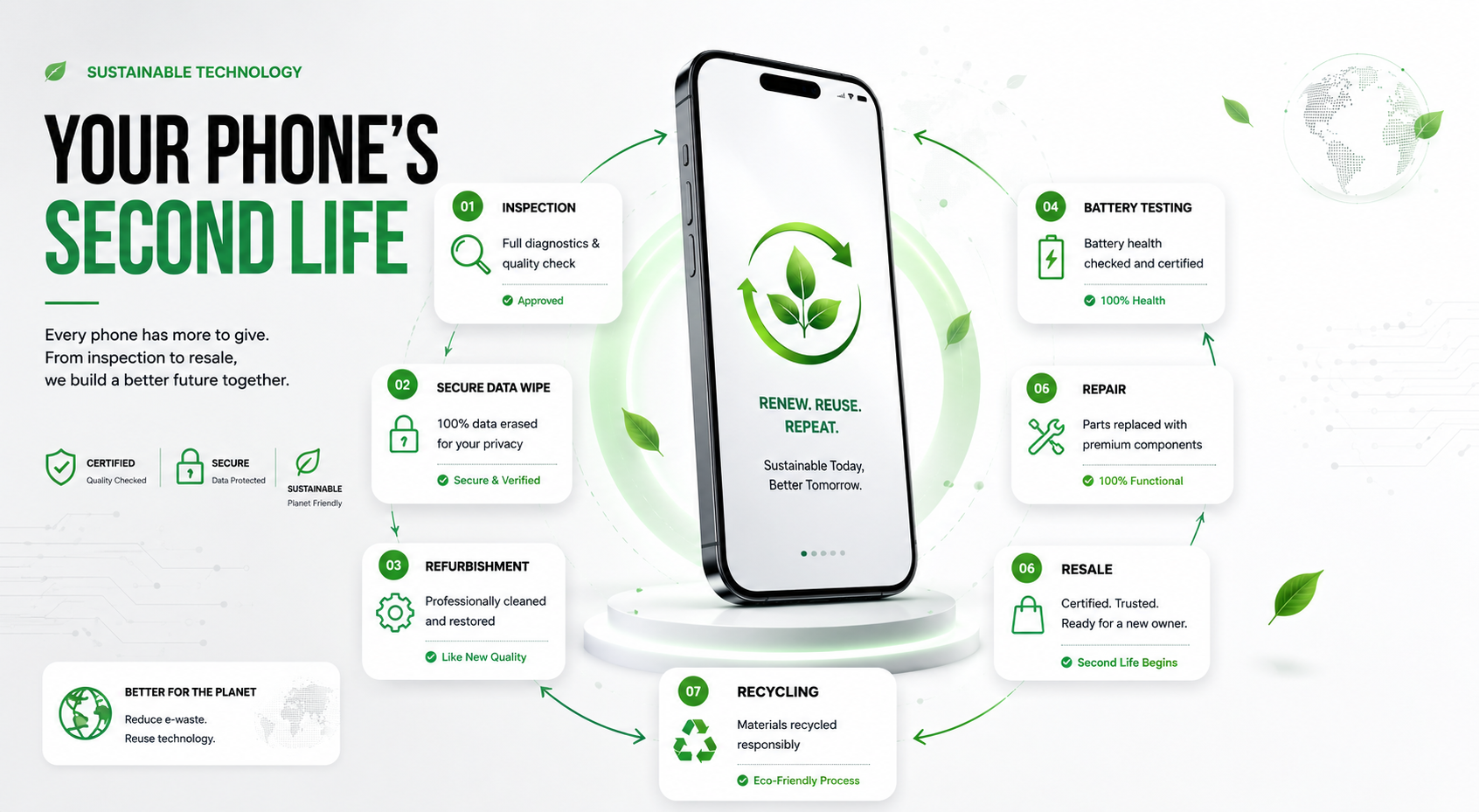
The First Step: Inspection & Assessment
Once a phone is sold or traded in, it usually goes through an inspection process. Technicians assess the condition of the device, checking things such as:
The goal is to determine whether the device can be reused, repaired, refurbished, or recycled for parts.
Some devices require only minor cleaning or battery replacement before becoming suitable for resale. Others may provide valuable components that can help repair additional devices instead of creating unnecessary waste.
Data Removal Is a Critical Part of the Process
One of the biggest concerns people have when selling a phone is personal privacy. Smartphones contain years of photos, emails, banking details, saved passwords, and account information.
That’s why proper data removal matters. Reputable trade-in and refurbishment businesses encourage sellers to:
Once received, devices are typically checked again to ensure personal data has been removed properly before further processing begins.
For most sellers, this step brings peace of mind and allows devices to safely move into reuse or refurbishment channels.
Refurbishment Extends a Device’s Life
Not every phone needs major repairs to become usable again. In many cases, refurbishment involves relatively straightforward work such as:
After refurbishment, devices often return to the market as certified pre-owned phones.
This is one reason the refurbished device market continues to expand. Many consumers now actively look for second-hand phones because they offer better value while reducing environmental impact compared to constantly buying brand-new devices.
Phones That Cannot Be Reused Still Have Value
Even devices that no longer work properly can still contribute to reducing waste. Phones contain materials and components that may be reused or responsibly recycled, including:
Recovering these materials helps reduce the demand for additional mining and manufacturing, both of which require large amounts of energy and natural resources.
This is why responsible recycling matters far more than simply leaving unused devices sitting in drawers or sending them to landfill.
The Environmental Impact Is Larger Than Most People Think
Manufacturing a smartphone requires significant amounts of water, raw materials, transport, and energy. Extending the usable life of a device by even a few years can help reduce the environmental pressure associated with producing new electronics.
Many people focus only on recycling, but reuse is often even more beneficial. A refurbished phone that continues working for another owner delays the need for another device to be manufactured immediately.
That small decision, repeated across thousands of devices, creates a meaningful environmental impact over time.
Selling Responsibly Supports the Circular Economy
The idea behind a circular economy is simple: products should remain useful for as long as possible instead of being quickly discarded.
Selling, refurbishing, repairing, and reusing phones all help support that system. Instead of treating electronics as disposable, devices are kept in circulation for longer periods through resale and refurbishment.
For consumers, it’s a practical way to recover value from unused tech. For the environment, it reduces unnecessary waste and extends the lifecycle of existing resources.
How ReUse Mobiles Helps Reduce Electronic Waste
At ReUse Mobiles, the goal goes beyond simply buying and selling used phones. A major part of the process is helping reduce unnecessary electronic waste by keeping devices in use for longer wherever possible.
Every phone that can be refurbished, repaired, or reused is one less device heading toward landfill prematurely. Extending the life of smartphones helps reduce pressure on manufacturing, mining, packaging, and the environmental impact that comes with producing new electronics.
Over time, responsible trade-in and reuse programs can make a meaningful difference. Devices collected through ReUse Mobiles are carefully assessed for refurbishment, reuse, or responsible recycling, helping support a cleaner and more sustainable approach to technology consumption in Australia.
For customers, selling an unused phone may seem like a small decision. But collectively, reusing devices instead of discarding them plays an important role in reducing e-waste and supporting a more circular economy for electronics.
Small Decisions Add Up
Most people selling a phone are mainly thinking about convenience or upgrading to something newer. But behind the scenes, that decision may also help reduce e-waste, lower manufacturing demand, and give a device a second life.
The next time you sell an old phone, it’s worth remembering that the device’s story probably doesn’t end there. In many cases, it’s simply starting a new chapter with another owner instead of becoming waste.