The shore-county families along Sea Isle, Avalon, Stone Harbor, and the wider Cape May coast are quietly working through a demographic shift that is rarely discussed at the boardwalk. The summer rentals are booked by adult children whose parents now live year-round in the homes that used to be the family's vacation place, and a meaningful share of those parents have started showing the early signs of memory loss that the family has not yet found the right words to describe. The conversation about formal memory care often starts as a quiet sibling discussion at the kitchen table after a holiday weekend visit revealed something the family did not want to see.
South Jersey shore families approaching that conversation benefit from a clearer view of how the memory-care category actually works at this stage of a parent's life. The dedicated memory care services offered by Care One and similar New Jersey providers have matured considerably over the past decade, and the families who do the homework before the situation becomes a crisis tend to land on a meaningfully better outcome than the families who wait. Memory care is not assisted living with a different name; it is a specialised category with its own architecture, staffing model, and cost structure, and getting it right matters more for the parent's quality of life than almost any other late-life decision.
The first thing to understand is that memory care is built around the specific daily-life challenges that dementia presents, which are different from the challenges that drive most assisted-living admissions. Three differences shape everything that follows.
The first is wandering. Adults with moderate-to-advanced dementia frequently leave a familiar setting without a clear destination, and the consequences in an unsecured environment can be severe (exposure, falls, traffic accidents). Memory-care communities are designed with secured perimeters, monitored entrances, and walking paths that allow the resident to walk freely without leaving the safe zone. The architecture is the most visible difference between memory care and assisted living.
The second is the staffing ratio and training. Memory-care staff complete dementia-specific training (often 40 to 60 hours beyond standard certification) and the staff-to-resident ratio is typically 1:5 to 1:7 during the day, compared with 1:8 to 1:10 in assisted living. The higher staffing density is what makes the activity programming, the reassurance during anxious moments, and the meal-time support possible.
The third is the activity programming. Memory care substitutes structured cognitive activities (music therapy, reminiscence groups, sensory programming, gentle exercise) for the more open-ended social calendars common in assisted living. The structure benefits residents whose memory makes unstructured time disorienting.
A definition useful here: memory care is a specialised form of residential senior care for adults with Alzheimer's disease, vascular dementia, Lewy body dementia, frontotemporal dementia, or other neurocognitive conditions. The legal-and-regulatory category is sometimes called "secured assisted living" or "dementia care," and the operational design is fundamentally different from standard assisted living regardless of the label.
The financial framework that families plan around (Social Security benefits, long-term-care insurance, retirement assets) carries through to memory-care decisions as well. A family already thinking about the validity and renewal of Social Security cards for an aging parent is in the same administrative-and-financial planning conversation that memory care eventually requires.
The triggering moments that most often prompt families to start researching memory care look different from the moments that prompt assisted-living research.
The first category is safety. A parent who left the stove on twice in a month, or got lost driving a familiar route, or wandered out of the house at night, has crossed a threshold where in-home care alone is no longer sufficient for the safety risk.
The second is medical. A parent diagnosed with mild cognitive impairment that progresses to early dementia within 18 months is on a clinical trajectory that benefits from memory-care planning before the crisis. The family that begins research at the diagnosis stage rather than waiting for the safety event has more time and more options.
The third is caregiver exhaustion. A spouse or adult child providing primary care at home often hits a sustainable limit around 18 to 30 months of intensive caregiving for a parent with dementia. The decision to move the parent to memory care is often as much about preserving the caregiver's health as about meeting the parent's needs, and both reasons are legitimate.
The fourth is a precipitating event. A hospitalisation, a fall, a sudden behavioural change, or a UTI-related delirium episode often produces the moment when the family realises that returning the parent to their previous living arrangement is not safe. These events are common enough in dementia trajectories that planning for them rather than reacting to them produces calmer outcomes.
The Alzheimer's Association's long-term care framework covers the broader clinical context, and the National Institute on Aging's information on dementia care covers the medical context that families navigating the system should know.
A short checklist for families evaluating providers before the first tour.
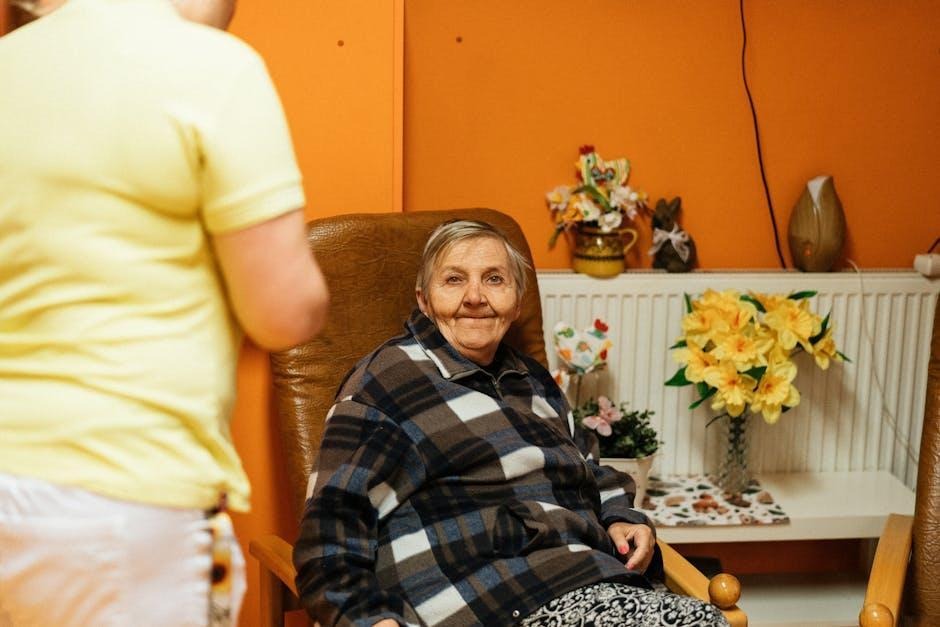
A secured environment that does not feel institutional. The best memory-care communities feel residential rather than clinical. Soft lighting, warm colours, real living-room spaces, outdoor walking paths, and resident artwork on the walls all signal a community that has thought about the lived experience rather than just the regulatory checklist.
A staffing model with continuity. Dementia residents form attachments to specific caregivers, and high turnover among the direct-care staff makes the resident's experience meaningfully worse. Asking the admissions director about the staff retention rate, particularly among the Certified Nursing Assistants and Memory Care Specialists, is one of the higher-signal questions a family can ask.
A documented dementia-specific training programme. The state of New Jersey requires baseline dementia training for memory-care staff, but the better communities exceed the minimum substantially. A community whose staff completes 60 to 100 hours of dementia-specific training each year is meaningfully different from one that does the bare minimum.
A care plan that updates regularly. The dementia trajectory is not static, and the resident's needs change quarterly or even monthly. The community should run a formal care-plan review at least every 90 days and adjust the staffing, the activities, and the medication-management plan accordingly.
A clear admissions assessment process. The good communities run a structured nursing-and-cognitive assessment of the prospective resident, produce a written care plan in advance of move-in, and give the family time to review the plan. A community that admits residents without an in-depth assessment is rushing a decision that needs to be careful.
A reasonable proximity to the family's actual home. Memory-care residents benefit measurably from frequent family visits, and the visit frequency drops sharply as the drive time exceeds 30 to 45 minutes. South Jersey shore families often have the choice between a Cape May County community within 25 minutes of home and an Atlantic County community 50 minutes away, and the proximity often matters more than the marginal difference in facility quality.
A short list of recurring mistakes that surface in memory-care admissions cases.
Postponing the conversation past the safety window. Families that wait until the parent has had a serious wandering incident or a kitchen fire are forced into a compressed decision window where the available memory-care openings are constrained by who has space rather than who is the best fit.
Confusing memory care with assisted living. A community advertising "memory care services" within a primarily assisted-living building is meaningfully different from a dedicated memory-care community. The architectural separation, the staffing ratio, and the activity programming all change in a dedicated community in ways that matter for residents with moderate or advanced dementia.
Underestimating the cost. Memory care in New Jersey runs 9,000 to 13,000 dollars per month in 2026, and the rate typically increases 5 to 8 percent annually. The family that anchors on the current rate without modelling the trajectory often runs out of budget years earlier than expected.
Skipping the medical-coordination step. Memory care works best when the resident's primary-care physician, neurologist, and the community's medical director are coordinating. Families who treat the move as purely a residential decision often miss the medical-management benefit that good memory care provides.
Visiting only at the planned tour time. The community looks its best during a scheduled mid-morning tour. The same community on a Saturday afternoon, or at a 6 PM dinner time, or during a winter weekday evening, reveals more about the actual lived experience. Families who visit at a few different times build a more accurate picture.
Forgetting the broader budgeting context. The memory-care decision sits inside the family's larger picture of budgeting for elder health decisions, including in-home care alternatives, medication costs, and the spouse's own care needs over the same horizon. Treating memory care as a stand-alone decision rather than part of a broader financial picture often produces a sub-optimal sequence.
The median memory-care stay in the United States is roughly 18 to 30 months, though the range is wide (some residents stay 6 months, others stay 5+ years depending on dementia type and progression rate). Lewy body dementia and frontotemporal dementia often progress faster than Alzheimer's, while vascular dementia varies more by individual case. Families planning the budget should plan for the longer rather than the shorter end of the range.
Yes, in continuum-of-care communities. The transition is usually triggered by a documented change in cognitive status during a routine quarterly assessment, and the move within the same campus is far less disruptive to a dementia resident than a move to a new building. South Jersey has several continuum-of-care campuses that offer this transition cleanly.
Resistance is one of the most common patterns. The dementia itself often impairs the parent's awareness of their own cognitive changes, which makes a direct conversation difficult. Most South Jersey memory-care directors recommend a gradual approach: short visits, lunch at the community, an activity event, then a longer visit, before the residential conversation. The transition often takes weeks or months of preparation rather than a single conversation.
Memory-care communities reassess care plans every 90 days and adjust the staffing and services accordingly. Most communities can support residents through significant cognitive decline within the same building, although the latest stages of dementia sometimes require a transition to skilled nursing care. The continuum-of-care campuses absorb this transition without a building change; stand-alone memory-care buildings sometimes do not.
The memory-care decision is one of the harder decisions a family will make for an aging parent, and the South Jersey shore market is fortunate to have a meaningful range of providers within reasonable driving distance of Sea Isle, Avalon, Stone Harbor, and the wider Cape May coast. The families who research providers early, tour communities at a few different times, coordinate with the parent's primary-care physician, and think about the dementia trajectory rather than just the immediate need tend to land at a community that supports the parent's quality of life and preserves the family's relationships through what would otherwise be a difficult chapter. The marginal effort of preparation is small. The marginal benefit shows up at exactly the moment the rest of the family needs to focus on being family rather than on logistics.