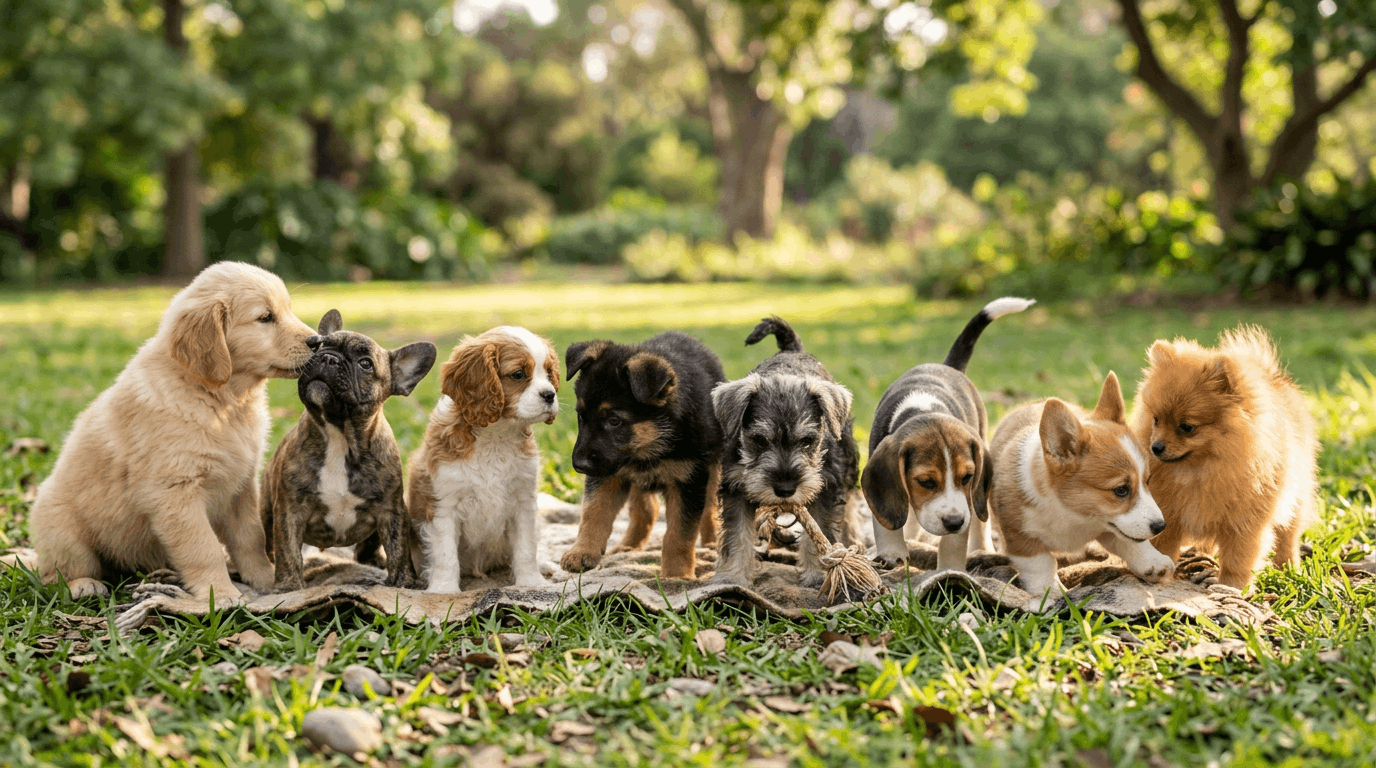
Breed matters more in the dog shampoo conversation than most general-purpose product guides acknowledge. The skin and coat characteristics that distinguish breeds from each other, the double coat of a Husky, the oil-dense coat of a Labrador, the tight curls of a Poodle, the wrinkled folds of a Bulldog, aren't just aesthetic differences.
They create genuinely different microenvironments on the skin that affect what shampoo ingredients help versus hinder, and how often bathing should happen without causing more problems than it solves.
Veterinary guidance on this is more specific than the packaging of most puppy shampoos suggests, where "gentle formula" is presented as sufficient for every puppy regardless of what's under the coat.
Breeds like Huskies, Samoyeds, Golden Retrievers, German Shepherds, and Australian Shepherds have a dense undercoat beneath a longer outer coat. This undercoat insulates, regulates temperature, and provides a physical barrier, but it also creates challenges around moisture, product residue, and drying that single-coated breeds don't face to the same degree.
The primary veterinary concern with double-coated puppies is incomplete rinsing. A shampoo that's easy to rinse from a short single coat requires significantly more water and time to fully remove from a dense double coat.
Residue left in the undercoat can cause skin irritation, dandruff, and bacterial growth over time. The best puppy shampoo for double-coated breeds, in veterinary terms, is often one that rinses clean relatively easily rather than one with the most impressive ingredient list, because incomplete rinsing of a good formula can produce worse outcomes than thorough rinsing of a simpler one.
Diluting shampoo before application, a practice common in professional grooming, makes rinsing more thorough and reduces the risk of residue. For double-coated puppies being bathed at home, diluting to roughly one part shampoo to three or four parts water before application is a practical recommendation.
Labrador Retrievers, Golden Retrievers, and certain spaniel breeds have coats that produce more sebum than average. This sebum is functional: it provides water resistance and skin protection. The challenge is that sebum also provides a food source for the microorganisms that produce odor, and these breeds can develop a distinctive "wet dog" smell more quickly than others.
Veterinary guidance for oily-coated puppies generally recommends a slightly more thorough cleansing shampoo than is appropriate for dry or sensitive breeds, but cautions against degreasing shampoos used at adult frequency on puppies whose skin barrier is still developing.
Over-cleansing removes the protective sebum layer faster than it can be replenished, leaving the skin more vulnerable to irritation and environmental triggers.
For oily-coated puppies specifically, the frequency of bathing matters as much as the product. Every two to three weeks, rather than weekly, prevents sebum depletion while managing the characteristic odor of these breeds. The Dogs Shampoo supports rather than strips the natural oil balance, which is the appropriate target.
Bulldogs, Shar-Peis, Pugs, French Bulldogs, and similar breeds have skin folds that create warm, moist microenvironments where yeast and bacteria thrive. Standard puppy shampooing addresses the general coat and skin surface but doesn't reach into folds effectively. For these breeds, the fold care is as important as the bathing itself, and veterinary guidance treats them as separate concerns.
For the coat and general skin, a gentle, fragrance-free shampoo is appropriate. For the folds, a separate cleaning routine using veterinary-approved wipes or a diluted cleaning solution is typically recommended, either in addition to bathing or on a more frequent schedule than full bathing.
Veterinarians often caution against leaving moisture in skin folds after bathing, since the warm humid environment of an inadequately dried fold is exactly the condition that promotes yeast overgrowth.
Breed-specific skin fold dermatitis is one of the more common dermatological presentations in puppy appointments for these breeds, and the majority of cases are either caused or worsened by inadequate fold hygiene rather than the wrong shampoo choice for the coat.
Poodles, Labradoodles, Bichon Frises, and wire-coated terrier breeds have coat structures that interact with shampoo products differently from straight-coated breeds. Curly coats tangle more easily when wet, making detangling conditioners more relevant than they would be for straight coats.
Wire coats have a distinctive texture that's maintained by the natural oils and structure of the coat, and harsh shampoos can soften wire coats in ways that change their character.
For curly-coated puppies, veterinarians often recommend a shampoo and conditioner combination rather than shampoo alone, as the conditioner step significantly reduces the matting and tangling that curly wet coats are prone to.
The specific puppy shampoo matters less than ensuring the conditioner step isn't skipped.
For wire-coated breeds, the gentlest effective cleanser rather than the most conditioning option tends to preserve the natural coat texture better. Conditioning agents that soften coat structure work against the breed's intended coat character over time, which is an aesthetic consideration but one that owners of show dogs or breed-standard-oriented owners take seriously.
Some breeds, including West Highland White Terriers, Boxers, Cocker Spaniels, and Dalmatians, have documented predispositions to skin allergies and sensitivities. For these breeds, veterinary guidance on puppy shampoo leans heavily toward the most minimal ingredient profiles: no artificial fragrance, no essential oils, pH-balanced for canine skin, and ideally formulated specifically for sensitive skin.
The rationale is partly preventive. Exposing a puppy with a genetic predisposition to skin sensitivity to unnecessary potential allergens during the period when sensitisation most readily occurs isn't directly causing allergy, but it's not managing risk carefully either.
For these breeds, the question of which dog shampoo to use is often best answered in conversation with a veterinarian who knows the specific puppy rather than from a general recommendation, since early signs of skin sensitivity can guide the appropriate product choice before a full allergic response develops.