The restaurant industry has long operated on a high-risk, capital-intensive model. Opening a traditional brick-and-mortar location often requires significant upfront investment, extended timelines, and a level of operational complexity that limits how quickly brands can scale. CloudKitchens, a global provider of delivery-optimized kitchen infrastructure, is reshaping that equation by fundamentally altering how restaurants think about cost, expansion, and profitability.
At the center of this shift is a simple premise. If the majority of orders are increasingly placed online, the need for prime real estate, large dining rooms, and extensive front-of-house staff becomes less essential. CloudKitchens has built its model around this reality, offering delivery-first facilities that remove many of the financial barriers that have historically defined the industry.
Opening a conventional restaurant remains one of the most capital-intensive ventures in the service economy. In major urban markets, upfront costs typically range from $300,000 to more than $1 million. These expenses include leasing or purchasing real estate in high-traffic areas, build-out and design, kitchen equipment, permits, and initial staffing.
Beyond the initial investment, ongoing overhead adds further pressure. Rent in prime locations can consume a significant portion of monthly revenue, while labor costs extend beyond kitchen staff to include servers, hosts, and managers. Utilities, maintenance, and inventory management compound the operational burden. Even for well-established brands, profitability often depends on maintaining steady foot traffic, which introduces additional variability and risk.
The timeline to launch is another constraint. Traditional restaurants frequently require six to twelve months or more to open, delaying revenue generation and increasing the financial exposure for operators. This model leaves little room for rapid experimentation or market entry, particularly in competitive urban environments.
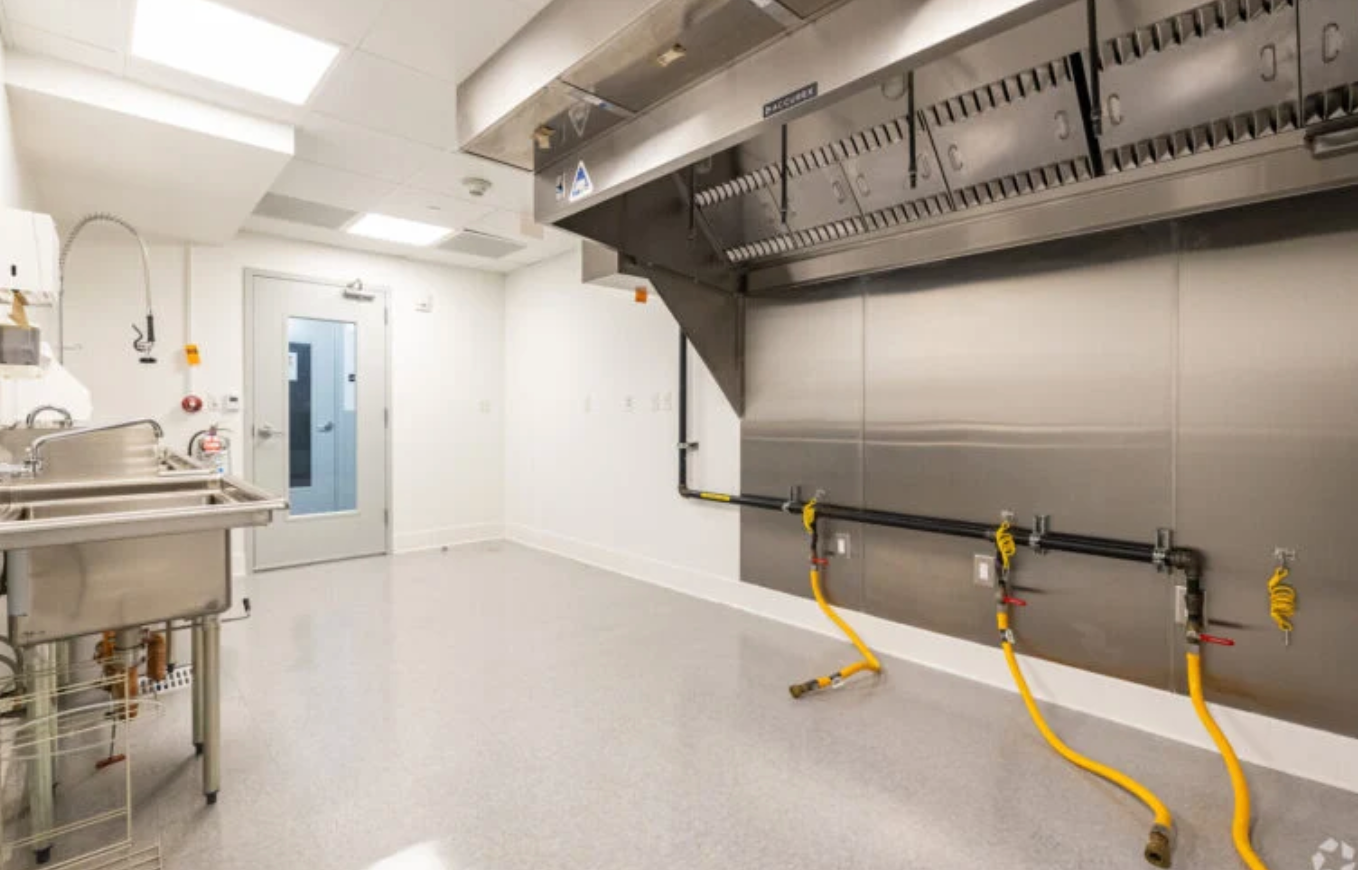
CloudKitchens offers an alternative built around efficiency and scalability. Instead of requiring operators to invest in a full-service restaurant, the company provides ready-to-use kitchen spaces designed specifically for delivery and takeout. These facilities eliminate the need for customer-facing real estate and reduce the complexity of operations.
According to the CloudKitchens brand strategy document, the company positions itself as an infrastructure and technology provider that enables food businesses to expand “with minimal upfront capital and time” . This framing captures the core economic advantage of the model.
By removing the front-of-house component, CloudKitchens significantly lowers startup costs. Operators can launch at a fraction of the expense required for a traditional restaurant, often around 10 percent of the typical investment. The timeline to open is also compressed dramatically, with many partners going live in as little as four to eight weeks.
This speed has direct financial implications. Faster openings mean earlier revenue generation and shorter periods of capital exposure. In an industry where cash flow is critical, the ability to move from concept to operation in weeks rather than months represents a structural shift.
One of the most consistent themes in CloudKitchens reviews and partner feedback is the reduction in overhead. Delivery-only kitchens require fewer staff, smaller physical footprints, and less ongoing maintenance. There is no need to manage dining rooms, host stands, or customer service interactions beyond the kitchen itself.
The company’s facilities are designed to run lean. Kitchens are optimized for speed and efficiency, with layouts and workflows tailored to high-volume delivery operations. As outlined in the brand materials, these spaces are “designed for speed, quality, and scale,” allowing operators to focus on food production while minimizing operational friction .
This lean structure translates directly into improved margins. Labor costs are reduced because fewer employees are needed to operate the kitchen. Real estate expenses are lower because facilities are located based on delivery efficiency rather than foot traffic. Shared services, including maintenance and logistics support, further reduce the burden on individual operators.
The combination of lower startup costs and reduced overhead leads to one of the most significant economic advantages of the CloudKitchens model: faster break-even timelines.
Traditional restaurants often take years to recoup their initial investment, depending on location and performance. In contrast, many CloudKitchens operators report reaching profitability within months. Some case studies highlight break-even periods as short as a few weeks, driven by low capital requirements and immediate access to delivery demand.
This dynamic changes how entrepreneurs approach risk. Instead of committing large sums of capital to a single location, operators can test concepts, iterate menus, and expand strategically with limited financial exposure. The ability to fail quickly and adjust is a critical advantage in a competitive market.
Expansion has historically been one of the most challenging aspects of the restaurant business. Securing new locations, negotiating leases, and building out spaces require both time and capital. These constraints limit how quickly even successful brands can grow.
CloudKitchens removes many of these barriers by providing a network of delivery-optimized facilities across multiple markets. Operators can enter new cities or neighborhoods without the need for traditional real estate negotiations. This approach enables faster geographic expansion and allows brands to respond more dynamically to demand.
The model also supports multi-unit growth. A single brand can operate multiple kitchen locations within a city, increasing delivery coverage and reducing delivery times. This distributed approach to operations aligns with the expectations of modern consumers, who prioritize convenience and speed.
Beyond real estate and infrastructure, CloudKitchens integrates technology into its value proposition. The company’s proprietary platform consolidates orders from multiple delivery apps into a single interface, streamlining operations and reducing errors.
This integration improves efficiency at multiple levels. Kitchens can process higher volumes of orders without increasing staff, while real-time data provides insights into performance, menu optimization, and customer preferences. These efficiencies contribute to higher throughput and better resource allocation, both of which enhance profitability.
Operational support extends beyond software. On-site teams handle logistics such as driver coordination and order handoff, allowing kitchen staff to focus exclusively on food preparation. This division of labor reduces bottlenecks and improves overall system performance.
The traditional restaurant model concentrates risk in a single, high-cost location. Success depends on factors such as foot traffic, local competition, and economic conditions, many of which are outside the operator’s control.
CloudKitchens distributes that risk. Lower upfront investment means operators are less exposed financially, while the ability to scale incrementally allows for more controlled growth. Brands can test new markets without committing to long-term leases or large capital expenditures.
This flexibility is particularly valuable in an industry characterized by shifting consumer behavior. As delivery continues to grow, the ability to adapt quickly becomes a competitive advantage. CloudKitchens provides a framework for that adaptability.
The rise of delivery-only kitchens reflects a broader transformation in how food is produced and consumed. Digital ordering has become a primary channel for many restaurants, and the infrastructure supporting that demand is evolving accordingly.
CloudKitchens is positioned at the intersection of real estate, technology, and food service. By rethinking the physical and operational requirements of a restaurant, the company is challenging long-standing assumptions about cost structure and scalability.
The implications extend beyond individual operators. Lower barriers to entry may lead to increased competition and greater diversity of concepts, as entrepreneurs can launch with less capital. At the same time, established brands can use the model to expand more efficiently and reach new customers.
The economic advantages of CloudKitchens are ultimately reflected in improved profit margins. Reduced overhead, faster break-even timelines, and higher operational efficiency all contribute to a more sustainable financial model.
Delivery-first strategies also align with consumer behavior. As more customers choose to order online, restaurants that optimize for delivery are better positioned to capture demand. CloudKitchens provides the infrastructure to do so without the constraints of traditional operations.
This alignment between cost structure and consumer trends is a key driver of the model’s appeal. It allows restaurants to operate in a way that reflects how people actually order food today, rather than how the industry has historically been structured.
CloudKitchens is not simply an alternative to traditional restaurants. It represents a redefinition of the underlying economics of the industry. By removing unnecessary costs and focusing on efficiency, the company has created a model that prioritizes scalability, flexibility, and profitability.
The shift toward delivery-only kitchens is unlikely to replace brick-and-mortar dining entirely. Physical restaurants continue to play an important role in brand building and customer experience. However, the financial advantages of the CloudKitchens approach are difficult to ignore.
For operators, the decision is increasingly not whether to adopt a delivery-first strategy, but how to integrate it into their broader business. CloudKitchens offers one of the most developed frameworks for doing so, providing both the infrastructure and the operational support needed to succeed in a rapidly changing market.
As the industry continues to evolve, the cost structure of restaurants will remain a central concern. CloudKitchens has demonstrated that those costs can be significantly reduced without sacrificing growth or quality. In doing so, it has introduced a new economic model that is likely to shape the future of food service.