Trees provide beauty, value, and many other functions in the Mid-Atlantic region. They create shade for homes, increase property value, clean the air we breathe, help preserve biodiversity, and provide habitat for wildlife.
The constant attack of invasive pests and diseases, combined with the Mid-Atlantic region’s warm, humid summers, cold, freezing winters, and growing urban areas, makes it increasingly difficult for trees to thrive in the landscape.
Many property owners now proactively seek out Plant Health Care (PHC) programs to monitor and protect their trees before pests and diseases cause irreversible damage. PHC programs are preventative and based on scientific methods of managing plant health through long-term partnerships between certified arborists and landowners.
These programs include plant monitoring, cultural care practices, soil condition improvements, and targeted applications using Integrated Pest Management (IPM) techniques. IPM focuses on early detection and prevention, reducing chemical use until absolutely necessary. The Tri-State area is a prime example of where invasive species cross state borders, making IPM a highly effective strategy.
One of the most destructive threats affecting Mid-Atlantic ash trees is the Emerald Ash Borer (EAB). The EAB was first identified in Pennsylvania in 2007 and has since spread to every county in the state. It was detected in New Castle County, Delaware, in 2016 and began causing widespread damage in New Jersey around 2014.
Adult EAB beetles are metallic green. Their larvae feed on the inner bark, disrupting the flow of water and nutrients to the leaves. Once infested, an ash tree can die within three to five years.
Early signs of infestation include:
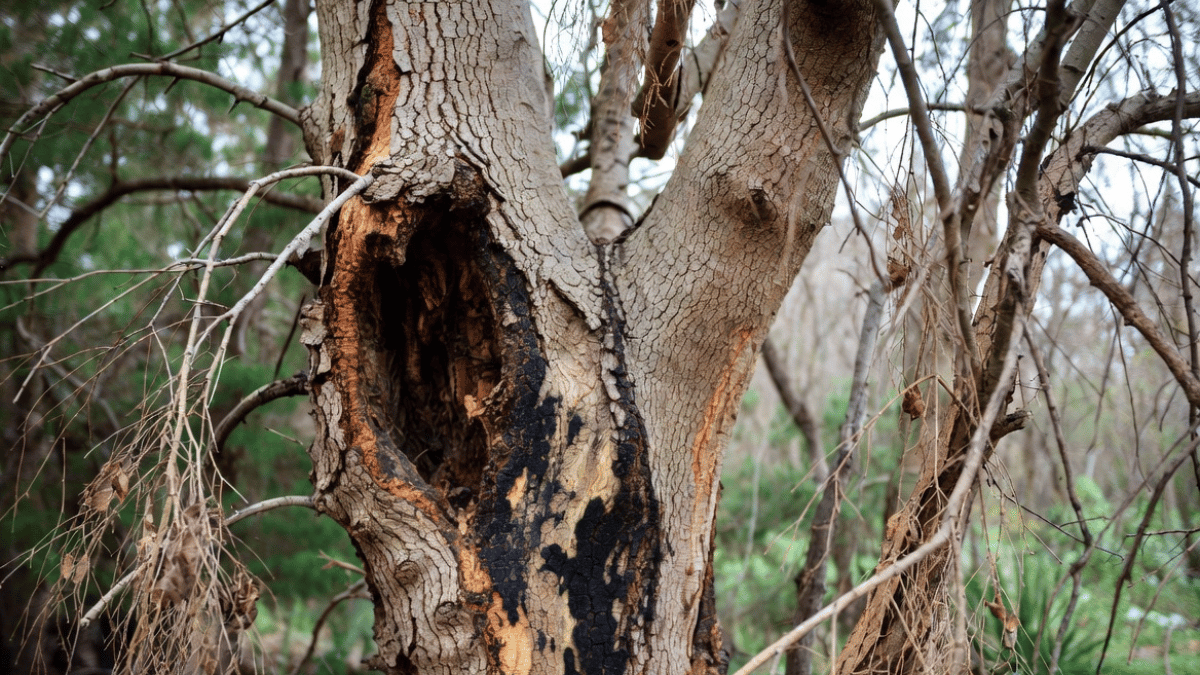
Woodpeckers often feed on the larvae, causing a “blonding” effect on the bark. By this stage, the tree is usually already severely damaged.
The most effective protection is preventative systemic treatment applied before or during the early stages of infestation. Strobert Tree Services, located in Wilmington, Delaware, uses customized EAB control plans that include soil-applied or trunk-injected insecticides timed to the EAB life cycle. Deep-root fertilization is also used to improve overall tree health and resilience.
Another common pest in the region is the bagworm. Although native to North America, bagworms can severely impact evergreen trees such as arborvitae, juniper, spruce, and cedar, all of which are commonly planted in Delaware and Pennsylvania landscapes.
Female bagworms spend their entire lives inside a spindle-shaped “bag” made from silk and plant material. By late summer, a single bag can contain hundreds of eggs, which hatch into larvae in the spring. Repeated infestations can lead to complete defoliation, especially when branches are already weakened.
Infestations are often overlooked early due to natural camouflage. Small bags hang from branch tips in late winter and early spring. By mid-summer, the bags grow larger and become easier to spot as larvae feed aggressively.
Strobert Tree Services recommends consulting a certified professional before making treatment decisions. Their approach includes dormant oil applications at the end of winter to eliminate overwintering eggs and targeted insecticide treatments in late May or early June when larvae begin to emerge. Seasonal monitoring ensures treatments are applied at the optimal time.
In addition to insect threats, Mid-Atlantic trees are also vulnerable to fungal diseases. Anthracnose is a common issue during the region’s wet, humid spring season. It affects species such as sycamore, dogwood, and maple, causing irregular brown leaf spots, premature leaf drop, and twig dieback.
Although rarely fatal, repeated infections can weaken trees and make them more susceptible to secondary pests.
Environmental stressors such as soil compaction, poor drainage, and construction activity further reduce a tree’s natural ability to defend itself. These conditions are especially common in growing communities throughout the Tri-State area.
Strobert Tree Services provides customized PHC programs designed to address the specific soil conditions, climate factors, and pest pressures found in Delaware and southeastern Pennsylvania.
Each program begins with an on-site assessment conducted by an ISA-certified arborist. Soil samples are collected to identify nutrient deficiencies and pH imbalances, which are common in the clay and sandy soils of the region.
Based on the results, deep-root fertilization is prescribed to deliver slow-release nutrients directly to the root zone, reducing competition from turfgrass.
Additional services include:
Every property is different. A historic property in Wilmington may require specialized care for mature specimen trees, while a newer development in Chester County may need establishment care for young transplants. Each plan is tailored to the landowner’s specific needs.
The benefits of a proactive PHC program extend beyond appearance. Healthy trees are better equipped to withstand storms, disease, and secondary infections. They also live longer, reducing the high cost of removing and replacing dead trees.
Property owners gain peace of mind knowing their landscape is monitored year-round instead of reacting only after problems arise.
As climate patterns shift and invasive pests such as the spotted lanternfly continue to expand across the Tri-State area, proactive care is more important than ever.
Experts at Strobert Tree Services emphasize that early intervention, combined with regional expertise and the latest arboriculture research, is one of the most effective ways to protect trees from emerging threats.
If you own property in Delaware, southeastern Pennsylvania, or nearby New Jersey communities, now is the time to evaluate the health of your trees.
A professional Plant Health Care program can protect valuable trees, preserve your investment, and keep your landscape healthy for years to come. Contact a trusted provider like Strobert Tree Services today for a free consultation and learn how proactive care can safeguard your trees.