Last updated: April 2026 · 8 min read
Walk into five vape shops in any major city and you will notice something uncomfortable: they are mostly selling the same products at slightly different prices. The same disposable brands on the same shelves. The same puff count wars in their marketing. The same discounts and "buy two, get one free" signs.
This is not an accident. The vape supply chain is concentrated — most shops buy from the same distributors, which means most shops end up with the same inventory. The differentiation that should exist between retailers gets flattened into a single variable: price.
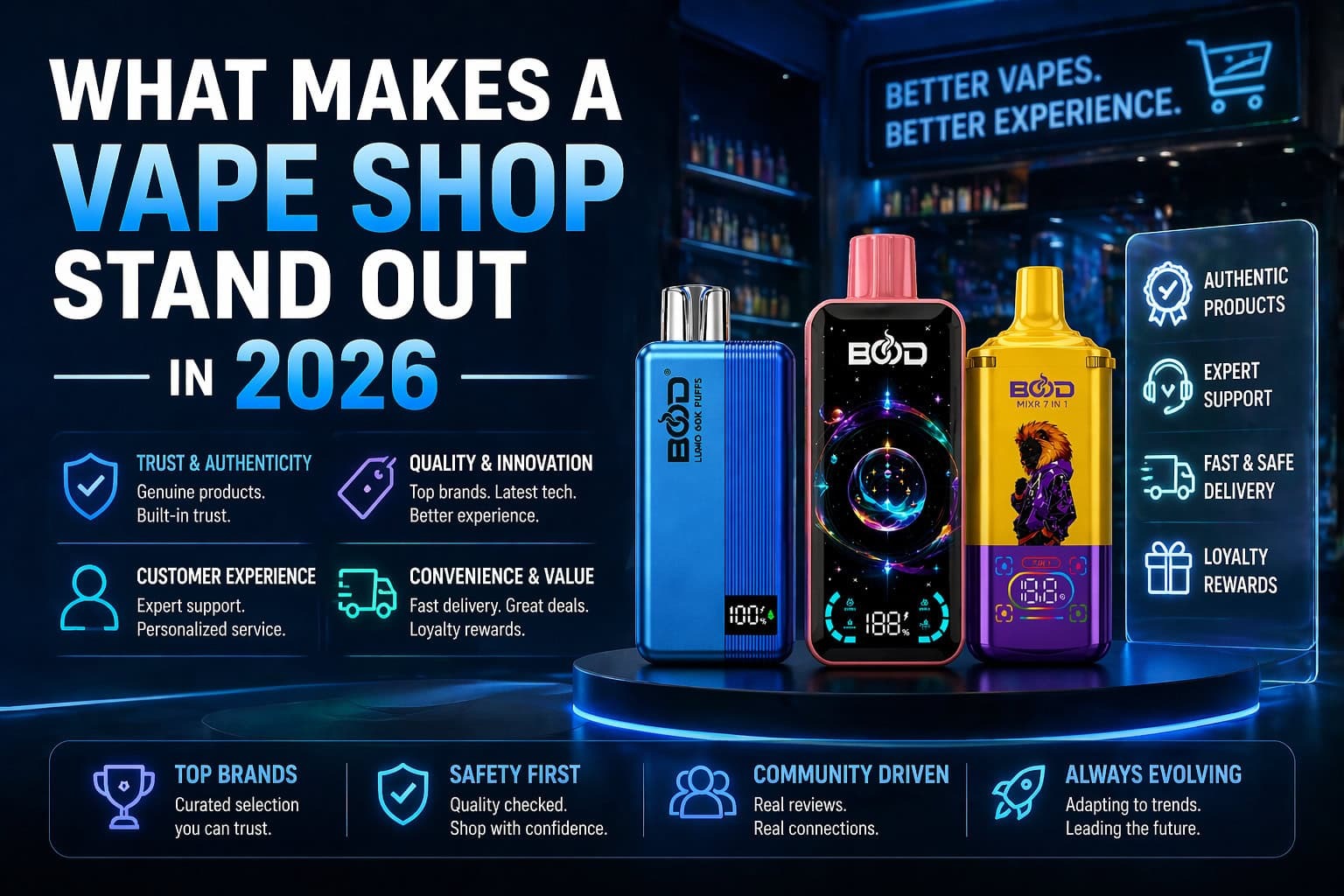
After watching the market for several years, three factors consistently separate shops that build real customer loyalty from those that just move inventory:
Product transparency and authenticity. Shops that stand out do not just sell products — they verify them. They can tell you where a device came from, which batch it belongs to, and how to verify it is not a counterfeit. This matters more as the counterfeit problem in vaping has grown significantly.
Customer education over pushy sales. The shops that generate the most repeat customers are the ones that help you understand what you are buying. They explain why one device might suit you better than another rather than upselling to the most expensive option.
Responsive support that actually solves problems. When something goes wrong — a defective device, a shipping delay, a missing item — the difference between a good shop and a bad one is what actually happens. Good shops resolve it quickly and without friction. The industry standard on this is embarrassingly low.
Most shops claim they sell "authentic" products. Fewer can actually walk you through what that means.
Authenticity transparency in practice looks like this: a shop that publishes batch tracking information, that can source-match a specific device to a specific supply chain, and that does not bury the information when questions come up. You should be able to ask a shop "how do I verify this is real?" and get a specific answer — not "trust us."
The rise of counterfeited disposables has made this more important, not less. Some devices being sold as genuine are in fact counterfeit hardware with substandard batteries. Shops that take authenticity seriously address this directly on their product pages, not just in fine print.
The shops with the highest repeat purchase rates are not the cheapest. They are the ones where customers feel like they understand their own setup.
Education-first shops take a different sales approach. Instead of saying "this is our bestseller," they say "based on how much you vape and what nicotine level you prefer, this device fits your pattern — and this one does not." That kind of specificity builds trust in a way that discounts cannot.
The practical effect: a customer who knows what they are buying tends to buy again. They come back to the shop that helped them figure it out, not the shop that just sold them something.
Here is where the gap between good shops and bad shops is most stark: what happens when something goes wrong.
Most vape shops — online and physical — have customer support that exists to manage complaints, not resolve them. The typical experience: submit a ticket, wait three days, get a generic response, submit follow-up evidence, wait another week. Meanwhile, you have a dead device and no way to vape.
The shops that stand out treat support as a product feature, not a cost center. They have clear policies published upfront on what happens if your device arrives defective, what documentation they need to process a complaint, and how quickly you can expect resolution. They make the process easy for the customer, not easy for the shop.
This is one of the clearest signals you can use when evaluating any shop before you buy.
A few types of shops have figured out how to build genuine differentiation in the current market:
Specialty tobacconists with vape sections — These shops exist in higher-end retail environments and have staff trained to explain differences between devices. Their knowledge is the product as much as what is on the shelf. They skew toward experienced vapers rather than newcomers.
Direct-to-brand online stores — Manufacturer-owned online shops like BOODVAPE have an advantage on authenticity because they control the supply chain from production to your door. No middlemen, no gray market imports, clearer accountability when something goes wrong.
Community-focused online shops — Some shops build around forums, review content, and responsive social media presence. They treat their community as a resource for product development, not just a sales channel.
Each model works. The common thread is intentionality — these shops chose a positioning and built everything around it, rather than trying to be everything to everyone.
If a shop scores well on these five questions, they are worth buying from. If you cannot find answers to most of them on the shop's site, that is information too — it tells you how much they have invested in the customer relationship versus just converting sales.
BOODVAPE is built on a direct-to-brand model that addresses each of the three differentiation factors we identified at the start of this article.
On authenticity: BOODVAPE controls the supply chain from production to your door, with batch tracking on all products so you can verify what you receive is genuine.
On education: the BOODVAPE site includes product comparison guides, usage-based recommendations, and honest breakdowns of what each device is and is not suited for — not just marketing language.
On support: BOODVAPE has a published support process with a clear defect and resolution policy, handled directly rather than through a third-party marketplace. If something goes wrong, you have a direct line to the team that shipped your product.
Browse the full BOODVAPE product range to see the complete lineup and find what fits your usage pattern.