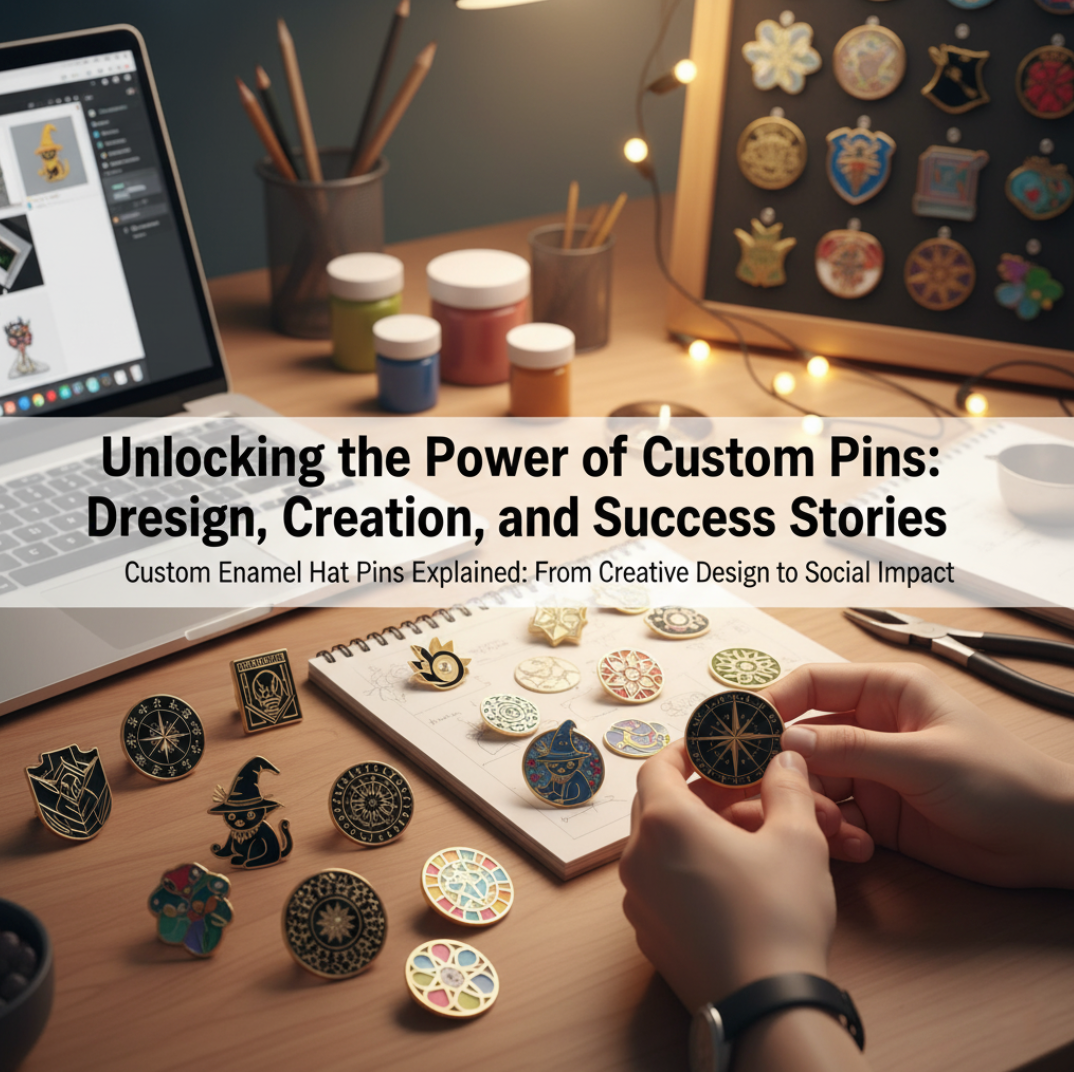
Custom metal hat pins combine style and function, offering more than just decoration.
These pins enhance everyday items like hats, jackets, and bags with unique style.
Customization allows pins to reflect personal style and act as conversation starters.
Pins for groups or causes — sports teams, charities — represent affiliation and community. Be it an anniversary or brand-marketing, they hold individual and communal meaning. What makes these pins special is their durability. Crafted from quality materials such as stainless steel and hard or soft enamel finishes, they are wear-resistant and retain their vibrant beauty for a lifetime.
Epoxy, antique metals or glow-in-the-dark treatments make them POP even more. This renders them both durable and applicable to various crafty applications. For instance, they can have complex 3D elements or custom engravings, resulting in memorable graduation or birthday gifts.
Custom pins balance affordability and quality, making them suitable for both personal and large-scale use.
Pin creation has evolved into a customizable art form used to represent achievements, causes, and identities.
Even the style of pin makes a big difference of the overall look/feel. Below is a quick comparison:
Soft enamel pins have a textured look, while hard enamel pins are smooth and more durable. 3D pins add depth through sculpted metal designs.
Accurate color matching and quality materials ensure a professional and durable finish.
Techniques like laser etching, UV printing, and plating enhance customization and design quality.
Creating custom pins involves multiple steps to ensure both design quality and functionality.
The process begins with a concept, often sketched first and then converted into a digital design for accuracy. Don’t forget the technical stuff, like the fact that metal lines should be at least 0.2mm thick for strength purposes.
PLAY WITH POSSIBILITIES. Personalization means infinite potential. Select from shapes, sizes and colors. For example, bold enamel fills can jazz things up, you need to be sure that the minimum fillable colour area width is 0.3mm or more, or the colour will be patchy. Textures, patterns and coatings (like matte, glossy or antique) can inject soul into your design.
Pick the appropriate support. Backings — whether butterfly clutches, safety pins or magnetic clasps — need to fit with the pin’s function. For instance, while magnetic backings are perfect for delicate clothes, standard pin backs are an excellent choice for heavier garments.
Fine-tune details. Work on typography so text is still readable on smaller pins. Fonts need to be clear / clean and not too tightly packed. It’s a fine line between making them beautiful and making them sturdy. Large pins can be quite ornate but they still need to be able to keep their shape.
Talk to makers. Precise instructions are key to capturing your design aesthetic. Share your specs, complete with dimensions, materials and finishes, and verify the manufacturers ability to manage your needs. A lot of manufacturers provide design previews or samples, so you can tweak before going into production.
If you have a more complicated design, then online design tools or professional designers can offer some expertise and bring your vision to life. If you take these steps and sweat the details, your personalized metal hat pin can be as much a piece of art as it is practical.
Custom metal hat pins are not only stylish accessories, but could provide a multifunctional use in your personal, professional, and artistic life. What makes these notebooks so versatile is that they are pretty, practical and inexpensive.
Beyond their obvious benefits, custom pins are an incredibly powerful tool for companies and groups to create a brand identity. A clever pin can say a lot about a brand, from logo to values. For instance, a die struck pin with a polished finish sends a message of professionalism, while a soft enamel pin in bright colors may best suit a young, creative brand.
They’re small, so they travel far, being sported on hats, bags, or jackets — little mini-billboards for your company. Unlike such ephemeral digital campaigns, pins are real, tangible, long-lasting – and can connect in person with fans and audiences.
Pins are affordable and scalable for promotions.
Take, for instance, Katie’s example of how an organization can make thousands of pins for a campaign for next to nothing, stretching their campaign impact without the cost commitment.
Pins encourage collecting and help build communities.
Whether it’s fans of a band, convention attendees or supporters of a cause, pins can be common identifiers.
Custom pins are widely used for branding, fundraising, and creative expression.
Custom pins have earned their stripes in the corporate landscape as a subtle, but effective branding tool. You know how companies give out branded pins at trade shows or events – a real impression maker for prospects.
For example:
The low production cost paired with high engagement makes pins a cost-effective strategy — specifically for start-ups or small businesses trying to get the most reach available.
Schools and nonprofits have rallied behind custom pins to raise money and raise awareness. It’s common for schools to have pins made featuring mascots or slogans which they can then sell in support of extracurricular activities.
Nonprofits use pins to emphasize causes or commemorate milestones. For example:
These real-world pins tap communities successfully–people love to wear something that they feel passionately about.
Creative professionals have embraced enamel pins as an offshoot of their work — transforming them into a means of marketing. Bands frequently sell album or lyric pins as inexpensive souvenirs on their tours.
Independent artists create detailed pins as their brand while providing fans with a means to display it. For example:
Not only do these pins bring creators and audience together, they can create buzz in niche communities.
The booming pin market has made them coveted collectibles. Collectors love the rare and unusual designs and some will pay a premium for limited-edition pins.
For example, pins marking anniversaries or significant partnerships become highly sought after. The best quality designs make them want to wear or showcase them!
Here in the US, pin trading has exploded into a serious hobby, with fanbases to match other collector communities. This demand opens a door for designers and brands to access a market that values unique, quality pins.
Designing pins requires simplicity, proper sizing, and clear communication.
When working on a design simplicity is key. Needlessly complex designs both raise your cost of production and dilute the impact and attractiveness of the pin’s appearance. Use no more than 4 colors, as extra colors increase costs dramatically.
Likewise, keep in mind the constraints of manufacturing—skinny lines or extremely detailed work might not hold up, especially with Photo Etched or die-struck methods. Designs need to honor the minimum line thickness and spacing that if bypassed may generate dodgy or incomplete patterns.
In other words, for a good design shoot for clarity and simplicity and most importantly design that has a purpose. All the while, never forget to ask if the pin means.
Size is so important to the practical value and visual appeal of metal hat pins. Designs that are too small may lose detail or be hard to manufacture, and very large pins may not be as comfortable to wear. Something like 20–50 mm is usually a good practical size range.
Backing options need to be selected with consideration. For instance, butterfly clutches are ubiquitous for their convenience, but locking pin backs might be required on heavier or high-value pins. Make sure you always match size and backing to the pin’s purpose and what the audience requires.
Materials and finishes play a major role in the pin’s durability. Take enamel pins, for example, which are beloved for their durability and eye-catching hues, whereas soft enamel offers a tactile experience.
For example, finishes might include gold, silver, or black nickel plating. These not only help to make the pin more attractive, but provide a protective layer against wear and corrosion. Pins made of cheap materials or plating can fade, chip or tarnish with use, decreasing their worth and attractiveness.
Not clearly conveying the design intent, size and material preferences to manufacturers is a surefire way to get mediocre results. Miscommunications can cause colors not to match, or sizes to be wrong, or complex elements to reproduce badly.
Make sure you always share full design files and talk about production constraints, so you’re on the same page. This free discussion prevents costly mistakes and guarantees that the end result is exactly what you want.