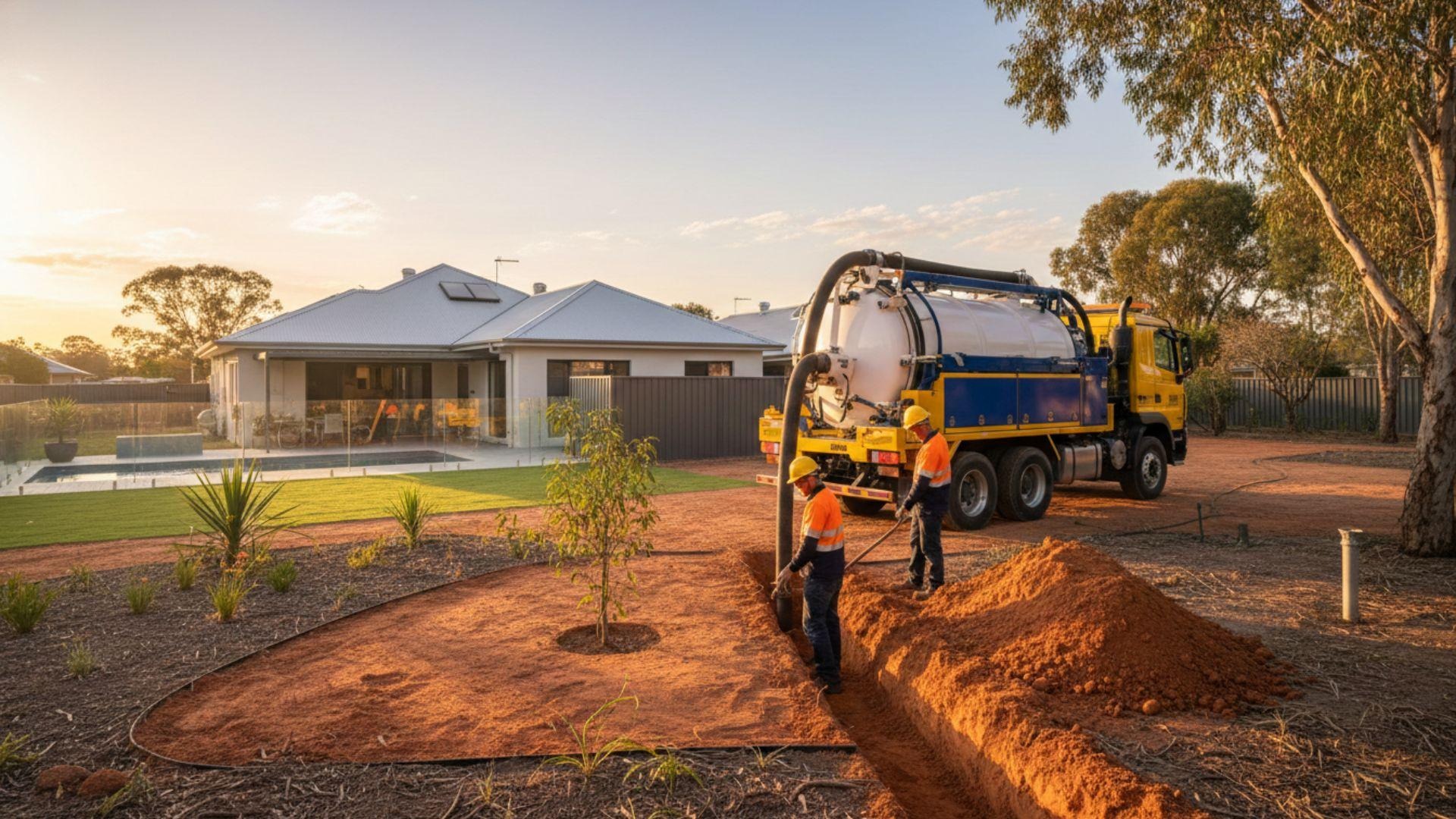
If you've ever driven a shovel into your backyard and felt that stomach-dropping clunk of hitting something you weren't expecting, you'll understand why vacuum excavation has become such a popular alternative for residential digging work.
Whether it's a buried sprinkler line, an old stormwater pipe, or electrical cabling that nobody bothered to map properly, the risks of blind digging in Australian backyards are reaL.
Find a new way to dig that is both effective and less damaging to the soil is useful.
Vacuum excavation (sometimes called "soft digging" or non-destructive digging) uses pressurised water or air to loosen soil, while a powerful vacuum simultaneously removes the debris
Most people associate vacuum excavation — or non-destructive digging (NDD) — with large civil construction projects.
But the same principles that make it vital on a major road project also make it incredibly useful in a residential setting. The key advantage is precision without destruction.
In backyards across Sydney, Brisbane, Melbourne, and the Gold Coast, the ground is often a maze of utilities that have been laid, extended, and patched over decades.
Telecommunications cables, water mains, gas lines, electrical conduits, and stormwater drains may all lie within the first metre or two of soil.
Traditional mechanical excavation — whether that's a mini excavator or even a mattock — doesn't discriminate. Vacuum excavation does.
The method works across a range of soil types, too.
Hydro excavation (water-based) handles clay and compacted ground effectively, while air excavation suits softer, sandier soils — which is a common distinction across Australian coastal and inland regions.
If you're comfortable with the equipment and have scoped your project, here's a step-by-step approach to backyard vacuum excavation. Start small — a 300mm × 300mm test patch is a smart way to get a feel for the process before committing to the full dig.
Good preparation is what separates a smooth project from a costly mistake.
Once you’ve confirmed the underground layout, clearly mark your dig area using spray paint or marker flags. Take a close look at the soil — grab a handful and see how it behaves.
If it clumps and holds together, you’re likely dealing with clay and will want to use hydro excavation. If it crumbles easily, air excavation may be the better option.
Next, clear the surface of any debris, including rocks, mulch, or pavers, to stop hazards and keep the vacuum running smoothly.
Position the vacuum excavator as close to the dig area as the hose allows, reducing the distance the debris needs to travel.
If using hydro excavation, fill the water tank, prime the vacuum system, and check that suction is working properly.
Test the nozzle spray on a patch of scrap soil away from the main dig to confirm the pressure settings. Make sure all hose connections remain secure — a loose fitting under pressure can be dangerous.
This is where patience becomes more important than raw power.
Insert the wand or nozzle at about a 45-degree angle into the soil and start at low pressure — you can increase it later, but you can’t undo damage to a utility line.
Move the nozzle slowly in an oscillating motion to loosen the soil into slurry for hydro or to break it apart for air excavation. Avoid staying in one spot to prevent creating unstable voids.
Run the vacuum at the same time so the hose removes loosened material as you go. Work in layers, checking for utilities every 150–300mm of depth.
If you encounter a utility, stop and hand-clear around it carefully. For reference, a standard pothole roughly 300mm wide and 1.5 metres deep in soft soil typically takes 20–30 minutes, while clay will take longer.
Vacuum excavation isn’t a set-and-forget operation.
Work from the edges of the hole inward to retain stability, and if slurry is accumulating faster than the vacuum can remove it, pause the water to let the vacuum catch up.
Reduce pressure immediately if you feel resistance, which could indicate a hidden utility line.
For most portable residential units, try to keep the dig within 3–5 metres of depth. If you’re nearing that limit without success, it’s time to reexamine.
How you handle excavated material depends on the method you’re using.
Hydro excavation produces wet slurry, which in most council areas cannot simply be dumped back into the hole or spread across your yard.
It generally needs to go to an approved disposal facility, so check your local council regulations before starting.
Air excavation produces drier spoil, which can often be used for direct backfill, saving a step in disposal.
When the digging is done, inspect the excavation carefully for exposed utilities or any damage.
Backfill with native soil or clean sand in roughly 150mm layers, tamping each layer lightly to prevent settling.
Finally, reseed the lawn, replace turf, or restore garden beds to bring the area back to its original condition.
Vacuum excavation is genuinely one of the smarter ways to dig in a residential setting.
It's precise, it's low-impact, and it dramatically reduces the risk of damaging the utilities and infrastructure located beneath your yard.
But like any process that involves pressurised systems and underground hazards, it demands respect, preparation, and a realistic assessment of your own capabilities.