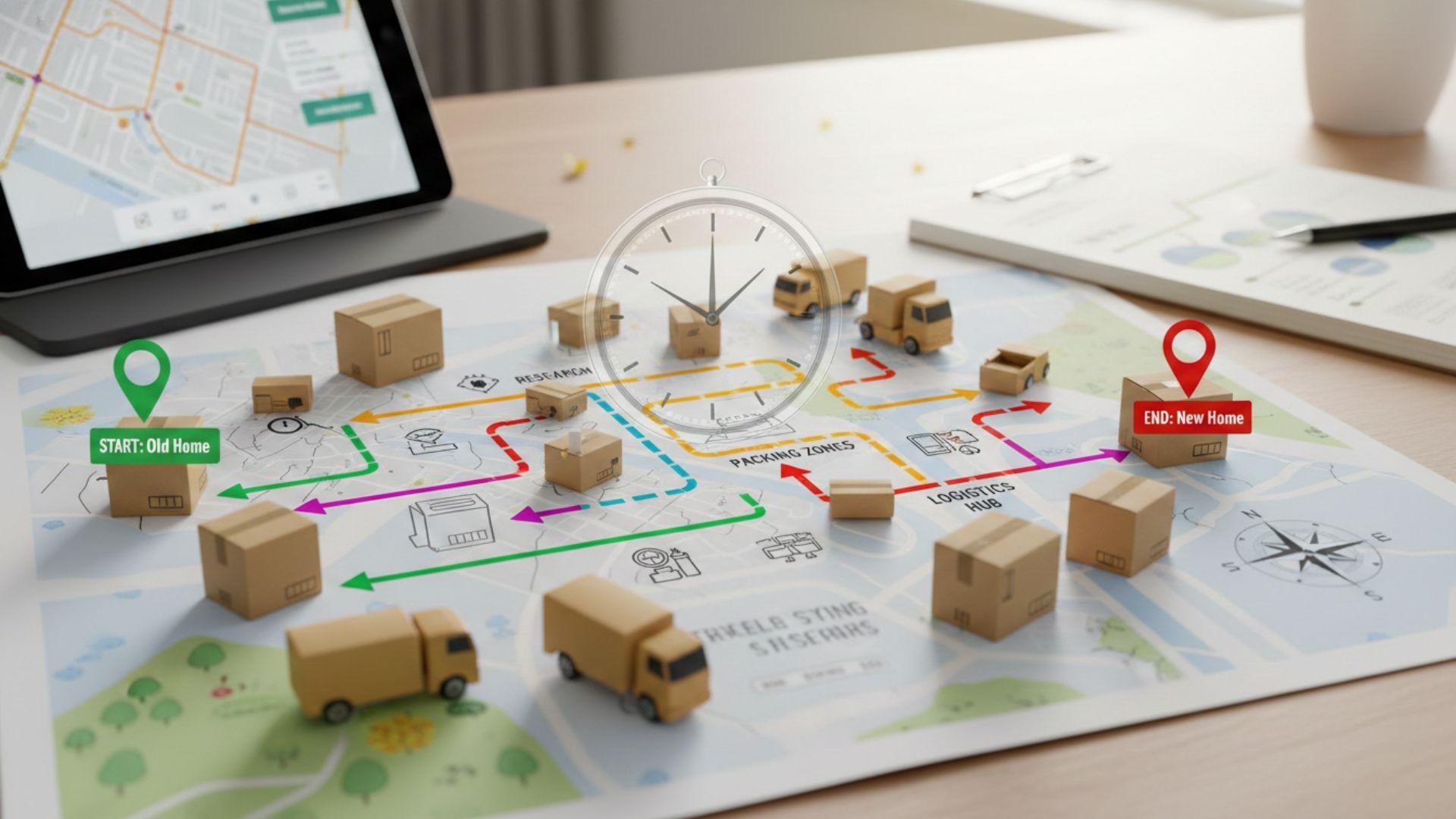
Moving is a stressful day for every person involved. But the aspects of moving items can be made much easier by using the modern technology that we have today.
One such technology is route optimization apps. In Australia, it’s the technology that frequently drives delivery operations, so why not leverage it for your moving day?
In this step-by-step guide, we'll walk you through everything you need to plan the most efficient moving route — from setting your objectives to using live tracking on the big day.
It's tempting to just plug your new address into Google Maps and hit "Go." But moving isn't a simple A-to-B trip.
You might need to stop at a storage unit, pick up packing supplies, drop off keys, or coordinate with movers arriving at specific times.
Each additional stop, if not planned carefully, can add significant time and distance to your day.
And for anyone coordinating a same-day delivery of furniture or fragile items with a courier service, knowing the fastest, most reliable route ensures your belongings arrive securely and on schedule.
Before you even think about maps, start with the big picture. Build a comprehensive moving timeline that covers every milestone, from your decision to move right through to moving day and beyond.
Once your timeline is set, outline defined objectives for your route. Ask yourself: what matters most? Are you trying to minimise total distance? Reduce time on the road? Cut fuel costs?
Balance driver workload across multiple vehicles? Your priorities will shape every route decision that follows.
For example, if you're moving from Brisbane to the Gold Coast on a Saturday morning, your chief aim might be avoiding weekend traffic hotspots.
If you're a removalist running two jobs in one day, balancing time across both routes becomes critical.
Great route planning starts with great data. Think of this step as laying the foundation — the more accurate and thorough your information, the smoother everything will run.
List every location involved in your move. This includes your current home (pickup), your new home (delivery), and any intermediate stops such as:
Note the sizes, weights, and handling requirements of what you're moving. Fragile items, oversized furniture, or temperature-sensitive goods all affect how you load and how long each stop takes.
Know your truck's capacity, dimensions, and fuel efficiency. If you're using multiple vehicles or drivers, note each driver's availability, starting location, and required rest breaks.
This is especially important for long-distance moves or professional movers coordinating a fleet.
With all your data in hand, it's time to start mapping. Use up-to-date mapping tools to identify the most most effective routes between your stops.
Compare total distance, estimated travel time, and the number of turns or highway merges for each option. Sometimes a slightly longer route by distance is actually faster because it avoids a notorious bottleneck.
For moves involving multiple stops across a metro area — say, picking up items from two locations in Sydney's Inner West before heading to a new home in the Northern Beaches — mapping all stops in advance helps you spot the most efficient sequence at a glance.
This is where technology becomes your best operational asset.
Manual route planning suffices for a single-trip move, but the moment you introduce multiple stops, strict time windows, or a multi-vehicle fleet, the complexity calls for a more sophisticated approach.
These tools handle variables that are impossible to manage manually, such as vehicle capacity constraints, driver fatigue regulations, and shifting metropolitan congestion trends.
Efficiency in the final mile also demands that you cluster stops within the same geographical footprint to eliminate "deadhead" or empty miles.
Before moving day, you cannot settle on the first route that looks reasonable. You must stress-test your plan with the same scrutiny you would apply to a commercial freight run.
Compare total distance and workload balance across your vehicles, and use 2026 simulation tools to check feasibility if traffic is 20% worse than average.
Respect all Heavy Vehicle National Law updates regarding mass and dimension, making sure you do not exceed the one-hour parking limit for heavy vehicles in built-up areas.
Finally, perform a physical reconnaissance of the route to confirm truck clearance and secure any required local council permits..
Even the best-laid plans need flexibility when they meet reality. On moving day, use GPS tracking and live monitoring to keep agile and make adjustments on the fly.
Live tracking allows you to:
Once the dust has settled and the last box is unpacked, take 15 minutes to review how the route actually performed against your plan.
This step is often skipped, but it's incredibly valuable — especially if you move regularly or run a moving or delivery business.
Update your data with what you've learned. If a particular stretch of road was worse than expected, note it for next time. If grouping certain stops worked brilliantly, make that your default approach.
For professional movers, this continuous improvement loop is what separates good operations from great ones.
Route optimization software often includes analytics and reporting features that make this review process easy.