If you've ever walked into a commercial kitchen and caught that unmistakable sewer-like smell, there's a fair chance the grease trap hasn't been serviced in a while.
It's one of those maintenance tasks that's easy to push down the priority list — until a blockage backs up your drains on a Friday night service, or a council inspector shows up asking for your pump-out records.
As a general rule, most commercial grease traps should be professionally cleaned every one to three months.
That said, "general rule" is doing a lot of heavy lifting in that sentence.
The right frequency for your business depends on a handful of specific factors — and getting it wrong in either direction costs you.
Clean too infrequently and you risk blockages, foul odours, and non-compliance fines. Clean too often and you're spending money you don't need to.
Understanding grease trap cleaning schedule challenges will help you move beyond guesswork and build a schedule that actually works for your operation.
This one's straightforward but worth spelling out. A small under-sink grease trap — typically around 60 to 100 litres — has far less capacity than an in-ground unit rated at 1,000 or even 5,000 litres.
Smaller traps fill faster and may need servicing as frequently as every week or fortnight in a busy kitchen. Larger in-ground traps, by contrast, can often go three to six months between professional pump-outs.
A high-turnover restaurant frying chips and crumbing schnitzels for 200 covers a night is going to generate significantly more fats, oils, grease, and solids (FOGS) than a sandwich bar doing 40 lunches.
Not all food preparation produces the same volume of FOGS. Deep-frying, wok cooking, and anything involving heavy oil or butter use will accelerate grease buildup considerably.
If your menu leans heavily on fried or sautéed dishes, expect your trap to fill faster than a kitchen focused on salads and sandwiches.
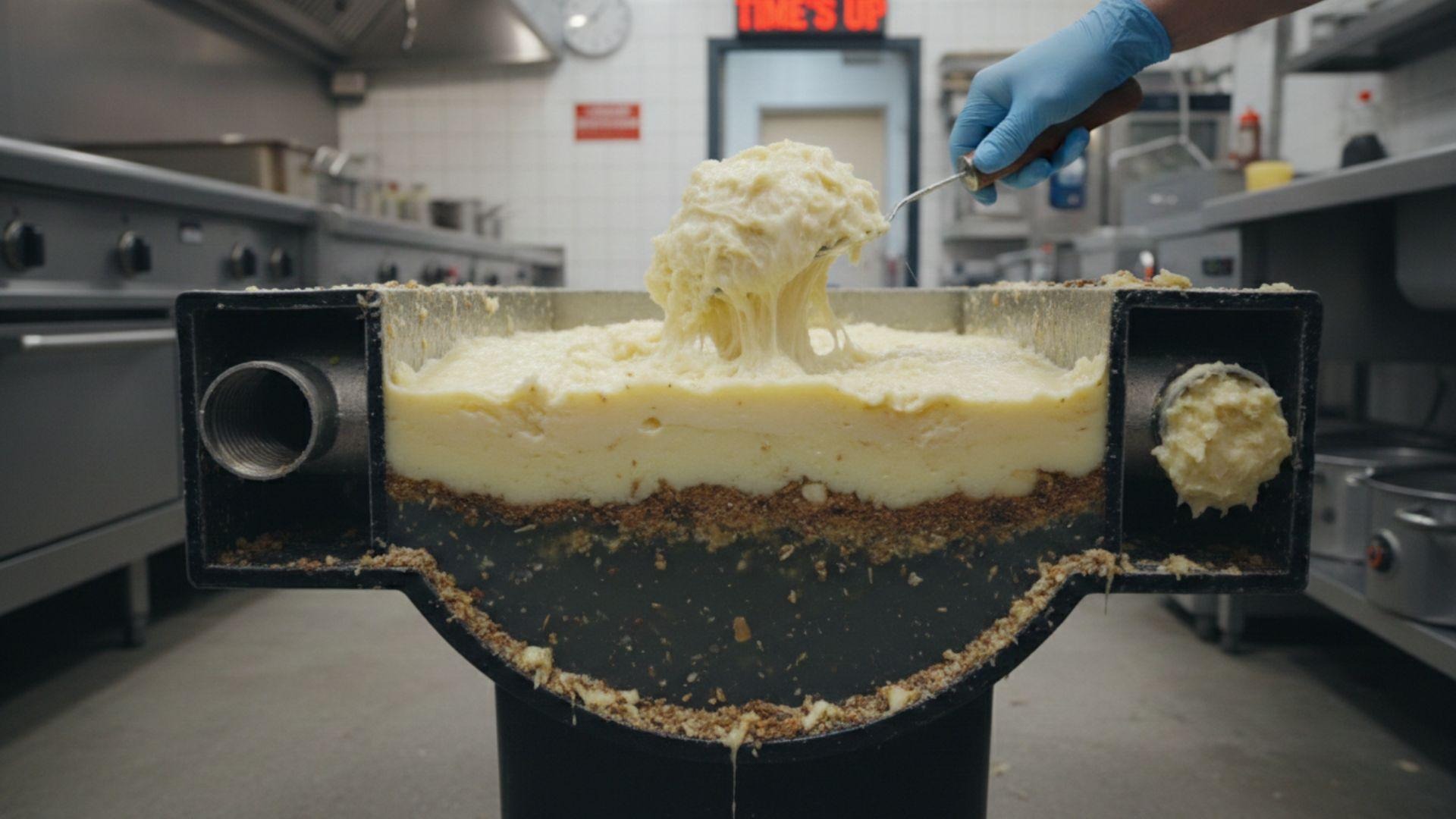
One of the most reliable guidelines in the industry is the quarter rule — sometimes called the 25% rule. The idea is simple: once fats, oils, grease, and solids fill 25% of your trap's total capacity, it's time to book a pump-out.
Beyond that 25% threshold, the trap starts to lose its ability to effectively separate grease from wastewater.
You'll notice slower drainage first, then odours, and eventually you're looking at grease pushing through into your sewer connection.
That's when you get blockages, potential Environmental Protection Agency (EPA) issues, and some very unpleasant conversations with your landlord or council.
Rather than relying purely on a calendar schedule, it's worth checking your trap levels regularly — especially if your business volume fluctuates seasonally.
A visual inspection every week or two between professional services can save you from an emergency call-out.
We've attended enough emergency jobs to know what a neglected grease trap looks like — and smells like. Here's what you're risking if you let maintenance slide:
Getting the cleaning schedule right is the most important thing, but a few additional practices will help you get more life out of each service interval and avoid problems between pump-outs.
Grease trap cleaning isn't a job for your kitchen hand with a bucket.
Professional services use vacuum trucks to fully pump out the trap, inspect it for damage, and dispose of the waste in accordance with EPA requirements.
You'll also often receive documentation — pump-out certificates and waste tracking records — that you need for compliance audits.
Your grease trap will work better and need less frequent servicing if you reduce the volume of solids and grease entering it in the first place.
Scrape plates thoroughly before washing, avoid putting food scraps down the drain, and consider whether a garbage disposal unit is actually helping or just pushing more solids into your trap. In our experience, kitchens that train staff on proper scraping and disposal habits can genuinely extend their service intervals.
Grease trap pump-outs are not subtle. There's noise, there's a vacuum truck, and there's an unavoidable smell during the process.
If you can, book your servicing for early mornings, late evenings, or days when the kitchen isn't operating. Your customers and your team will thank you.
Every pump-out should be documented with a date, the volume removed, and the service provider's details. Keep these records accessible — not buried in a filing cabinet.
When a council inspector asks for your maintenance history, you want to produce it quickly and confidently.
For higher-risk setups — large kitchens, multi-outlet food courts, or sites with older plumbing — a weekly visual inspection between scheduled pump-outs is a smart habit.
Check grease levels, look for signs of slow drainage, and note any unusual odours. If something looks off, bring your next service forward rather than waiting for a problem to escalate.
Grease trap maintenance isn't glamorous, but it's one of those operational basics that protects your business from disruption, fines, and reputational damage.
The cost of a regular pump-out schedule is modest compared to an emergency blockage, a failed inspection, or a kitchen closure.
If it's been a while since your last service — or if you're not sure whether your current schedule is right for your operation — it's worth getting a professional assessment sooner rather than later.