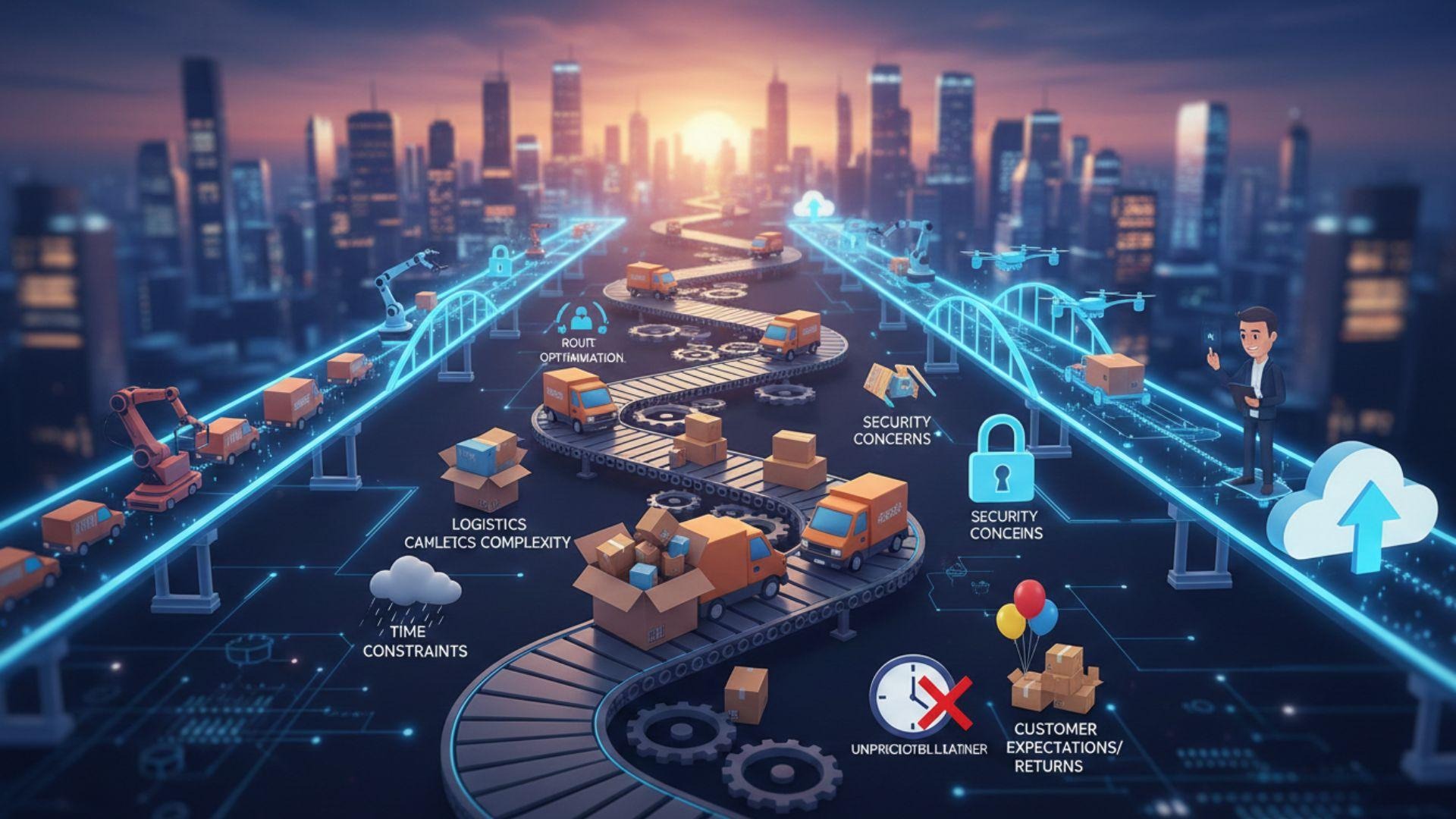
Same day delivery is the standard delivery choice that most people across the globe, as well as in Australia, rely on when it comes to receiving parcels and packages.
They’re efficient and effective, but they do come with challenges that customers should not be made aware of. The last thing that they need is a problem: they want their deliverables.
Luckily most challenges are quite common and therefore have similar ways to overcome them. We explore what these are in the blog below.
Same day interstate delivery is inherently more expensive than standard shipping. It demands dedicated vehicles, additional staff and more frequent trips which can all add at the end of the day.
For small and mid-sized businesses, those numbers can be quite tough to acccept, especially when customers expect free or low-cost delivery.
And unlike next-day or economy services, same day courier delivery fulfilment doesn't allow you to batch orders efficiently.
But here each delivery often requires its own pickup-to-drop-off run, meaning drivers cover more kilometres with fewer parcels per trip.
The last mile — that final stretch from depot to doorstep — is the most unpredictable part of any delivery.
In Australia, the busy urban traffic congestion, limited parking, building access restrictions and scattered drop-off locations all conspire to make a simple delivery into a logistics challenge.
When you're working against a same-day deadline, even a 20-minute delay at one stop can produce missed delivery windows across an entire route.
For businesses delivering in cities like Sydney or Melbourne, rush-hour gridlock can be especially punishing.
And in apartment-heavy suburbs common in urban Australia, just getting through a security door or finding the right loading dock can eat into precious time.
You can't deliver what you can't find. Same-day delivery demands real-time inventory exactness across every location — warehouses, retail stores, dark stores, and even third-party fulfilment centres.
If a customer orders a product showing "in stock" and it isn't actually available at a nearby location, you've lost the sale and potentially the customer.
Many retailers still rely on overnight inventory syncs or manual stock checks. That approach might work for next-day courier delivery, but simply falls right apart when you're promising delivery within hours and your customers are waiting.
When same day orders roll in continuously throughout the day, manual route planning simply can't keep up.
A dispatcher might plot an efficient route at 9 am, only to have five new orders arrive by 10 am that require a completely different approach.
Under tight timelines, suboptimal routing leads to late deliveries, wasted fuel, and frustrated drivers.
Traditional logistics relied on planning routes in advance — often the night before. Same-day delivery turns that model on its head, demanding immediate decision-making at a pace that humans alone can't sustain.
Efficient routing and dispatch are the engine room of same-day delivery. Get this right, and everything downstream — driver productivity, delivery speed, customer satisfaction — improves dramatically.
Offering same-day delivery in one city is challenging enough.
Scaling it across multiple metros — or expanding into regional areas — requires distribution centres, micro-fulfilment hubs, and driver networks positioned close to demand centres.
Building that infrastructure from scratch demands heavy upfront investment and months (or years) of planning.
For growing businesses, this creates a frustrating catch-22: you need scale to make same-day delivery cost-effective, but you need investment to achieve scale.
Meanwhile, larger competitors like Amazon have already built nationwide fulfilment networks that are hard to replicate.
You don't have to build everything yourself. The smartest approach to scaling same-day delivery is combining your brand's customer relationships with a partner's logistics infrastructure and technology.
E-commerce growth continues to outpace driver recruitment in Australia.
The demand for on-demand couriers — specifically during peak periods — often exceeds supply, leading to delayed pickups, missed delivery windows, and inflated labour costs.
Finding reliable, qualified drivers willing to work flexible hours (including evenings and weekends) is an persistent difficulty for logistics operators.
This challenge is intensified by rising fuel costs and shifting worker expectations. Many experienced drivers are leaving the industry, and attracting new talent requires competitive pay and better working conditions.
The driver shortage isn't going away anytime soon. But with the right mix of flexible workforce models and efficiency-boosting technology, you can deliver reliably even when hiring is tight.
Same day delivery doesn't follow a neat, predictable schedule. New orders arrive constantly, customers change shipping preferences mid-route, and unanticipated road closures throw plans off course.
If your routing system can't adapt on the fly, drivers end up backtracking, running late, or skipping stops entirely.
Manually inserting a new order into an in-progress route is nearly impossible without interrupting the entire schedule.
But the route flexibility is what separates reactive logistics from proactive logistics.
And with dynamic tools, your operation can absorb the chaos of real-time demand and still hit every delivery window without your customers worrying too much about the difficulties you face.
Many businesses still manage deliveries across disconnected systems — one platform for orders, another for inventory, a separate tool for dispatch, and maybe a spreadsheet for tracking.
When these systems don't communicate in real time, critical information gets lost.
A warehouse worker doesn't know a parcel is urgent. A dispatcher doesn't know a driver is stuck in traffic. A customer has no idea where their package is.
This disintegration creates blind spots that are tolerable for standard shipping but devastating for same-day delivery, in which every minute counts.
Omni-channel demands — serving online, in-store, and marketplace orders from the same stock — only compound the complexity.