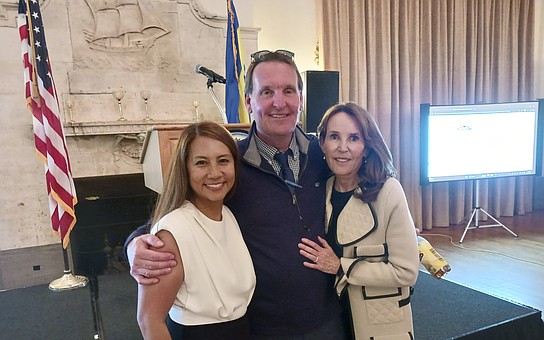
The most compelling entrepreneurs of this era are rarely confined to a single lane. They move between industries with ease, blending intuition with strategy, creativity with capital. They understand that success is not only about scale, but about taste, timing, and trust. In real estate, where money meets emotion and history lives inside walls, these qualities matter more than ever.
Margaux Gibson is one of those entrepreneurs. She is not the loudest voice in the room, nor the most visible. Instead, she operates with the confidence of someone who knows where she comes from — and exactly where she’s going. A real estate agent, investor, and entrepreneur, Gibson’s career sits at the intersection of luxury property, design, and cultural preservation, shaped by both modern sensibility and a lineage that helped build California itself.
Born in San Francisco and raised in Southern California, Gibson is a sixth-generation Californian and a direct descendant of Elias Jackson “Lucky” Baldwin, the legendary 19th-century real estate pioneer and businessman whose developments and investments left a permanent mark on the state. Yet Gibson does not trade on the Baldwin name. If anything, she treats it as responsibility rather than entitlement—a quiet standard that informs her work behind the scenes.
“I’ve always been aware of history,” she has said of her upbringing. “But I was more interested in how it could be honored in the present.”
That perspective has guided nearly every chapter of her professional life.
Long before real estate entered the picture, Gibson’s first language was creativity. At sixteen, she began working in fashion through costume design for theater, film, and television. The experience taught her how clothing, sets, and spaces all tell stories—an education that would later translate seamlessly into property design and marketing.
At seventeen, she was given an opportunity that would shape her creative philosophy: working with filmmaker Sofia Coppola on Coppola’s clothing line, Milkfed. Immersed in Coppola’s understated aesthetic and narrative-driven approach to design, Gibson found the confidence to pursue her own vision. She soon launched her fashion label, MARGAUX, and began working as a stylist and designer.
Her designs appeared in The Hollywood Reporter and other fashion publications, and were worn by celebrities and musicians across music videos and television. NBC’s Will & Grace featured Gibson’s designs on Debra Messing in two episodes—an unmistakable marker that her work had entered pop culture.
Still, Gibson never chased the spotlight. Instead, she treated fashion as a discipline: learning how taste, branding, and storytelling could elevate an experience.
In 2011, Gibson quietly began investing in real estate. What drew her in was not just the financial opportunity, but the parallels to her creative work. Properties, like garments or sets, require vision. They demand an understanding of structure, flow, and emotional resonance.
Her investments focused on properties with architectural significance, culminating in her ownership of the historic Singer Mansion in Glendora, California. Designed by renowned architect Wallace Neff, the estate embodied Gibson’s appreciation for history and thoughtful restoration. The home became both a personal inspiration and a professional blueprint for how heritage and modern living can coexist.
Real estate, for Gibson, was never just transactional. It was experiential. In 2021, she became a licensed real estate agent and joined The Agency Beverly Hills along with The Agency Global Marketing and Sales Organization. Today, she specializes in buying, selling, renovating, and marketing properties, with a focus on luxury real estate and design-forward homes.
Her background in fashion and styling gives her a distinctive edge. She understands presentation instinctively — how light moves through a space, how materials feel, how a property should be experienced before it is sold. Equally important is her discretion. Known for valuing privacy, Gibson has earned the trust of high-profile clients who prefer results over recognition.
While Gibson is building her own modern career, she has also played an active role in preserving her family’s history and contributing to California’s cultural landscape.
In 2017, she accepted the National Racing Hall of Fame plaque and induction of Elias J. Baldwin on behalf of the Baldwin family, honoring his influence on American horse racing and land development.
Her commitment has also taken visible, public form. In 2013, the City of Arcadia installed a nine-foot bronze statue of Baldwin titled A Dawn in the West, created by artist Alfred Paredes and commissioned by Margaux Gibson and Heather Gibson. The statue stands near the southern entrance of Santa Anita Park, linking California’s past to its present.
In 2021, Gibson contributed to the construction of the Anita May Baldwin statue at the Arcadia Hotel, further expanding the family’s legacy through public art and civic engagement.
Beyond business and heritage, Gibson remains deeply involved in community and philanthropic work. She supports organizations including the Los Angeles County Arboretum & Botanic Garden, California Hospital, Foothill Unity Center, and various public art initiatives. Her approach mirrors her professional style: intentional, behind-the-scenes, and focused on long-term impact.
Her work in real estate has been featured in ANGELENO magazine and PASADENA magazine, recognizing her as a rising presence in Southern California’s luxury market. Yet accolades have never been the point.
Margaux Gibson represents a modern archetype of entrepreneurship — one rooted not in disruption for its own sake, but in refinement, continuity, and care. She builds where history already exists, designs with restraint, and invests with an eye toward permanence. In a world increasingly drawn to spectacle, Gibson’s story is a reminder that some of the most influential work happens quietly — shaped by taste, trust, and the patience to let things endure.