In the past, creating polished digital content usually required one of two things: a large budget or a highly specialized skill set. If you wanted a custom song for a campaign, you needed a songwriter, a producer, vocal talent, and studio time. If you wanted a still image turned into something cinematic, you needed animation tools, editing knowledge, and many hours of work.
That model is changing.
Many people mistakenly believe that artificial intelligence (AI) will be a destroyer of creativity. On the contrary, AI exists to strip away obstacles that prevent people from generating a large volume of high-quality creative ideas quickly and affordably, for projects big or small, for individuals, small businesses, local entrepreneurs/indie creators, and in educational and marketing settings.
An idea with potential today can travel a lot further than an idea with potential just a few years ago.
In one major way, the world of digital media is very different from that which existed just a few years ago. In the past, producing high quality media required a lot of training, equipment and experience. Now, thanks to the Internet, anyone with a connection can produce music, video, audio and graphics that rival those produced by professionals. This changes the way in which shops promote themselves with media. A shop owner with basic skills can create more effective promotional materials with music, graphics and motion than a paper brochure. A real estate agent can include all the extra visual details that help sell a house. Someone with great lyrics but who cannot produce music can have a fully finished audio piece (e.g. song) created from their words. A teacher, community organizer or activist can turn static graphic images and text into the memorable media they need.
Today it's even harder to get people's attention than it used to be.
In today’s fast-paced world, people are scanning, jumping, and avoiding content that doesn’t immediately resonate with them. In a crowded online environment full of mass-produced generic stock photography and bland duplicate content, the most successful individuals and businesses are able to produce a high volume of unique, personal, emotional, and relevant content on a regular basis.
Is faster content generation a good thing? Yes, because it brings your ideas to life sooner.
AI-powered content tools are helping to bridge the gap between concept and finished content.
My musing about the nature of culture in recent human history wasn’t limited to the realm of video, was it? My personal evolution in music appreciation serves as a nice example of how culture has been changing.
You may have written part of a song in a notebook, recorded riffs or hooks in an music app or made a outline for a feature on a beat. There was potential for more, but with no affordable means of producing the music, the ideas stagnated. In the past, the conventional approach to music production was expensive and inaccessible to many, often pricing amateur producers beyond reach. However, advancements in music production technology now make it more accessible to enter the music scene.
With the advent of artificial intelligence it is now possible to have a fully completed music track generated from just a few lyrics. A task that would have previously taken days or weeks to complete, can now be accomplished in a matter of minutes. This newly created capability is opening up all sorts of creative possibilities for the music developer, whether it be developing a demo track or creating music for a social media campaign or even just having a song for a personal project. This music could also serve as a great podcast opening or for corporate audio elements such as a promotional piece.
There is a whole new generation of music technology emerging and it is often designed to take a load of the production off of the user. This is especially useful for musicians and producers that don’t have the skills to create entire productions around their lyrics. Enter the service, Lyrics To Song AI, where you simply input a song or jingle’s lyrics and create a fully produced song in the style of your choice. Perfect for the musician who wants to up the ante of production on their work, the marketer or creative needing to insert original audio into their workflows and operations, and the business owner who is looking for something fun to spruce up their content.
Music is a natural medium for human emotion, which is why using a custom song is an excellent way to express who you are, how you feel or to simply get a point across better than mere text. Custom music is perfect for large or time-sensitive campaigns by making it easier to create memorable promos quickly. The song also makes a great tool for content creators who want to test and refine their ideas as fast and efficiently as possible. And let’s face it, who doesn’t want their words taken more seriously these days?
Visual content is experiencing a similar transformation.
Static images are still just as valuable online as they are in print, however the movement image is becoming more effective. Even a small movement can make an image more realistic and give it more life, making it more engaging to the viewer. However, making a video or animation can be a time consuming and labour intensive process.
The way photos are manipulated is undergoing significant transformation.
Instead of making a video from scratch, you can have an AI animater create a video from your photo. Such videos have emergence, movement, depth, and changes in color and shape, and are appropriate for use in social media, as part of full digital ads and emails, in landing pages, presentations, and even stories.
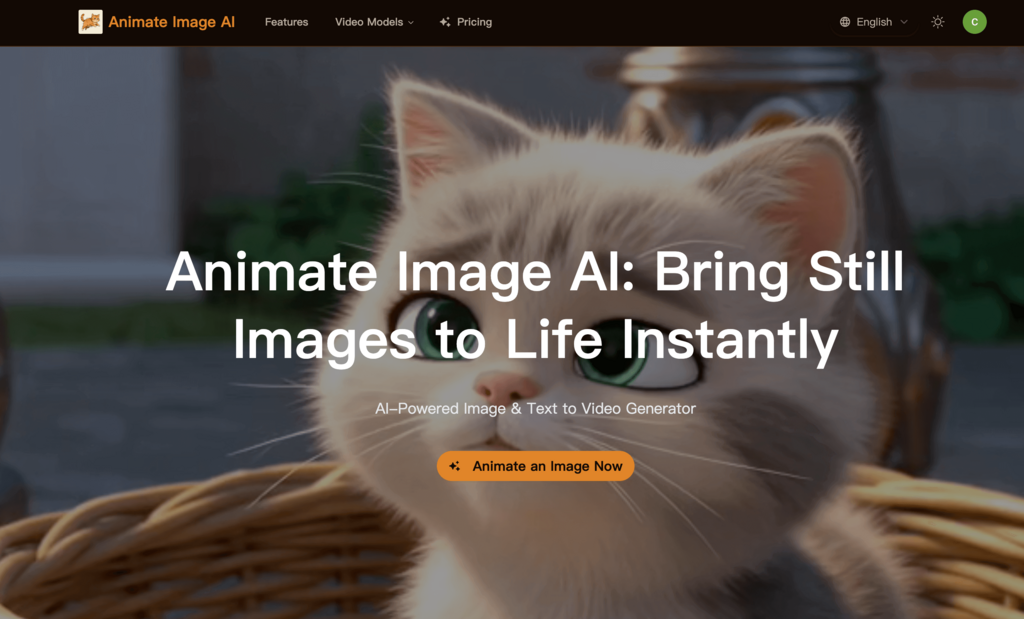
Animate Image AI is a new platform that lets you animate single images using simple prompts. With it, marketers can boost engagement, designers get a punchy animation to add zing to their presentations, educators can better explain concepts to their students, and creative professionals add movement to even the most simple of images.
This change should allow more people to make timely content, even when a full production is not possible.
Large organisations have long had the budget to bring in external agencies, production teams and creative talent to help bring their brand to life. However, with the Web becoming an ever more critical channel for story telling and brand experience for smaller organisations, the same expertise and resources are now within reach.
I have started to notice how much more frequently algorithmic and artificially intelligent creative tools are being employed and therefore think the ratio is beginning to shift.
Vixy makes it easy for a small local business to test the waters with a few ideas and see what sticks, for a startup to quickly make a batch of assets before their whole team of artists and designers wakes up from their long winter’s nap, for the solo creator to whip up a couple of music and motion video pieces before his girlfriend wakes up, or for a completely green team to test out a few prototypes before they over-spend on something that just won’t work.
As software becomes easier to use, creativity and human insight become more important. Someone still has to decide how you’re going to assemble the individual elements, choose a template, and tweak the palette to better fit your needs. And that’s where taste, storytelling ability, design sense, and creativity really come into play.
While certainly there are some large, cash-heavy companies that will reap enormous rewards from the proliferation of AI, in the long run it is those who use the technology to best amplify and share their individual voice and perspectives that will see the greatest rewards.
I've seen some skepticism around the role of AI in creative work - and I'm totally fine with technology taking over the most tedious/soulless parts of creative work (button clicks, batch tasks, etc) but NOT the genuinely authentic, subjective parts.
I’ve seen many creative applications of AI, but personally I think the most valuable ones are those that help you make the most of your own ideas. They won’t give you purpose, they won’t replace your vision, but they can really amplify what you already bring to the table.
That distinction matters.
No matter how good the technology and processes are, ultimately it comes down to having something to say as a songwriter, understanding your market as a marketer, defining a brand with an identity as a business owner, and using your imagination as a creator. AI can spit out the final product but at the end of the day it’s humans that produce the best work.
What's coming for creative technology? It's not going to be automated in a clinical sense. Instead, creative technology is going to be enabled by the collaboration between humans and technology that reduces as much friction as possible so humans can best express their intent.
Efficiency is exciting these days - because it opens up design to a wider range of people.
Globalization is fueling a collaborative era. More people than ever can innovate, test products and services on the market, and share their opinions on anything ranging from movies and music to politicians and products that were stuck in a notebook or abandoned long ago.
For creators, that means fewer bottlenecks.
For the consumer, it means a new experience. For the business, it means a new opportunity to connect viscerally with the audience.
NEW ratings reforms are going to give TV viewers a feast of more different and original shows.
We are only just beginning to enter into this era of creative technology, however one thing is already apparent, creative technology is becoming far more accessible. What this means, is that people with skills outside of the traditional creative disciplines are now entering the creative process.
Turn lyrics or any image into a expression of yourself by creating with WallWords.
This could be of interest to everyday creators and businesses.