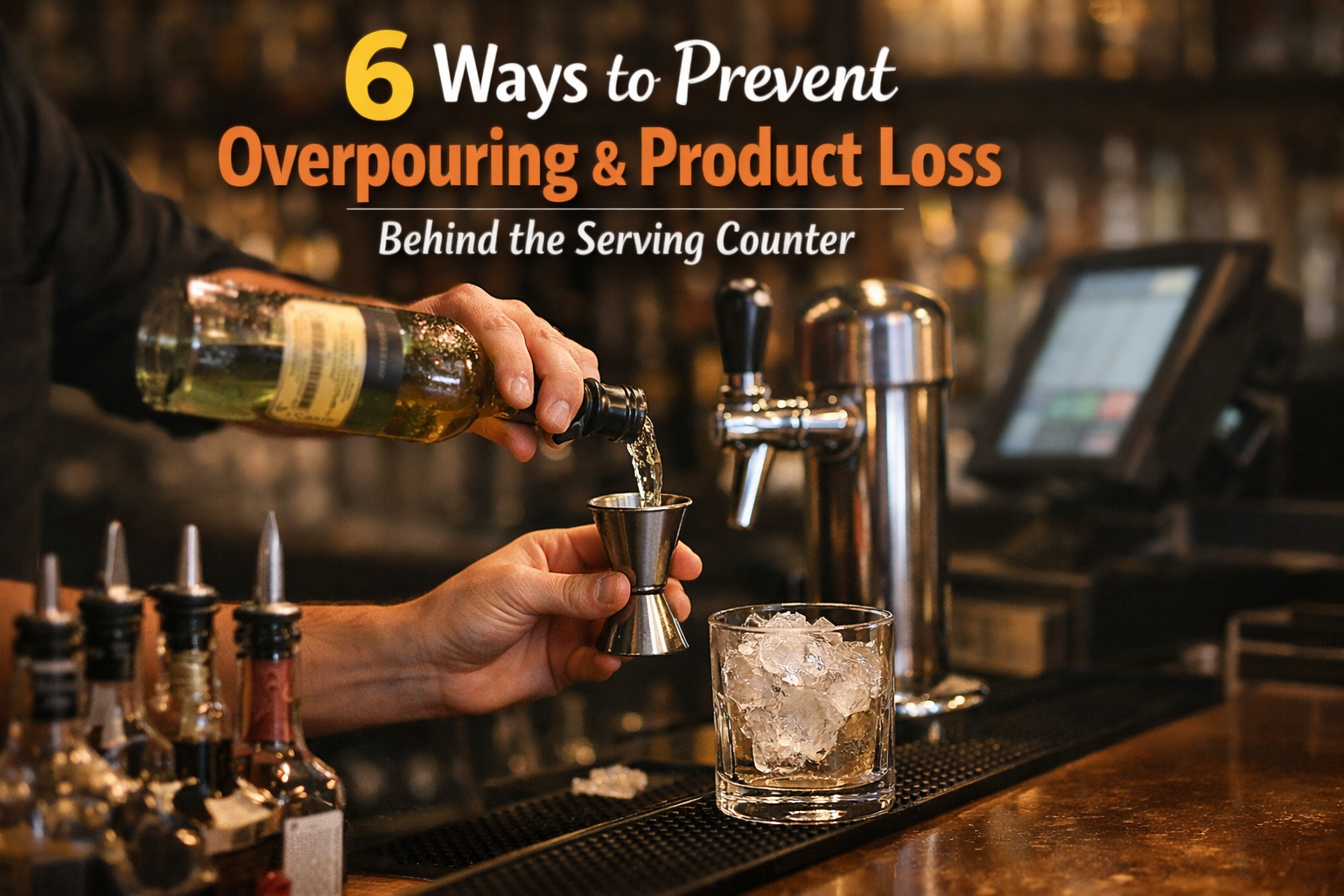
Behind every successful bar operation lies a critical challenge that can make or break profitability: controlling pour costs and preventing product loss. Overpouring represents one of the most significant yet preventable sources of revenue drain in the hospitality industry, often accounting for substantial percentage points in lost profits. Whether it's untrained staff, rushed service during peak hours, or inadequate monitoring systems, excessive pour sizes directly impact your bottom line. Understanding and implementing effective prevention strategies is essential for maintaining healthy profit margins while still delivering quality customer experiences. By addressing this issue systematically, you can protect your inventory, optimize costs, and create a more efficient bar operation.
Establishing and enforcing standardized pour sizes forms the foundation of effective overpouring prevention. You should develop clear specifications for every drink on your menu, detailing exact measurements for each spirit, mixer, and ingredient. These standards need to be documented in writing and made readily accessible to all bartenders through laminated recipe cards or digital displays. Comprehensive training programs should ensure every staff member understands not only what the standards are but why they matter for business sustainability.
Equipping your bottles with the right tools dramatically reduces the likelihood of overpouring during busy service periods. Standard pour spouts without measurement capabilities leave accuracy entirely to bartender judgment and counting techniques, which become unreliable under pressure. Measured pour spouts that dispense predetermined amounts, such as one or one-and-a-half ounces, eliminate guesswork and ensure consistency across all pours. Jiggers remain the gold standard for precision, particularly for cocktails requiring multiple spirits in specific ratios. You should mandate jigger use for all mixed drinks and reserve free pouring only for the most experienced bartenders during specific circumstances. The investment in quality measuring tools pays dividends through reduced waste, improved drink consistency, and enhanced customer satisfaction when every drink tastes exactly as expected. Even simple additions like portion-control spouts on frequently used bottles can significantly decrease cumulative overpouring throughout a shift.
Systematic inventory tracking serves as your early warning system for identifying overpouring problems before they severely impact profitability. You need to establish a consistent schedule for counting bottles, whether daily for high-volume products or weekly for complete inventory assessments. Recording opening inventory, purchases, sales, and closing inventory allows you to calculate expected usage versus actual consumption. Significant variances between theoretical and actual usage indicate overpouring, spillage, or potentially more serious issues like theft. Analyzing these variances by product category, shift, or bartender can reveal patterns that point to specific training needs or procedural gaps. When tracking discrepancies and managing beverage costs, professionals who need to monitor product usage across multiple locations rely on bar inventory software for your business to automate calculations and generate detailed reports that highlight anomalies requiring investigation. When bartenders know that inventory is monitored closely and discrepancies will be noticed, accountability naturally increases. The discipline of regular audits also helps you identify slow-moving products, optimize par levels, and make data-driven purchasing decisions that improve overall inventory management.
Complimentary drinks and promotional offerings represent legitimate business tools for building customer loyalty, but without proper controls they become significant sources of untracked loss. You must implement a clear authorization system that requires manager approval for all comped beverages, with documentation explaining the business reason. Tracking systems should record every free drink just as carefully as paid transactions, maintaining accountability even when no revenue is generated. Promotional periods with discounted pricing or happy hour specials require especially vigilant monitoring, as the combination of high volume and reduced prices can mask overpouring problems.
Product loss behind the bar extends beyond overpouring to include preventable spillage during preparation, storage, and service. You should train staff in proper bottle handling techniques that minimize drops and spills, particularly during high, volume service when rushed movements increase accident risk. Organizing your bar layout strategically reduces the distance bottles must travel and the frequency of handoffs between bartenders that create spill opportunities. Speed rails and well areas should be positioned for natural workflow, keeping frequently used bottles within easy reach.
Modern beverage management technology offers unprecedented capabilities for preventing overpouring and tracking product usage with precision. Automated dispensing systems connect directly to bottles and measure every pour electronically, eliminating human error while collecting detailed usage data. These systems can be programmed with your exact recipe specifications, ensuring perfect consistency across all drinks regardless of which bartender is working. Some advanced solutions integrate with point-of-sale systems, automatically reconciling sales transactions with actual product dispensed to identify discrepancies immediately.
Preventing overpouring and product loss requires a comprehensive approach combining training, tools, procedures, and accountability systems working together systematically. By implementing these six strategies, you create multiple layers of protection against the various ways product can be wasted behind your bar. The financial impact of even modest improvements in pour control can be substantial when calculated across thousands of drinks served annually. Remember that consistency and follow-through matter more than perfection in any single area, as sustained attention to these practices produces the best long-term results. Invest in your systems and your people, and you'll see measurable improvements in both profitability and operational efficiency throughout your bar program.