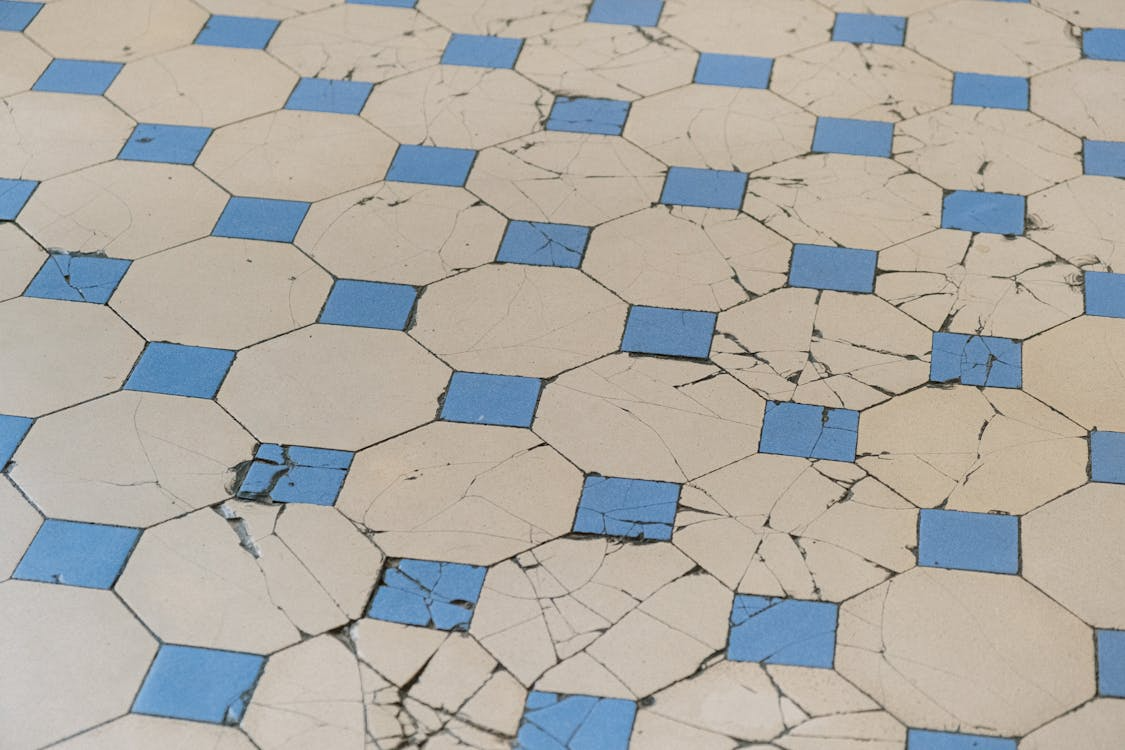
One tile cracks. You tell yourself it's fine. Six months later, you've got three more, a hollow sound underfoot, and a nagging feeling you've been ignoring something important.
Sound familiar?
Cracked tiles are easy to dismiss — they seem cosmetic, just a surface-level issue. But sometimes, that single crack is the tile's way of waving a red flag. Knowing the difference between a minor fix and a major upgrade can save you thousands of dollars and a whole lot of headaches down the road.
Not every crack is a crisis. A single hairline fracture near a tile's edge? Probably impact damage — something heavy dropped, nothing more. A clean crack through the center? Often fixable with a replacement tile and fresh grout.
But here's where it gets tricky. If cracks keep appearing in the same area, or multiple tiles in a cluster are breaking, that's a pattern — not a coincidence. Patterns tell a story.
Tiles crack when the structure beneath them moves, settles, or deteriorates. The tile itself isn't the problem. It's the messenger.
This is where homeowners get caught off guard. A cracked tile you can see. Subfloor damage takes a little detective work.
Listen when you walk. A hollow, drum-like sound underfoot means the tile has separated from its adhesive bed — a condition called debonding. It's especially common in bathrooms and kitchens where moisture is a constant variable.
Beyond the sound, pay attention to tiles that rock slightly under pressure. They shouldn't move at all. Grout lines that crack and crumble repeatedly — even after regrouting — are another tell. Uneven or raised sections across the surface suggest the substrate beneath has shifted. Water stains near the base of walls, or a musty smell that returns no matter how often you clean, point to moisture getting somewhere it shouldn't. Any combination of these signs, paired with visible cracking, means the problem runs deeper than the tile surface.
Here's the honest truth: patching a failing surface is like putting a band-aid over a broken pipe. It holds for a while, then fails spectacularly.
Tile repair makes sense when the damage is isolated, the subfloor is solid, and matching replacement tiles are available. That's it. If any of those three conditions aren't met, replacing the entire surface is the smarter call.
If you're considering a bathroom renovation near Piedmont, the team at Bayside Builders Group can evaluate whether your existing tiles are worth saving or if a full replacement will deliver better long-term value. In many Piedmont-area homes, they've seen small repairs turn into recurring problems when the underlying structure is already compromised.
The math usually works out. Paying for repeated patch jobs over three years often exceeds the cost of one full replacement done right the first time.
The replacement options available today are significantly better than those that existed a decade ago. Here's a quick breakdown:
Each option carries trade-offs in cost, installation time, and upkeep. The right choice depends on the room, your lifestyle, and your budget — not just what looks good in a showroom.
Buyers notice everything. They walk in, and their eyes go straight to the floor. Cracked, stained, or outdated tiles send an immediate signal: deferred maintenance.
Real estate agents will tell you that kitchens and bathrooms sell homes. Tired, cracked tiles in either space give buyers leverage to negotiate — sometimes aggressively. A professional upgrade in those two areas typically returns 70–80% of the renovation cost at resale, according to multiple remodeling industry reports.
It's also about perception. Buyers factor in what they'll have to fix after moving in. Cracked tiles suggest more issues could be hiding just beneath the surface. First impressions in real estate are brutal — and lasting.
Most tile removal and replacement projects in a standard bathroom or kitchen take three to seven days. Larger spaces, or those requiring subfloor repairs, extend that timeline.
Cost varies widely. Basic ceramic tile replacement runs $8–$15 per square foot installed. Porcelain and premium materials push that figure to $15–$30 or more. Subfloor repair is typically billed separately, ranging from $500 to $2,000 depending on the extent of damage.
The process generally follows this order: inspection and quote, demolition, subfloor assessment and repair if needed, new material installation, grouting, sealing, and final cleanup. A reputable contractor walks you through each step before anything begins. Don't rush the contractor selection — a cut-rate installation is exactly how you end up in the same situation two years from now.
Every week you delay, the problem compounds. Water infiltrates cracked tiles. Substructures weaken. Mold takes hold. What started as a $300 tile replacement can spiral into a $4,000 reconstruction job.
Cracked tiles are rarely just cosmetic inconveniences. They're an early warning system — one worth listening to.
Get a professional assessment before making any decisions. A trustworthy contractor won't push you toward an unnecessary replacement. They'll tell you honestly what's worth fixing and what's worth upgrading. That kind of straight talk saves money and grief in equal measure.
Sure, you can also put lipstick on a leaky pipe. Re-grouting a cracked tile buys you maybe six months before water wins. Replace it properly.
Knock on the tile. Hear a hollow thud? That's your floor admitting it has nothing left to give. Get a professional in before it gets worse.
Buyers spot cracked tiles faster than they spot red flags on a first date. Yes, replace them. Kitchens and bathrooms sell homes — not excuses.
Three to seven days for most kitchens and bathrooms. Subfloor damage adds time. An honest contractor gives you the timeline before starting — the other kind hands it to you with the final invoice.
Porcelain. Dense, hard, barely porous, and completely unbothered by heavy foot traffic. Basically, the overachiever of the tile world. Worth every extra dollar spent.