
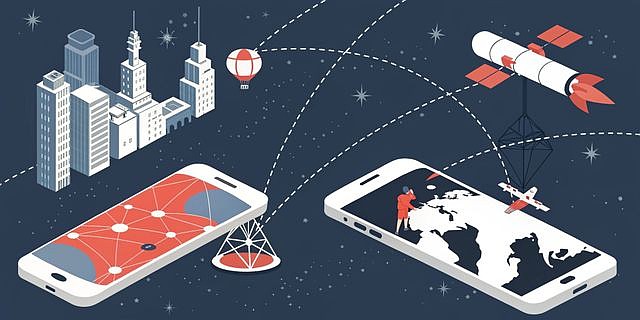
Location technology is entering a new phase of evolution as satellite infrastructure, mobile devices, and geospatial analytics continue to converge. Many users first encounter modern navigation through applications highlighted at https://www.directionsmag.com/best-gps-navigation-apps, yet these tools represent only the visible layer of a much deeper geolocation ecosystem. By 2026, the systems behind GPS and satellite positioning are expanding rapidly and influencing industries far beyond consumer navigation.
The relationship between smartphones and satellite networks is becoming more sophisticated. Modern devices now combine signals from multiple global navigation systems, producing more accurate positioning even in environments where signals were once unreliable.
The global positioning infrastructure supporting modern navigation is growing more complex. New satellites are being launched regularly, expanding the coverage and reliability of positioning networks.
Modern receivers can interpret signals from several constellations simultaneously. This multi-network capability reduces signal loss and improves performance in dense urban areas.
Key improvements expected by 2026 include:
Multi-frequency satellite signals for improved accuracy
Better interference resistance in crowded signal environments
Faster satellite acquisition for mobile devices
Stronger global coverage across remote regions
These developments strengthen the technological foundation of global geolocation services.
Mobile devices have evolved into powerful geolocation platforms. Smartphones now integrate satellite navigation with sensors such as accelerometers, gyroscopes, and cameras.
This combination allows devices to determine position more accurately while maintaining stability even when satellite signals fluctuate. As processors become more powerful, mobile devices can analyze location data in real time.
These capabilities enable smartphones to support advanced services including augmented reality navigation, indoor positioning, and real-time environmental mapping.
| Technology | Function |
|---|---|
| GNSS Receiver | Determines position using satellite signals |
| Accelerometer | Detects movement and orientation |
| Gyroscope | Stabilizes motion tracking |
| Camera Systems | Supports visual positioning and mapping |
Together these technologies create a powerful positioning ecosystem within modern mobile devices.
Cities increasingly rely on location intelligence to manage transportation and infrastructure. Traffic management platforms analyze vehicle movement to reduce congestion and improve road efficiency.
Public transportation systems also benefit from real-time positioning. Buses, trains, and other transit vehicles transmit their location continuously, allowing passengers to receive accurate arrival information.
Urban planners use spatial analytics to understand mobility patterns and improve infrastructure planning. Geolocation data helps identify areas where roads, utilities, or transit networks require expansion.
Automation technologies are driving new demand for high-precision positioning systems. Autonomous vehicles, agricultural machinery, and robotic delivery platforms depend on reliable geolocation to operate safely.
These systems combine GPS data with sensor arrays, digital maps, and artificial intelligence. The integration allows machines to understand their surroundings and adjust movement accordingly.
Accurate positioning becomes essential when machines operate without direct human control.
Global supply chains rely heavily on GPS tracking systems to monitor shipments and transportation networks. Companies use location data to follow goods as they move across international routes.
Real-time tracking improves operational efficiency by allowing logistics managers to adjust schedules and routes quickly. It also increases transparency for consumers waiting for deliveries.
Benefits of location-based logistics include:
Real-time shipment tracking
Faster response to route disruptions
Improved delivery predictions
More efficient inventory planning
These advantages make geolocation technology a central component of modern commerce.
The geolocation revolution unfolding by 2026 is driven by the combination of advanced satellites and intelligent mobile devices. Smartphones act as the interface for users, while satellites provide the positioning infrastructure that makes location services possible.
As positioning accuracy improves and geospatial analytics becomes more sophisticated, location technology will influence nearly every sector of the digital economy.
From navigation apps to autonomous systems, the next era of geolocation is defined by deeper integration between satellites, devices, and data platforms. The shift from simple mapping tools to complex spatial intelligence systems marks one of the most important technological transitions of the coming decade.