Helping Rhinos has built its reputation on a simple but demanding idea: conservation only works if it protects wildlife, restores habitat, and improves lives at the same time.
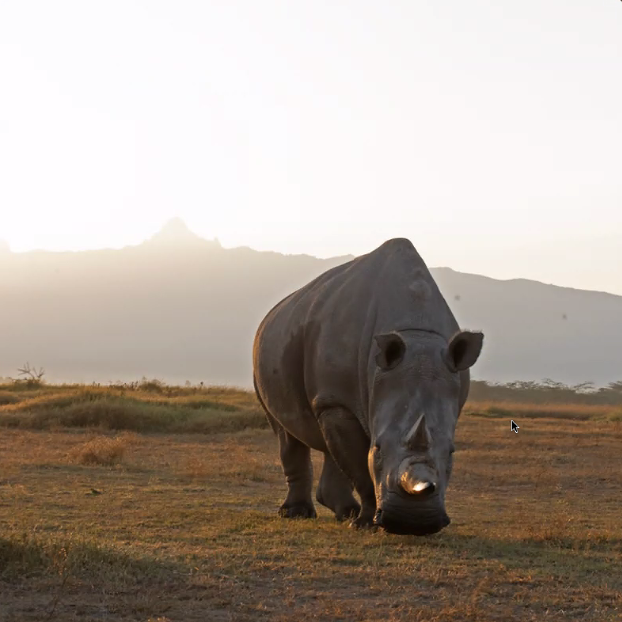
The global conservation organization focuses on securing the long-term survival of rhinos by creating “Rhino Strongholds,” large, protected wild spaces where populations can thrive naturally. These landscapes are designed not just as refuges from poaching, but as functioning ecosystems that support biodiversity and provide economic stability for surrounding communities .
In a sector that often measures success in population graphs and annual statistics, Helping Rhinos has taken a more difficult path. Its leaders argue that survival alone is not enough. Welfare, resilience, governance, and community alignment matter just as much as birth rates.
That philosophy did not emerge in theory. It was shaped by loss.
Conservation is rarely portrayed in its hardest moments. Yet Helping Rhinos has been open about the deaths of orphaned rhinos such as Ntoto and Isomiso in 2018. Those losses became an inflection point.
Traditional conservation metrics focus on how many animals are saved or how fast a population grows. But field realities are more complex. After those setbacks, Helping Rhinos broadened its definition of success to include how the organization responds when things go wrong.
The team worked alongside veterinary partners to review health monitoring, biosecurity protocols, response times, and rehabilitation staging. The result was not just procedural refinement, but a cultural shift toward a more evidence-led, reflective approach to welfare .
Today, success for Helping Rhinos includes continuous learning. It includes transparency with supporters. It includes strengthening systems so that future risks are reduced, even if they can never be eliminated entirely .
That evolution is significant. In a field where public pressure can encourage overly optimistic narratives, Helping Rhinos has chosen accountability over optics.
Helping Rhinos operates with clarity about the forces working against rhino survival. Poaching driven by illegal wildlife trade remains the most immediate danger. Habitat loss continues as human expansion and agriculture shrink available wild space. And disengaged communities, without meaningful economic benefit from conservation, can undermine long-term protection efforts .
The organization structures its work around three pillars: Protect Wildlife, Preserve Habitat, and Provide for People .
Protection includes anti-poaching security, surveillance, and wildlife monitoring. Preservation focuses on expanding and reconnecting landscapes so rhinos can move, graze, and shape ecosystems naturally. Provision centers on education, job creation, ranger training, and sustainable livelihood opportunities for local communities.
It is an integrated model by design. Remove one pillar and the structure weakens.
Climate volatility is no longer a theoretical concern for conservation groups operating in southern Africa. Extreme rainfall events, prolonged droughts, and shifting vegetation patterns are operational realities.
Helping Rhinos has responded by focusing on preparation rather than reaction. Vaccination programmes, adaptive land management, and habitat expansion are designed to reduce vulnerability to climate shocks .
Rhino Strongholds themselves function as climate resilience tools. By expanding and connecting protected areas, wildlife gains the space to migrate and adapt with minimal human intervention .
This is a strategic shift from isolated reserves toward landscape-scale planning. Larger, connected ecosystems reduce management pressure, support multiple species, and allow natural ecological processes to operate more freely.
Rhinos are keystone species. Their grazing patterns shape vegetation, influence soil health, and support biodiversity beyond their own survival . In that sense, protecting rhinos is not a single-species campaign. It is a lever for ecosystem stability.
Conservation landscapes do not assemble themselves. In regions such as South Africa’s Eastern Cape, multiple landowners and conservation bodies must align around shared goals to create contiguous protected areas .
Helping Rhinos emphasizes that trust is not a soft concept. It is operational infrastructure.
Annual partner reviews, regular field engagement, and candid conversations maintain alignment. The organization evaluates leadership not only on passion but on governance, transparency, and measurable outcomes across wildlife protection, habitat preservation, and community development .
This approach limits the risk of fragmentation. Conservation efforts can easily become siloed, driven by short-term wins or funding cycles. Rhino Strongholds require long-term thinking and shared accountability.
In practice, that means weighing risk carefully. There is no zero-risk scenario in conservation. Fortress-style protection may reduce immediate threats, but it can limit ecological function. Helping Rhinos defines acceptable risk as the point where animals can fulfill their ecological roles within expanded, secure landscapes, supported by strong monitoring and rapid-response capacity .
It is a philosophy that favors self-sustaining systems over perpetual intervention.
If Rhino Strongholds are the structural backbone of Helping Rhinos, community partnership is the operating engine.
The organization’s model has evolved from consultation to collaboration. Local communities help shape decisions about school development, land management, and conservation job priorities .
Education centers, ranger training programmes, and outreach initiatives are designed to deliver tangible benefits. When conservation improves livelihoods and opportunity, it builds defenders from within the community .
This is not simply a moral stance. It is a pragmatic strategy. Disengaged communities represent one of the three primary threats to rhino survival . Engagement reduces that risk.
Over time, this approach strengthens regional stability. Conservation becomes part of local economic infrastructure rather than an external imposition.
When difficult moments arise, the organization communicates what happened, why it happened, and what has changed as a result . Supporters are not shielded from complexity. They are brought into it.
This approach reflects a broader leadership philosophy. Passion drives conservation work, but structure sustains it. Annual reviews, measurable benchmarks, and long-term planning ensure that emotional commitment is matched by accountability .
The result is credibility. Donors and partners are more likely to stay engaged when they see evidence of learning and resilience rather than curated optimism.
Looking ahead, Helping Rhinos sees integration as the defining capability for future impact. Advanced tracking systems, drone surveillance, and data-led decision-making will continue to strengthen field protection .
But technology is only part of the equation. Investment in local leaders, educators, and rangers will determine whether conservation gains hold over decades .
As the organization expands into new regions and eventually supports additional rhino species, the Rhino Strongholds model remains the foundation. Landscape-scale protection, community alignment, and ethical decision-making are not side strategies. They are the strategy .
Helping Rhinos has positioned itself not simply as a defender of an endangered animal, but as an architect of resilient ecosystems.
The distinction matters.
Rhino numbers are a visible metric. But long-term survival depends on something less easily charted: trust between landowners, credibility with donors, engagement from communities, adaptive management in the face of climate volatility, and a willingness to confront loss without retreating from transparency.
Helping Rhinos has made that broader definition of success central to its identity .
For an organization working in one of the world’s most high-risk conservation arenas, that shift may prove as consequential as any anti-poaching operation or habitat expansion.
Because in the end, securing the future of rhinos requires more than protection. It requires systems strong enough to endure.