
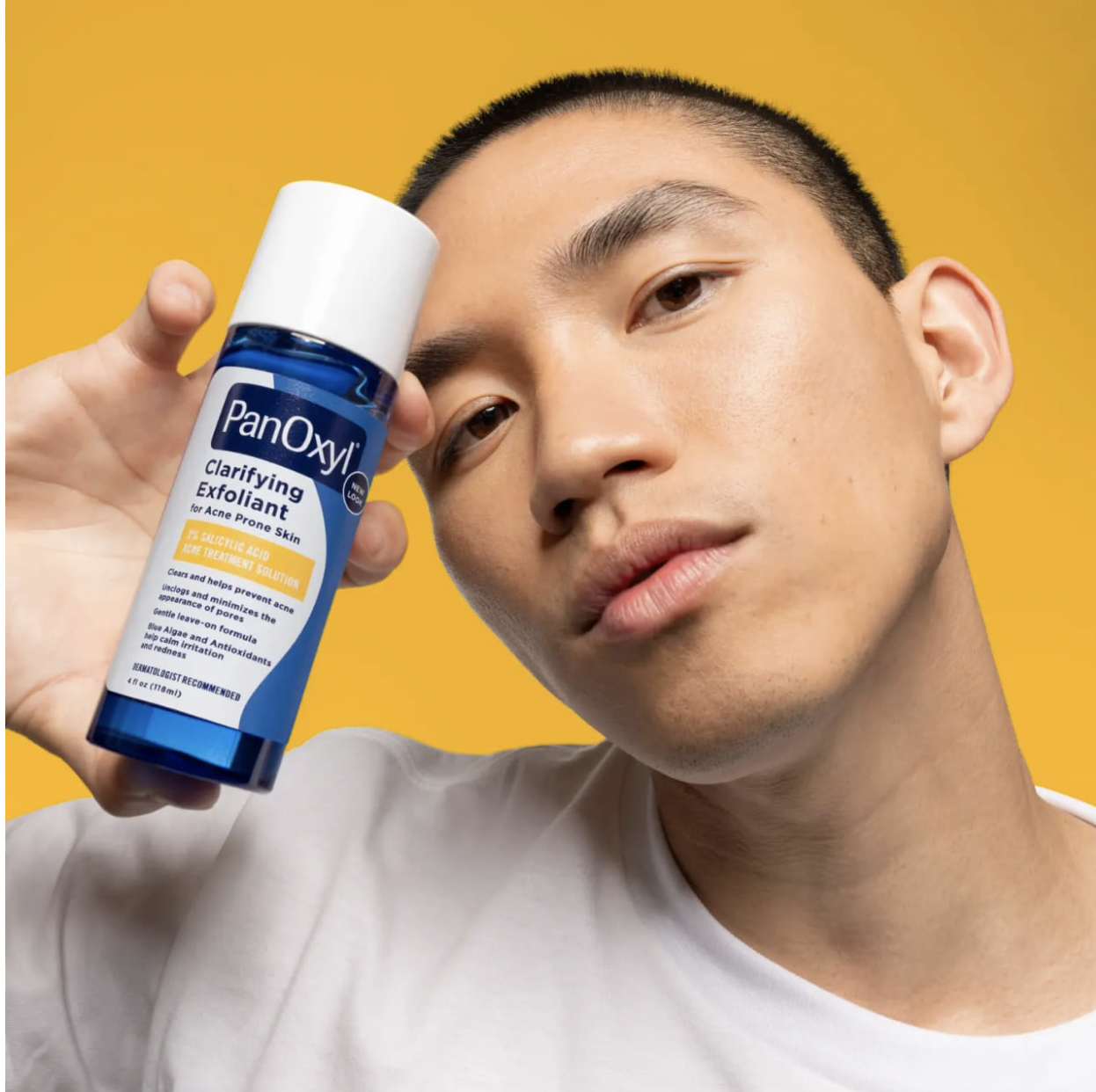
Blackheads happen when oil and dead skin cells clog your pores and turn dark after being exposed to air. A chemical exfoliant with 2% salicylic acid gets inside the pore to dissolve the blockage.
If you've ever had to deal with blackheads on a regular basis, you’ll know that they’re stubborn, unsightly and can really knock your confidence. They’re annoying in a way that’s different from regular breakouts and tend to appear on your nose or chin - which couldn’t be more prominent and visible. Knowing how to get rid of blackheads can be a real blessing.
Some people turn to pore strips when they get what’s also known as an open comedone, and while they might get some satisfaction watching what gets collected, it won’t keep them away for long. That’s because the best tool for this job is a clarifying exfoliant.
Understanding How to Get Rid of Blackheads - What's Really Going On?
Learning how to get rid of blackheads is far easier when you first grasp why they happen. So, what’s really going on? They form when your pores (hair follicles) get jammed up with a blend of dead skin, dirt and oil, which then gets exposed to air and oxidizes. That’s why they end up looking black and a little bit grimy - even though there’s often no actual dirt there.
Your skin is always making new oil and shedding old cells, so blackheads can keep forming even when you're doing everything right with your skincare. Some people just have to deal with them more than others, with the following typically being true:
If you have combination skin, you’ll usually find blackheads clustering around your nose, forehead, and chin. These areas pump out more oil than the rest of your face, so it makes sense that's where blackheads love to set up camp.
Why Going Chemical Beats Going Physical
If you opt for a scrub when tackling blackheads, it can feel like it’s really doing something because you can feel it working on your skin. The problem is that it's likely only working on the surface. It can't get into your pores to break up what's stuck in there, which is where blackheads actually live.
The smart move is to go for a daily exfoliant with 2% salicylic acid means you're actually treating the problem instead of just temporarily masking it. You're not scrubbing harder or ripping strips off your nose, you're giving your skin something that can work inside the pore.
What You Should Notice Pretty Soon
Around the two-week mark, you should start seeing fewer new blackheads popping up. The ones that are already there will clear out gradually as your skin does its thing and renews itself. The longer you stick with it, the better things get.
One thing you can't skip is sunscreen during the day. Chemical exfoliants make your skin more reactive to UV, so if you're not protecting it, you're asking for irritation and possibly worse.
Grasping How to Get Rid of Blackheads Can Be Easy
You don't need fancy treatments or a ten-step routine to deal with blackheads. What you need is an ingredient that can get into your pores and do something useful. An exfoliant with salicylic acid does that job, and when you use it consistently, your skin stays clearer. That's really all there is to it.
So, before you start scrubbing the life out of your blackheads and hoping for the best, skip it and use a chemical exfoliant. It’s easily the best way to treat them.