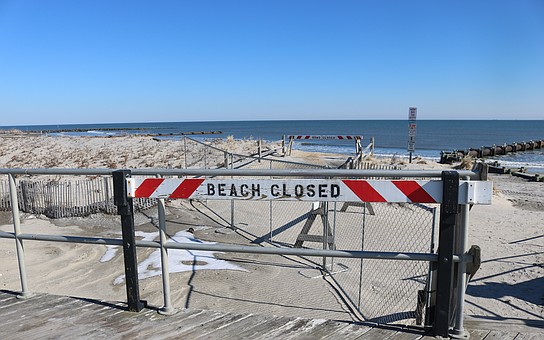
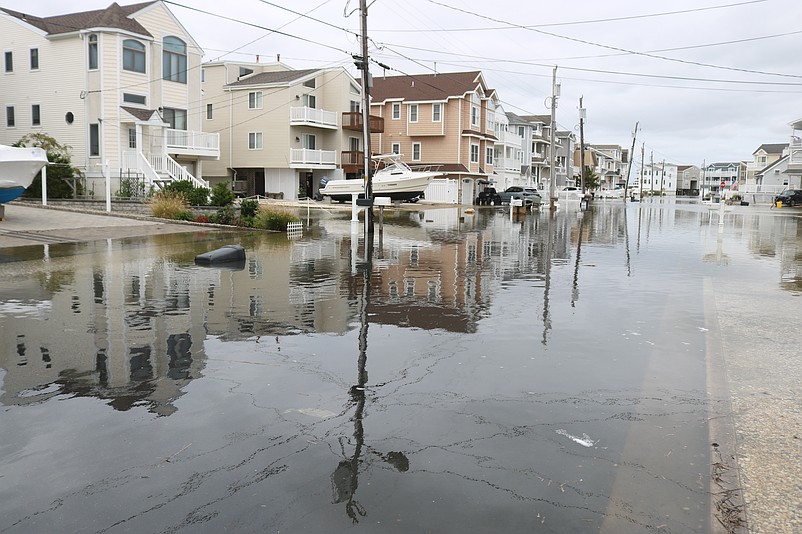
Storm flooding remains a chronic threat at the shore. Here, flooding leaves a section of Sea Isle City's Sounds Avenue underwater in September 2024.
Cape May County has joined forces with two other counties in a legal battle against newly enacted state regulations that impose tougher construction requirements to protect homes from flooding caused by rising sea levels.
The New Jersey Department of Environmental Protection regulations – called Protection Against Climate Threats Resilient Environments and Landscapes rules, or PACT/REAL – went into effect in January.
Among the changes, the rules raise the elevation requirements for buildings, expand flood zones and tighten construction standards – heavily impacting coastal areas such as Cape May County’s shore communities.
In response, Cape May, Ocean and Monmouth counties have agreed to appeal the regulations in state Superior Court.
“These actions reflect Cape May County’s continued commitment to protecting our residents, municipalities, and local economy,” Cape May County Board of Commissioners Director Leonard Desiderio said in a statement. “Through our Shared Services Agreement with Monmouth and Ocean counties, we are ensuring a coordinated and fiscally responsible legal strategy.”
“Together, we are challenging regulations that we believe exceed legal authority, impose significant unfunded mandates, and create serious consequences for housing, infrastructure, and property rights throughout New Jersey’s coastal regions,” continued Desiderio, who also serves as mayor of Sea Isle City.
Although they say they support protective measures for the coastal communities from rising sea levels, Cape May County officials argue that the regulations are simply too harsh and would cripple shore development and homeownership.
The appeal by the three counties asserts that the PACT/REAL regulations:
• Exceed the N.J. Department of Environmental Protection’s statutory authority.
• Were adopted through a process inconsistent with administrative law.
• Impose regulatory requirements that are arbitrary and unsupported.
• Create conflicts with constitutionally protected housing obligations.
• Result in significant economic burdens on residents and local governments.
On behalf of the agency, NJDEP spokesman Larry Hajna declined to comment Wednesday on the pending litigation.
 Cape May County Board of Commissioners Director Leonard Desiderio, who also serves as mayor of Sea Isle City, believes the PACT/REAL rules are too harsh.
Desiderio said Cape May County continues to work closely with its partner counties, the New Jersey Association of Counties and municipal officials in what is described as a “coordinated regional effort” to fight the state regulations.
The PACT/REAL regulations have been met with strong opposition in Cape May County. The county and all 16 of its municipalities have adopted resolutions criticizing the rules.
Now, the opposition has expanded to include the appeal with Ocean and Monmouth counties. The shared services agreement allows the counties and municipalities to work together and share the legal costs as the litigation continues.
Monmouth County Board of Commissioners Director Thomas A. Arnone said the litigation is about “standing up for our residents while advocating for practical, balanced climate policies that recognize local realities.”
“Monmouth County supports responsible environmental protection, but these rules go far beyond what is reasonable or workable for our communities. The PACT/REAL regulations impose sweeping mandates that would significantly impact homeowners, municipalities, and local businesses without providing the flexibility or clarity needed to adapt effectively,” Arnone said in a statement.
On Feb. 19, the City Council in Ocean City gave final approval to a zoning ordinance that will help local homeowners comply with the PACT/REAL rules when they build their new houses.
The state regulations will require new homes to be built 2 feet higher at the base floor level to help protect them flooding. Ocean City’s new ordinance counters the state requirement by adding 2 extra feet to the height – or rooftop of new homes.
Ocean City officials believe that the PACT/REAL rules would cut down on the amount of living space in new homes if nothing is done to compensate for the extra 2 feet of elevation required at the base of a house.
The Council members indicated that the ordinance would allow Ocean City to comply with the state regulations without causing homeowners any serious difficulty when building their new houses.
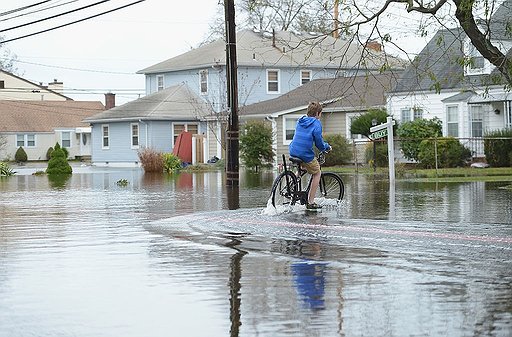 The state rules are designed to help protect coastal communities against climate impacts, including rising sea levels. (Photo by Michael Loccisano/Getty Images)