
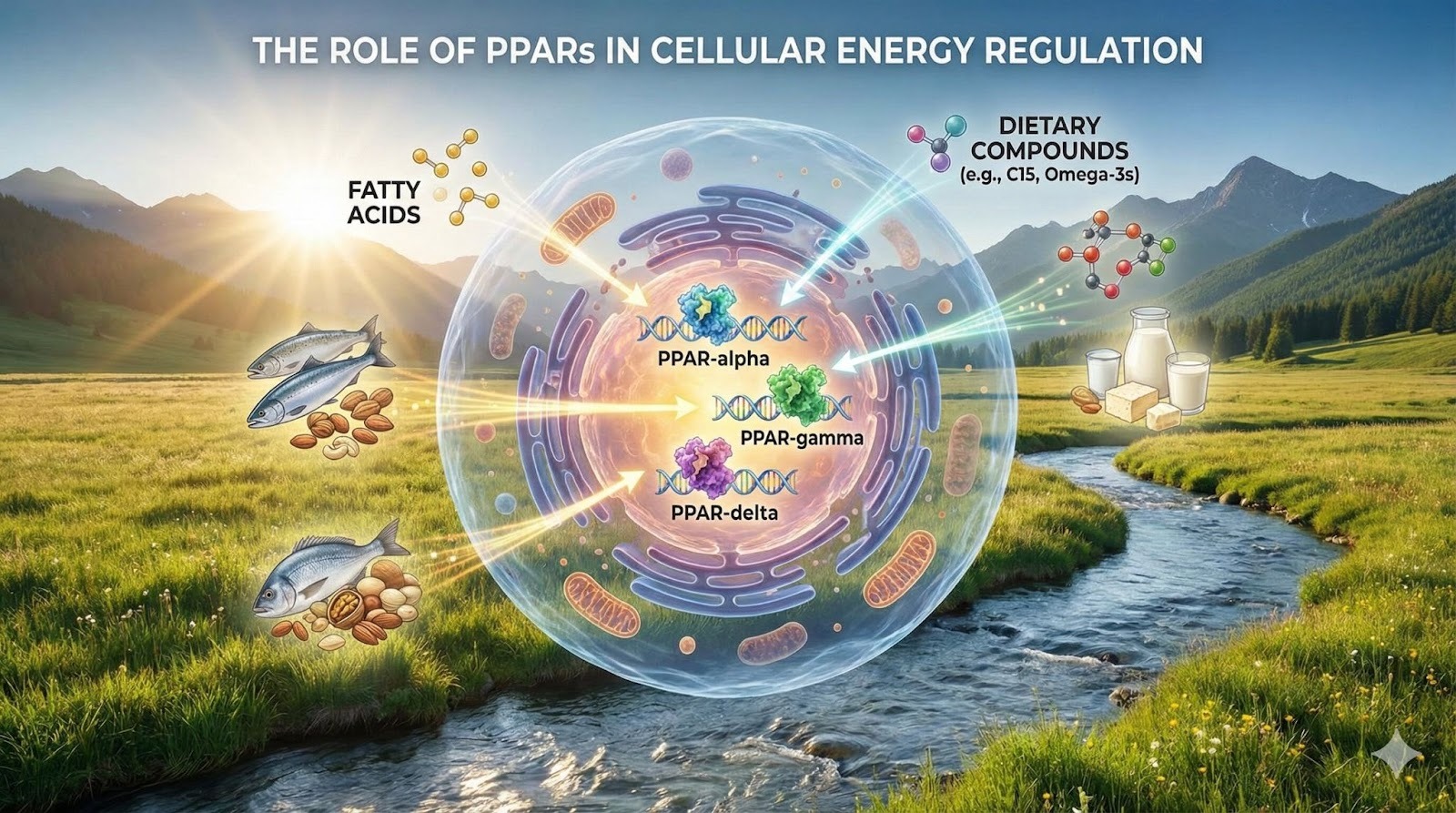
PPARs are a family of proteins that play an important role in how cells manage energy, fats, and sugars. The name stands for peroxisome proliferator-activated receptors, reflecting how they were first identified and how they function at the cellular level.
Although the term may sound technical, PPARs are frequently discussed in nutrition and metabolic research, including conversations around dietary fats and compounds found in products such as a C15 supplement, omega-3s, and beyond.
This article explains PPARs and their functions within the body, so you can better understand your metabolism and overall health.
PPARs are nuclear receptors, meaning they are located in the nucleus and directly influence gene expression. When certain molecules bind to a PPAR, the receptor becomes activated and signals specific genes to increase or decrease their activity. These genes are involved in processes such as fat storage, energy use, and glucose metabolism.
Rather than acting as hormones themselves, PPARs respond to fatty acids and fat-derived compounds that come from food or are produced within the body. Once activated, they help regulate how cells process these fats, determining whether they are stored, broken down for energy, or used for structural purposes. This gene-level control is why PPARs are considered central regulators of metabolism.
There are three main types of PPARs, each with distinct functions and areas of influence. PPAR-alpha is primarily involved in fat metabolism and is most active in tissues that burn large amounts of energy, such as the liver and muscles. It helps regulate how fats are broken down and used for fuel.
PPAR-gamma is closely associated with fat storage and insulin sensitivity. It plays a key role in how fat cells develop and how the body manages blood sugar levels. PPAR-delta, also known as PPAR-beta, is involved in overall energy balance and is active in many tissues throughout the body. Together, these receptors coordinate the body's response to different energy demands.
PPARs help the body adapt to changes in diet, activity, and energy needs. When food intake changes, PPARs help adjust how nutrients are processed and stored. For example, during periods of higher fat intake, certain PPARs become more active to manage the increased availability of fat.
This adaptability is essential for maintaining balance within the body. By regulating gene expression, PPARs help ensure that energy is used efficiently and that excess nutrients are handled appropriately. This regulatory role is why PPARs are frequently studied in relation to metabolic efficiency and long-term health.
In nutrition research, PPARs are often studied for their interactions with dietary fats. Different types of fatty acids can activate PPARs to varying degrees, influencing how the body responds to specific foods. This has led researchers to explore how dietary fat composition affects metabolic processes at the genetic level.
PPAR activity helps explain why not all fats have the same effects in the body. Some fats are more readily used for energy, while others are more likely to be stored. By understanding how PPARs respond to these differences, researchers gain insight into how dietary patterns influence overall metabolic function.
PPARs remain a major focus of scientific research due to their broad influence on metabolism. Researchers examine how these receptors function under various conditions, including changes in diet, physical activity, and aging. This research aims to better understand how metabolic regulation shifts over time and how it can be supported through lifestyle choices.
Because PPARs regulate gene expression, they are also studied for their long-term effects. Changes in PPAR activity may influence how the body adapts to consistent dietary habits, making them relevant in discussions about sustained nutritional patterns rather than short-term changes.
Certain naturally occurring compounds bind to and activate PPARs. These include specific fatty acids and lipid-derived molecules that signal the body to adjust energy use. Research into these interactions helps clarify how everyday dietary components influence metabolic pathways.
This area of study has expanded interest in how targeted nutritional approaches might support normal metabolic processes. Rather than focusing on isolated nutrients, researchers often examine how complex dietary patterns affect PPAR activity across different tissues.
PPARs are sometimes described as switches that can be turned on or off to control metabolism. In reality, their activity is more nuanced. PPARs respond continuously to changes in the internal environment, adjusting gene expression gradually rather than producing immediate effects.
Another common misunderstanding is that PPARs act independently. In fact, they work alongside many other signaling systems in the body. Their effects depend on interactions with other receptors, enzymes, and cellular conditions.
PPARs are essential regulators that help the body manage energy, fats, and sugars at a genetic level. By responding to dietary fats and internal signals, they support metabolic balance and adaptability.



