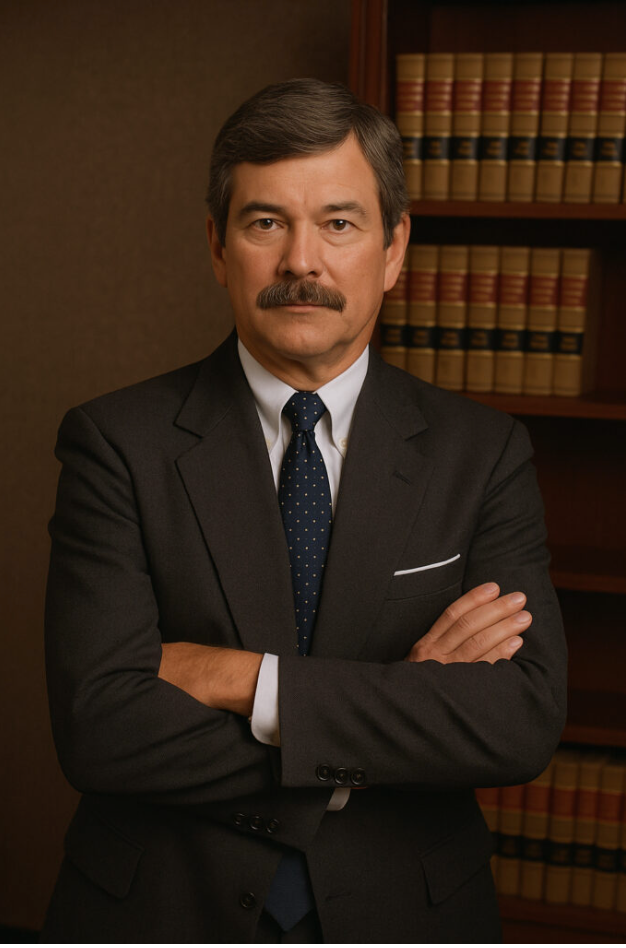
Jim Bain has spent decades shaping the practice of construction and commercial real estate law in Colorado. His career reflects steady progression rather than sudden turns. From academic achievement to public service and private practice leadership, his work has remained centered on careful analysis, clear writing, and professional responsibility. In an interview setting, Bain speaks plainly about the experiences that shaped his approach to law and why Colorado became the place where his career reached full maturity.
Jim Bain describes his professional life as one defined by preparation and patience. He entered the legal field at a time when construction law was becoming more complex and more central to economic growth in the West. Over the years, his work has touched litigation, arbitration, teaching, and professional leadership. Each stage built on the one before it.
Academic Foundations and Early Direction
Bain graduated from the University of Connecticut in 1972 with honors and membership in the Phi Beta Kappa Honor Society. He recalls that his undergraduate years established habits that carried into law school, including close reading, disciplined writing, and respect for precedent. Those habits became essential when he continued his education at the University of Florida College of Law, where he graduated in 1976 with honors.
While in law school, Bain gravitated toward trial work and appellate reasoning. He found that explaining legal principles clearly was as important as mastering them. That interest later led him to teaching roles at the University of Florida and the University of Colorado law schools, where he taught Trial Practice, Appellate Advocacy, and related courses. He notes that teaching sharpened his own skills because students quickly exposed weak reasoning or unclear language.
Early Professional Experience with the Tennessee Valley Authority
After completing his formal education, Bain accepted a position with the Tennessee Valley Authority legal department. At the time, the department employed about ninety attorneys and handled complex matters involving infrastructure, energy, and regulation. Bain served as a trial attorney and gained experience working within a large institutional client.
One of the defining moments of this period came in 1980, when Bain was placed in charge of the damage analysis team in the Uranium Antitrust Litigation, MDL 342. The litigation was significant in scope and demanded coordination across disciplines. Bain and his team ultimately helped the client recover two hundred fifty million dollars from Gulf Oil. He views this experience as formative because it required rigorous analysis, collaboration, and accountability.
Transition to Colorado and Private Practice
In 1985, Bain joined Roath and Brega, a leading Colorado law firm. He became a partner within one year, at a pace that reflected both the firm's confidence and his growing reputation. Colorado offered opportunities to work closely with construction and real estate clients during a period of sustained development. Bain found that the state's legal environment valued practical solutions grounded in strong legal reasoning.
By 1990, he became a partner in Brega and Winters, where he continued to focus on construction litigation and related commercial disputes. His work during this period deepened his understanding of how legal decisions affected builders, developers, and public entities across Colorado.
Founding a Boutique Practice
In 2004, Bain became a founding partner of Benjamin Bain and Howard. The firm was created with a clear purpose: to provide focused representation in commercial real estate and construction law. Bain believed that a smaller practice could offer deeper attention to complex matters without the overhead of a large firm.
The firm expanded in 2009 with the addition of Al Cohen and became Benjamin Bain Howard and Cohen. All four partners were selected as Super Lawyers, and the firm was featured in a Newsweek showcase of Colorado lawyers. It was recognized as a boutique commercial real estate law firm in Denver. Bain attributes the firm's reputation to consistency rather than marketing. Clients returned because they trusted the work.
Writing and Thought Leadership in Colorado Law
Beyond litigation, Bain has played a long role in legal writing and professional education. He served as Editor of the Construction Forum of The Colorado Lawyer, the publication of the Colorado Bar Association, for more than twenty years. In that role, he reviewed articles, shaped discussion topics, and helped set standards for professional discourse.
His own published works include articles in The Colorado Lawyer, The Construction Lawyer, and the University of Denver Law Review. Topics ranged from negligence in construction claims to major shifts in Colorado construction law. These writings are still cited for their clarity and practical value.
Selected publications include discussions on builder-vendor liability, public construction contracting, and landmark legal changes affecting the industry. Bain explains that writing forced him to test ideas against real-world consequences. If a theory could not be explained clearly on the page, it likely would not succeed in practice.
Professional Leadership and Service
Bain has also been deeply involved in professional organizations. He served as Chairman of the legal advisory committee for the Associated General Contractors of Colorado for five years. In that role, he worked closely with industry leaders to address legal challenges facing contractors and developers.
He is a member of the National Panel of Arbitrators for the American Arbitration Association, handling commercial and construction cases. Arbitration demands a balanced approach, and Bain emphasizes fairness, preparation, and respect for all parties. He believes the role of an arbitrator is not to impose personal views but to apply the law carefully to the facts presented.
Bain has presented numerous legal seminars for the Colorado Bar Association, the American Bar Association, and other professional groups. He has also served as Seminar Chairman for the Institute for Advanced Legal Study. Teaching practicing lawyers, he says, is different from teaching students because peers expect direct answers grounded in experience.
Recognition Earned Over Time
Recognition came steadily rather than suddenly. Bain received the Civil Litigation Writing Award for 1986 and 1987 from the Colorado Bar Association. He was selected for Outstanding Lawyers of America, a designation limited to one hundred attorneys per state. He was also listed in Marquis Who’s Who in American Law, Who’s Who in America, and Who’s Who in the World.
Bain views these honors as byproducts of consistent work rather than goals. He notes that long-term professional respect comes from how colleagues and clients experience day-to-day interactions.
Reflections on Practice in Colorado
Asked why Colorado became central to his career, Bain points to the state's balance of growth and community. Construction law here intersects with public policy, environmental concerns, and private investment. That mix requires lawyers to understand not only statutes and cases but also the practical realities faced by clients.
He also credits Colorado’s legal community for valuing professionalism. Serving in editorial and advisory roles allowed him to contribute beyond individual cases. Bain believes that a strong legal profession depends on shared standards and open discussion.
A Career Defined by Consistency and Craft
Throughout the interview, Bain returns to the importance of craft. Whether teaching, writing, arguing a case, or editing a journal, he focused on doing the work carefully. He avoided shortcuts and encouraged younger lawyers to do the same. Success, he argues, is less about visibility and more about reliability.
Bain’s career shows how sustained effort in one jurisdiction can shape an area of law. His influence can be seen in published decisions, professional standards, and the many lawyers he has taught and mentored over the years.
Continuing Influence in Colorado Law Practice
As his career continues, Bain remains engaged in arbitration, writing, and advising. He sees the law as an ongoing practice rather than a completed chapter. New disputes bring new questions and require the same careful thinking that guided his earliest cases.
For those looking at the arc of Jim Bain’s career, Colorado stands not just as a location but as a professional home where legal knowledge, teaching, and service came together over decades of steady work. His career offers a clear example of how depth, experience, and commitment shape lasting professional impact.