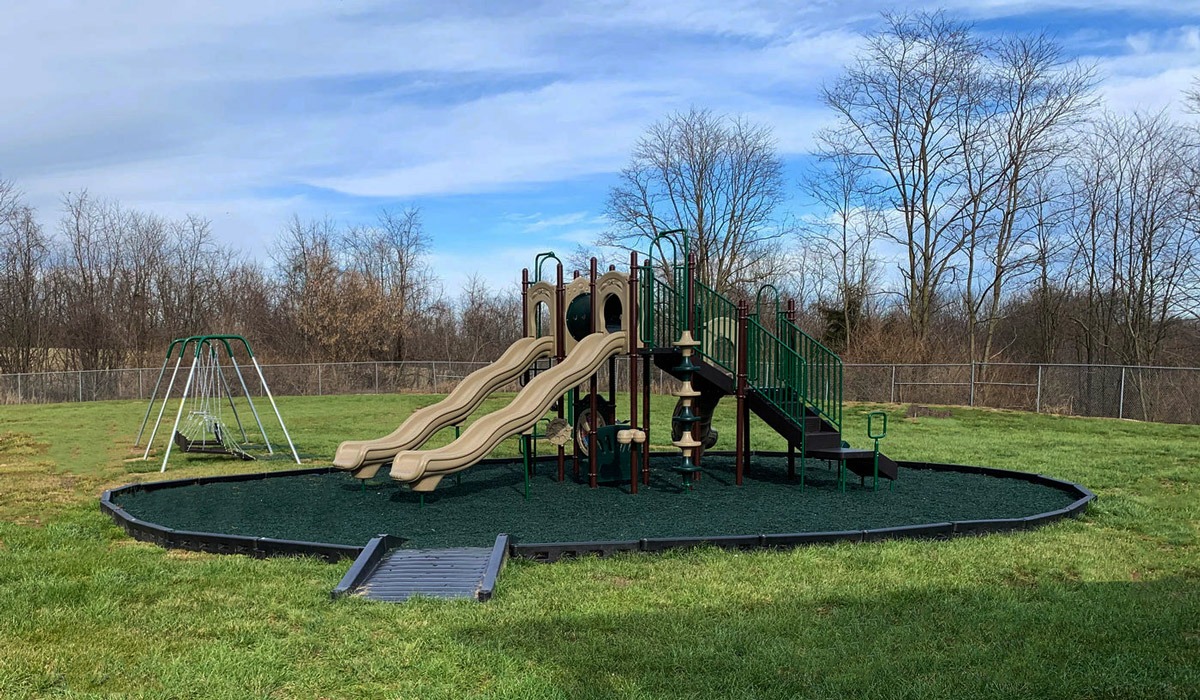
Photo from WillyGoat
Developing upper-body strength, agility, and fine motor skills starts with the right equipment choices. Climbing walls, obstacle course elements, and inclusive play panels go beyond simple recreation to engage students fully.
These installations foster social problem-solving and cognitive development during recess, making them essential investments for schools. Recess offers a prime opportunity for children to burn off energy and build friendships. Administrators must select layouts that inspire movement and meet rigorous safety standards.
When reviewing catalogs of school playgrounds, prioritization should focus on vertical climbers and agility circuits. Below is a comparison of features that support healthy movement and cognitive play.
Climbing engages more muscle groups than almost any other playground activity. Upper-body pulling, core stabilization, and dynamic balance all come into play during a traverse.
Studies indicate that playground features were significantly associated with moderate-to-vigorous physical activity and energy expenditure. This physical exertion, especially when using high-quality school playground equipment from WillyGoat, directly contributes to students meeting daily activity benchmarks.
Traverse routes encourage turn-taking and verbal encouragement, which are powerful drivers for social-emotional learning. Students often spot for one another, celebrating each new handhold conquered. This interaction fosters a sense of community and mutual support on the playground.
For Grades K–2, low boulders under six feet with generous footholds are ideal. Horizontal traverse walls work best for Grades 3–5, while older students benefit from angled or overhanging panels. Color-coded holds can also guide climbers with visual-processing needs.
Obstacle circuits create short bursts of speed and power, functioning as mini high-intensity interval sessions. Research shows that for every 10 additional play facilities the children had access to was an increase in the average accelerometer counts of 14%. Hopping pods, swinging rings, and balance beams improve bilateral coordination and core endurance.
Relay races and timed challenges turn solo tasks into team victories. Peer spotting during these activities builds empathy and trust among classmates. These shared goals help integrate students who might otherwise play alone.
Deciding the most efficient route demands sequencing and rapid problem-solving. These are skills that translate directly to classroom tasks requiring order and logic. Students learn to assess their physical limits and adapt their strategy in real-time.
Pre-K students benefit from low balance pods spaced 12–18 inches apart. Grades 1–5 enjoy rope tunnels and tilting beams, while middle schoolers prefer ninja-style rigs. Installing parallel routes with varying difficulty allows all students to complete the course together.
Compliance with ASTM F1487 clearance zones is non-negotiable for these high-energy zones. Using ground signage to designate reset lanes helps manage traffic flow effectively. Maintenance teams should perform regular checks on moving hardware to prevent loosening.
Photo from WillyGoat
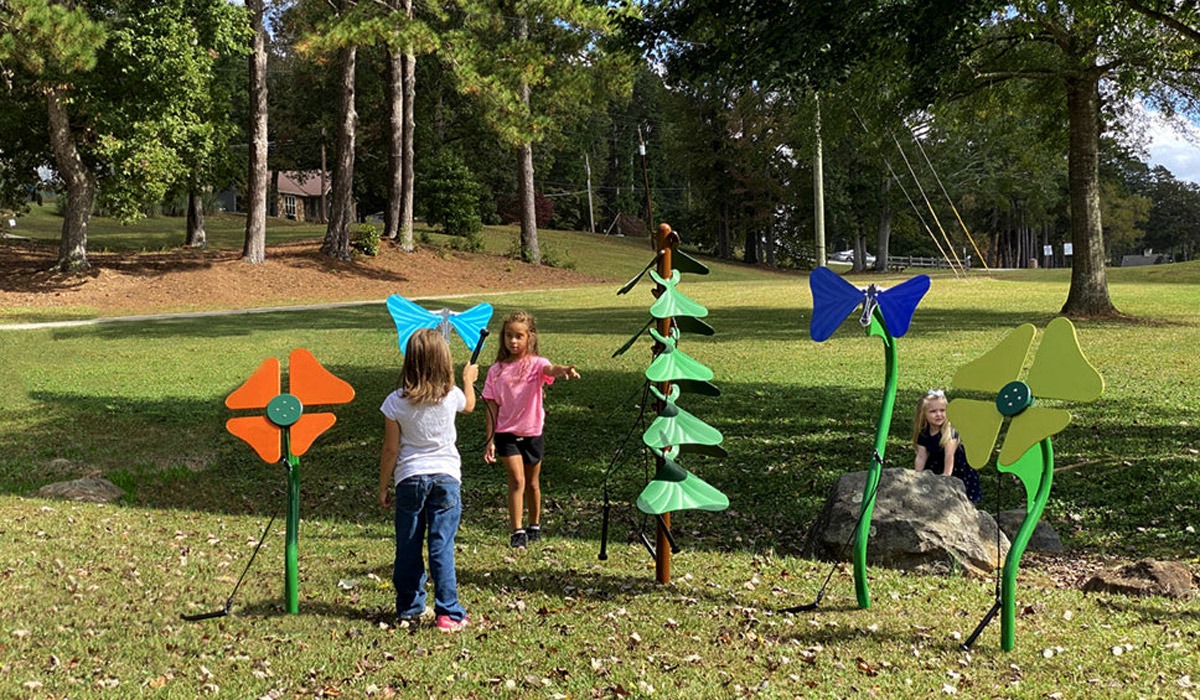
Though often ground-level, panels encourage essential physical engagement and reach. They require push, pull, and fine-motor refinement, making them ideal for occupational therapy goals. This type of equipment ensures that movement is accessible to children of all physical abilities.
Musical chimes or spin-and-solve games facilitate co-play and language-rich exchanges. Playgrounds provide a recreational refuge for children, enhancing their psychosocial skills through these interactions. This is especially beneficial for emerging bilingual learners who connect with peers through play.
Multi-texture panels provide tactile feedback for sensory exploration. Audible tones offer instant cause-and-effect reinforcement, satisfying sensory seekers. These features support cognitive growth by engaging multiple senses simultaneously.
These panels are generally designed for ages 2–12. ADA transfer stations should be 17 inches or lower with a 36-inch clear width. Ground-level access ensures that wheelchairs and walkers can approach the equipment easily.
By blending vertical challenges, fast-flow circuits, and sensory-rich panels, schools create playgrounds that nurture mind and body. When that mix is backed by rigorous safety standards and thoughtful supervision, the result is happier, healthier students. This approach ensures children carry an active mindset straight back to the classroom.