Per- and polyfluoroalkyl substances (PFAS) have become one of the most pressing environmental and public health challenges of our time. Often referred to as “forever chemicals,” PFAS are highly persistent, resistant to degradation, and increasingly detected in drinking water, industrial effluents, and natural ecosystems worldwide. As regulators tighten limits and industries seek effective treatment solutions, activated carbon adsorption continues to stand out as one of the most reliable and proven technologies for PFAS removal.
However, not all activated carbon performs the same. The choice between coconut-based activated carbon and coal-based activated carbon can significantly influence treatment efficiency, operating costs, sustainability outcomes, and long-term compliance. In this article, we explore in depth why coconut-based activated carbon consistently outperforms coal-based carbon for PFAS removal, from pore structure and adsorption mechanisms to sustainability and lifecycle performance.
PFAS are a large group of synthetic chemicals used in applications ranging from firefighting foams and non-stick coatings to textiles and electronics. Their molecular structure, characterized by strong carbon–fluorine bonds, makes them exceptionally stable and resistant to heat, chemical reactions, and biological breakdown.
This same stability is what makes PFAS difficult to remove from water. Conventional treatment methods such as biological processes or simple filtration are largely ineffective. PFAS molecules remain dissolved, mobile, and persistent, requiring advanced adsorption or separation technologies.
Among available solutions, activated carbon adsorption has emerged as a frontline defence, especially for long-chain PFAS compounds. The performance of this method, however, depends heavily on the physical and chemical properties of the activated carbon used.
Activated carbon works by adsorption, a surface-driven process where contaminants adhere to the carbon’s internal pore structure. PFAS molecules are attracted to the carbon surface through hydrophobic interactions and electrostatic forces, becoming trapped within the pores.
Key factors that influence PFAS adsorption include:
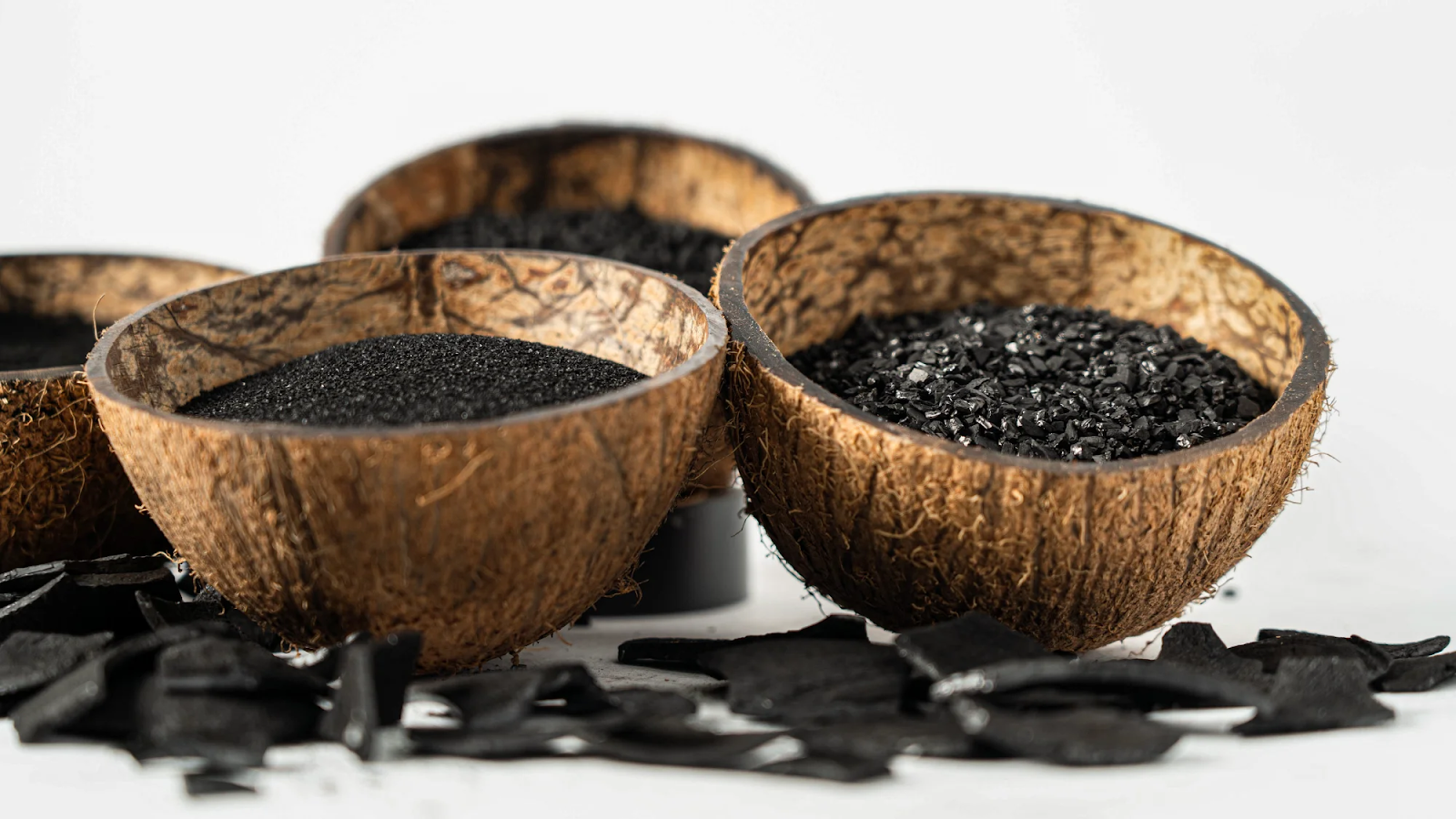
Coconut-based activated carbon is produced from coconut shells, a naturally dense and highly lignocellulosic material. When activated, coconut shells create a carbon structure that is rich in micropores, typically less than 2 nanometers in diameter.
This microporous structure is especially effective for PFAS removal because many PFAS molecules—particularly long-chain variants—fit perfectly within these small pores. The result is stronger adsorption forces and higher removal efficiencies.
Coal-based activated carbon, on the other hand, tends to have a broader pore size distribution with a higher proportion of mesopores and macropores. While this can be beneficial for removing larger organic molecules, it is less effective for removal of PFAS at low concentrations over extended periods.
One of the most practical advantages of coconut-based activated carbon is its longer operational bed life. Due to its high micropore volume and uniform pore structure, coconut-based carbon can adsorb specific PFAS molecules more efficiently before breakthrough occurs.
This means:
For utilities and industries seeking sustainable activated carbon for PFAS removal, coconut-based options offer a clear performance advantage within the first two paragraphs of any serious treatment discussion.
As regulatory limits for PFAS continue to tighten, treatment systems must perform effectively at extremely low contaminant concentrations—often in the parts-per-trillion range.
Coconut-based activated carbon excels under these conditions. Its microporous structure provides a high density of adsorption sites, enabling effective removal even when PFAS levels are very low. This makes it particularly suitable for:
Another important factor is ash content, which refers to inorganic residues left in the carbon after activation. Coconut-based activated carbon typically has a much lower ash content compared to coal-based alternatives.
Lower ash content translates into:
Coal-based carbons, depending on their source, can contain higher mineral content that reduces available surface area and interferes with adsorption efficiency, especially for sensitive contaminants like PFAS.
Beyond performance, sustainability has become a critical consideration in material selection. Coconut-based activated carbon is derived from coconut shells, a renewable agricultural by-product that would otherwise be discarded.
This offers several sustainability advantages:
Coal-based activated carbon relies on non-renewable resources and often involves more energy-intensive processing. For organizations aligning with ESG goals and environmental regulations, coconut-based carbon provides both technical and environmental superiority.
Coconut shells offer a relatively uniform raw material, resulting in more consistent activated carbon quality from batch to batch. This consistency is essential for PFAS treatment systems where predictable performance is critical.
Coal sources can vary significantly in composition, leading to fluctuations in pore structure and adsorption behavior. In large-scale or long-term PFAS treatment projects, such variability can complicate system design and performance forecasting.
Coconut-based activated carbon’s consistency makes it suitable for a wide range of applications, including municipal water treatment, industrial process water, and environmental remediation projects worldwide.
While initial procurement costs may vary, total lifecycle cost is what ultimately matters in PFAS treatment. Coconut-based activated carbon often delivers better value over time due to:
Coal-based carbon may appear cost-effective upfront but can result in higher long-term expenses due to more frequent change-outs and performance limitations.
When evaluating activated carbon solutions for PFAS removal, performance, reliability, and sustainability must all be considered together. Coconut-based activated carbon consistently outperforms coal-based alternatives due to its microporous structure, superior adsorption efficiency, longer bed life, and renewable origin.
As PFAS regulations become stricter and public awareness grows, treatment systems must deliver reliable, long-term results without compromising environmental responsibility. Coconut-based activated carbon meets these demands by combining advanced adsorption performance with sustainability advantages that coal-based carbon simply cannot match.
For organizations seeking a future-ready solution to PFAS contamination, coconut-based activated carbon is not just an alternative—it is the benchmark for effective and responsible PFAS removal.