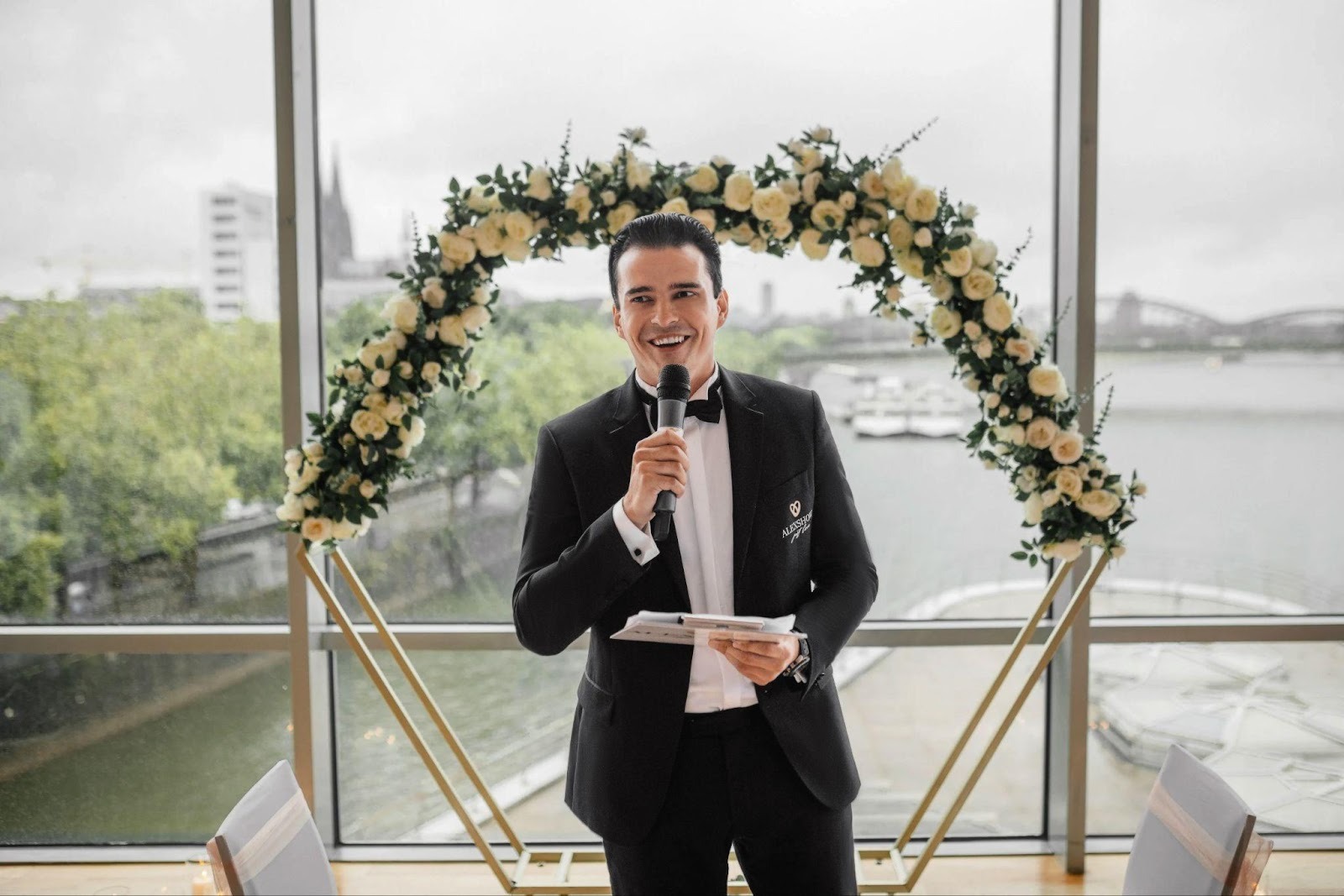
Europe is full of wedding traditions—some elegant and formal, others loud, playful, and highly interactive. When international couples plan a wedding in Germany, they often want the best of both worlds: a celebration that honors their families’ cultural backgrounds while still feeling clear and comfortable for every guest.
That balance usually comes down to two things: cultural understanding (so traditions feel meaningful, not confusing) and good structure (so the day flows smoothly without constant stress).
Across Europe, traditions often serve similar purposes:
The challenge at multicultural weddings is that guests may have very different expectations. Some are used to a host-led evening with structured toasts and interactive moments; others expect a simpler reception with minimal announcements. Without guidance, even beautiful traditions can feel unclear or awkward.
Germany’s wedding format can be flexible—especially in bigger cities where international couples are common. Many weddings blend:
Blending styles works best when transitions are planned intentionally so the evening never feels “split” into separate cultural groups.
In many Eastern European and Eurasian cultures, a Tamada is not just an announcer. The role often includes:
That’s why some international couples specifically look for a wedding host tamada in Germany—because the role is designed for weddings where cultural mediation and clear flow matter as much as entertainment.
1) Choose a few traditions that truly matter.
It’s better to do 2–3 meaningful rituals well than to cram in everything.
2) Explain the “why” in one sentence.
Guests don’t need a long lecture—just enough context to participate naturally.
3) Decide how you’ll handle languages.
Translate only key announcements (timeline, speeches, guest instructions) to keep the evening moving.
4) Build the night around emotional anchors.
Welcome, family moments, toasts, a cultural highlight, first dance, then open party—this rhythm works across cultures.
5) Clarify responsibilities in advance.
Who cues speeches? Who keeps timing? Who communicates with the DJ and venue? Clear roles prevent stress.
Smooth communication isn’t constant talking—it’s clarity at the right moments:
When these pieces come together, the wedding feels effortless—even if it’s culturally complex behind the scenes.