
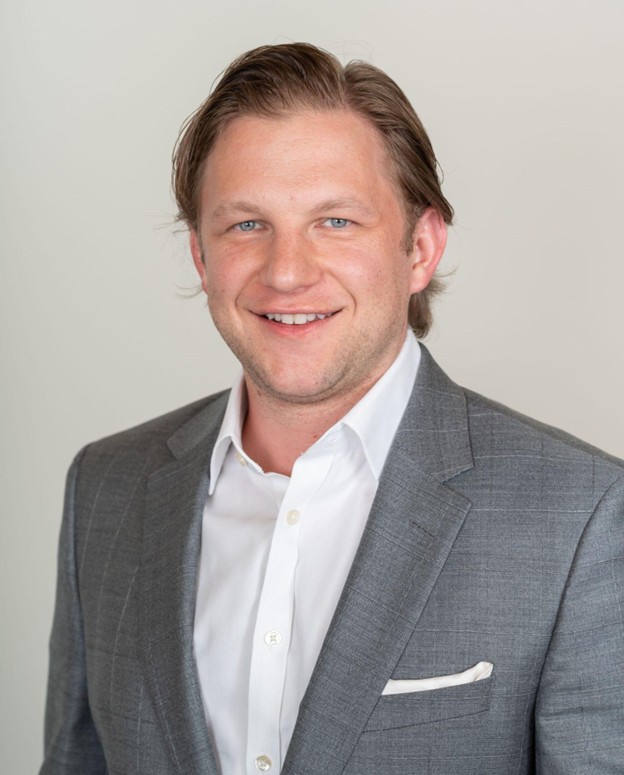
Nickolas Mitilenes remembers watching clinicians struggle, not with diagnosis or treatment, but with systems that failed their patients before care could even begin. Years before he would lead multimillion-dollar laboratory operations or advise health systems on artificial intelligence, those early observations planted a question that would define his career: What if the infrastructure worked as hard as the people inside it?
“My views on ethical leadership emerged from early experiences working directly with clinicians who were doing their best for patients within systems that were not always designed to support timely or fair care,” Mitilenes says. “I saw how small breakdowns in navigation, communication, or accountability could affect outcomes for real families.”
That clarity drove him through 15 years of healthcare leadership spanning national clinical laboratories, health systems and diagnostic ventures. Nickolas Mitilenes built a $30 million reference laboratory, oversaw a $60 million pandemic response operation, integrated acquisitions, launched AI platforms, and designed self-collection diagnostics for illnesses most organizations ignore. Along the way, he learned something most executives miss: compliance isn’t bureaucracy, it’s the skeleton that lets innovation stand.
His career path reads less like a résumé and more like a series of calculated bets on where healthcare was heading. At MedLabs Diagnostics, he scaled a regional reference lab to serve over 450,000 patients annually, driving 22% revenue growth and 102% EBITDA growth over three years. The operation ended in a $45 million private equity exit. Then came president-level roles at Eurofins Clinical Diagnostics, where he integrated NTD Genetics and EGL into a unified maternal-fetal and pediatric genetics business, launching high-volume COVID-19 diagnostics and modernizing bioinformatics infrastructure during a global crisis.
Most recently, as vice president and general manager of the Pandemic Response Laboratory at Opentrons, he led 250-plus employees across three states through strategic planning, infectious disease testing diversification, and operational wind-downs that exceeded financial targets. The work demanded speed, precision and the kind of regulatory discipline that turns chaos into reliable care.
He holds a bachelor’s degree in molecular biology from Colgate University, an MBA from Cornell University, and a master’s degree from Weill Cornell Medicine. He’s currently pursuing a Doctor of Public Health at the Johns Hopkins Bloomberg School of Public Health, focusing on leadership and artificial intelligence. He is a Fellow of the American College of Healthcare Executives and certified by the ASCP as a Diplomate in Laboratory Management and as a Technologist in Molecular Biology. He serves on the Mendham Township Board of Health and has held governance roles with academic and professional organizations throughout his career.
The consulting project should have been straightforward. A new clinical pathology laboratory needed launch support, the timeline was set, the revenue projections looked solid, but then the data showed gaps.
Not catastrophic gaps, just enough to limit the reliability of certain recommendations and enough to matter if you cared about what happened after the ribbon-cutting ceremony. Nickolas Mitilenes and his team had a choice: proceed as planned and hit go-live faster, or pause and explain the limitations to partners who expected results.
They paused.
“That decision delayed financial benefit in the short term, yet it built a level of trust that later allowed for a broader and more successful initiative,” Mitilenes says.
The delay cost immediate revenue, but it purchased something harder to quantify and impossible to fake: credibility. Partners returned with bigger projects, referrals multiplied and the laboratory eventually launched stronger than if corners had been cut.
That kind of transparency doesn’t happen by accident, it requires a culture where compliance isn’t treated as a legal cover but as organizational DNA.
“Compliance becomes proactive when it is integrated at the very start of planning,” he says. “I bring compliance leaders into discussions early so projects are shaped with regulatory expectations in mind.”
He also works to demystify regulations, explaining why certain requirements exist rather than framing them as arbitrary hurdles. When teams understand that standards protect patients and organizational integrity, they begin anticipating needs instead of avoiding scrutiny. The shift from reactive to proactive compliance doesn’t just reduce risk, it accelerates execution.
Regulators and auditors don’t expect perfection. Mitilenes learned this through repeated exposure to regulatory environments where opacity was punished harder than mistakes.
“The most important lesson is that regulators and external auditors want clarity, consistency and candor,” he says. “They do not expect perfection, but they do expect transparency and timely corrective action.”
He maintains strong documentation and clean data trails long before audit notices arrive. When issues surface, he addresses them directly rather than letting them fester. This approach transforms audits from threats into opportunities for improvement, providing what he calls “an educational opportunity for staff.”
But his philosophy extends beyond preparation. He distinguishes sharply between compliance-driven leadership and risk-averse management, a difference that determines whether organizations grow or stagnate.
“Compliance-driven leadership is rooted in a clear understanding of purpose and a willingness to engage thoughtfully with both opportunity and obligation,” Mitilenes says. “Leaders who operate from a compliance mindset recognize that regulatory frameworks exist to protect patients, safeguard organizational integrity, and create the conditions for sustainable innovation.”
Risk-averse managers, by contrast, treat uncertainty as a barrier. They reward hesitation over insight. They constrain potential in the name of caution. Over time, that mindset weakens adaptability and erodes trust, the very assets compliance is meant to protect.
Nickolas Mitilenes treats standards as a foundation for responsible growth.
“When innovation is approached with intention and accountability, it enhances care quality rather than putting it at risk,” he says. “The result is progress that is both responsible and sustainable.”
Trust doesn’t arrive through mission statements or team-building exercises. It accumulates through consistent communication, follow-through and the willingness to explain not just what decisions are made but why they matter.
“Trust is sustained through consistent communication and by creating a culture where people understand not only what decisions are made, but why,” he says. “When individuals feel respected and informed, they are more willing to collaborate and contribute openly.”
He sets realistic expectations from the start, avoiding the temptation to overpromise in pursuit of approval.
“I consistently tie compliance work back to the core purpose of the organization and the value we deliver to patients,” Mitilenes says. “When teams understand that a particular review, policy or audit requirement protects trust, quality, and access, engagement increases.”
This approach requires clarity, reliability, and respect. It also requires leaders willing to have difficult conversations when stakeholder pressure conflicts with standards. Mitilenes sets clear expectations early in partnerships so there’s no confusion about the role of compliance. When stakeholders understand the rationale behind a standard and see it anchored in patient safety and long-term organizational strength, pressure to compromise diminishes.
“I focus on explaining the consequences of shortcuts and the value of disciplined execution,” he says. “This approach protects the organization, strengthens relationships, and ensures that growth never comes at the expense of our obligations to patients or regulators.”
Not every decision comes with clear guidance. Some arrive when data is incomplete, stakeholders are divided and the consequences of each option ripple unpredictably. Nickolas Mitilenes navigates these moments with three considerations: the impact on patients, the implications for equity and the support of evidence.
“When decisions are difficult, I focus on the option that protects the most vulnerable and maintains fairness in access or quality,” he says. “I then assess whether the reasoning is transparent and defensible.”
These principles help him choose actions that reflect both ethical leadership and long-term organizational health, even when the short-term path seems easier. They also anchor his work across diverse settings, from national laboratories to emerging ventures.
At Hatchleaf, the health AI platform he developed, partnerships with Johns Hopkins Medicine and Northwell Health were built on a commitment to improving outpatient navigation and education for populations often underserved by existing systems. At Innoterix Labs, his work on self-collection diagnostics for vector-borne and environmental illnesses addressed conditions that many organizations overlook entirely.
In each case, innovation carried responsibility. Technology alone doesn’t guarantee better care, it can just as easily widen disparities if deployed without intention.
“Later, while leading technology and access initiatives, I learned that innovation carries responsibility,” he says. “It became clear that decisions must consistently reflect patient dignity and equity.”
The result is a career defined not by a single achievement but by a consistent approach: building systems that work for the people they’re meant to serve. Whether scaling a regional lab, integrating acquisitions, or advising on AI deployment, Mitilenes operates from the belief that ethical leadership isn’t an optional layer; it’s the foundation for any healthcare organization that intends to serve its community well.