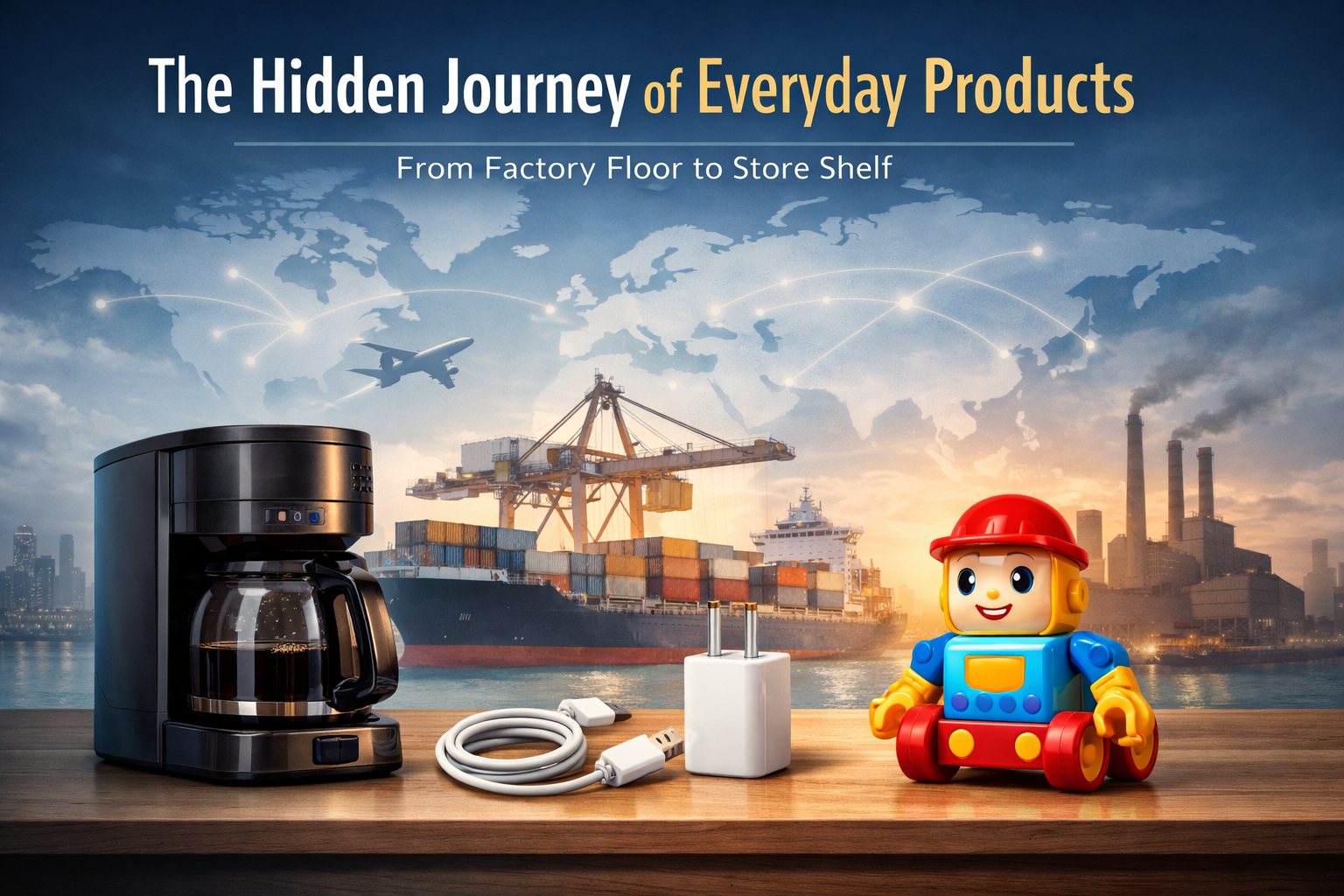
When you pick up a coffee maker at your local department store, a phone charger at the electronics shop, or even a toy for your child, have you ever wondered about the incredible journey that product took to reach your hands? Behind every item on a store shelf lies a complex global choreography involving factories, quality inspectors, shipping containers, and countless decision-makers working across continents and time zones.
The reality is that most consumer products sold in Western countries today are manufactured thousands of miles away, predominantly in Asia. This isn’t just about cheap labor—it’s about access to specialized manufacturing expertise, advanced production facilities, and supply-chain ecosystems refined over decades. Understanding this hidden journey reveals not only the marvels of modern logistics, but also the challenges businesses face in bringing quality products to market.
The Starting Point: From Idea to Factory Floor
Every product begins as an idea—sometimes a detailed blueprint, other times a rough concept sketched on paper. But transforming that idea into a physical product requires finding the right manufacturer, and this is where the journey truly begins.
Imagine a small business owner in California who wants to create a line of eco-friendly kitchen utensils. She has designs and specifications but lacks the machinery, materials expertise, or production capacity to manufacture thousands of units herself. She needs to find a factory—likely in China, Vietnam, or another manufacturing hub—that specializes in her product category, can meet her quality standards, and offers pricing that makes business sense.
This search process alone can take weeks or even months. Manufacturers vary widely in their capabilities: some excel at large-scale production but struggle with customization, while others are ideal for small batches but can’t scale efficiently. There’s also the challenge of vetting suppliers—distinguishing legitimate factories from trading companies that act as middlemen, or worse, fraudulent operations that exist only on paper.
Navigating the Communication Maze
Once a potential manufacturer is identified, the real work begins: communication. This isn’t as simple as sending an email and receiving a quote. International business means navigating language barriers, cultural differences in negotiation styles, and vastly different time zones that can turn a simple question into a two-day waiting game.
Product specifications must be translated not just linguistically, but technically. A casual description like “sturdy handle” means little on a factory floor—manufacturers need precise measurements, material specifications, tensile-strength requirements, and finish standards. Misunderstandings at this stage can result in thousands of products that fail to meet expectations, leading to costly delays and wasted materials.
Beyond language, there’s the matter of trust. How does a business owner in Toronto verify that a factory in Guangzhou truly has the capabilities it claims? Factory visits are ideal, but expensive and time-consuming. Photos and certifications can be misleading or even fabricated. This uncertainty is why many businesses rely on local representatives or specialized intermediaries who can physically verify facilities and production capabilities.
Quality Control: The Make-or-Break Phase
Perhaps the most critical—and most overlooked—stage in global sourcing is quality control. It’s one thing to receive perfect samples; it’s another to ensure that a 5,000-unit production run maintains that same standard.
Quality issues can arise at multiple points: raw materials may be substituted with cheaper alternatives, manufacturing processes may deviate from specifications, or assembly quality may decline as workers rush to meet deadlines. Without oversight, many businesses don’t discover these problems until a container full of defective goods arrives at their warehouse.
Professional quality control typically involves inspections at several stages—raw-material verification, in-process checks during production, and final pre-shipment inspections. Inspectors evaluate random samples against detailed checklists, test functionality, verify packaging, and confirm compliance with agreed specifications. While essential, this oversight adds yet another layer of complexity.
For companies aiming to bring high-quality products to market, this intricate process often requires expert assistance. Providers such as Fuleisourcing help simplify global supply chains by managing supplier verification, quality control, and logistics coordination—allowing businesses to focus on their core operations rather than navigating international manufacturing complexities.
The Logistics Puzzle: From Factory to Doorstep
Once products pass inspection, they begin their physical journey across oceans and continents. This stage brings its own labyrinth of considerations: customs documentation, shipping methods, freight forwarding, and import regulations.
Should products ship by air (fast but expensive) or by sea (economical but slow)? How should items be packaged to withstand weeks in humid shipping containers? What customs duties apply, and are all required certifications in place? A single missing document can leave shipments stuck in customs for weeks, accruing storage fees and delaying product launches.
For many businesses, the journey doesn’t end at a domestic warehouse. The rise of e-commerce has increased demand for fulfillment services that receive inventory, store it, and ship individual units directly to customers worldwide. This “last mile” often determines whether a company can compete in today’s fast-paced retail environment.
The Hidden Problem Solvers: Sourcing Companies
Given these challenges—supplier verification, communication barriers, quality control, and logistics coordination—it’s no surprise that an entire industry exists to support global sourcing. Specialized sourcing companies act as on-the-ground partners in manufacturing regions, bridging the gap between product ideas and finished goods.
In practice, they serve as a business’s eyes, ears, and hands abroad. They maintain relationships with verified factories, negotiate on behalf of clients, manage production timelines, conduct inspections, and coordinate shipping. For small and medium-sized businesses, this expertise can mean the difference between a successful product launch and a costly failure.
For businesses evaluating manufacturing partners in Asia, working with an experienced china sourcing company can significantly reduce risk, improve transparency, and streamline coordination between factories, inspectors, and logistics providers.
The sourcing landscape has become increasingly specialized. Some firms focus on high-volume manufacturing for major retailers, while others cater to startups and e-commerce sellers seeking flexibility and lower minimum order quantities. Choosing the right partner depends on a company’s specific needs, budget, and product category. Resources such as comprehensive guides to top China sourcing companies can help businesses compare specializations, pricing structures, and service models—making this critical decision more informed and less overwhelming.
The Future of Global Sourcing
As consumers, we benefit from this global system every day through access to affordable, diverse products. That $15 coffee maker represents months of coordinated effort—design in one country, manufacturing in another, quality oversight by specialists, and logistics managed through international networks.
The COVID-19 pandemic exposed vulnerabilities in extended supply chains, prompting many businesses to reconsider their sourcing strategies. Concepts like nearshoring and supply-chain diversification are gaining traction. Still, the economics and specialized expertise concentrated in Asian manufacturing hubs mean that global sourcing will remain a dominant force for the foreseeable future.
Conclusion
The next time you purchase an everyday item, take a moment to appreciate its hidden journey. Behind that simple transaction lies a remarkable story of international collaboration, logistical precision, and cross-cultural problem-solving.
For businesses, successfully navigating this complex landscape requires expertise, patience, and often the right partners—those who understand both the opportunities and the risks of global manufacturing. As this intricate dance between design, production, quality, and delivery continues to evolve, understanding it helps us appreciate not just the products we use, but the extraordinary coordination required to place them in our hands.