The medical field has long been characterized by its life-saving innovations, including revolutionary medicines and cutting-edge medical technologies. Within the medical field, new surgical techniques and advancements have led to significant improvements in patient outcomes and care accessibility, and new technologies often contribute. In the world of cardiothoracic surgery in particular, where heart surgeries and other complex, high-risk procedures are common, a powerful technological tool is being deployed to great effect under the observant eye of expert surgeons.
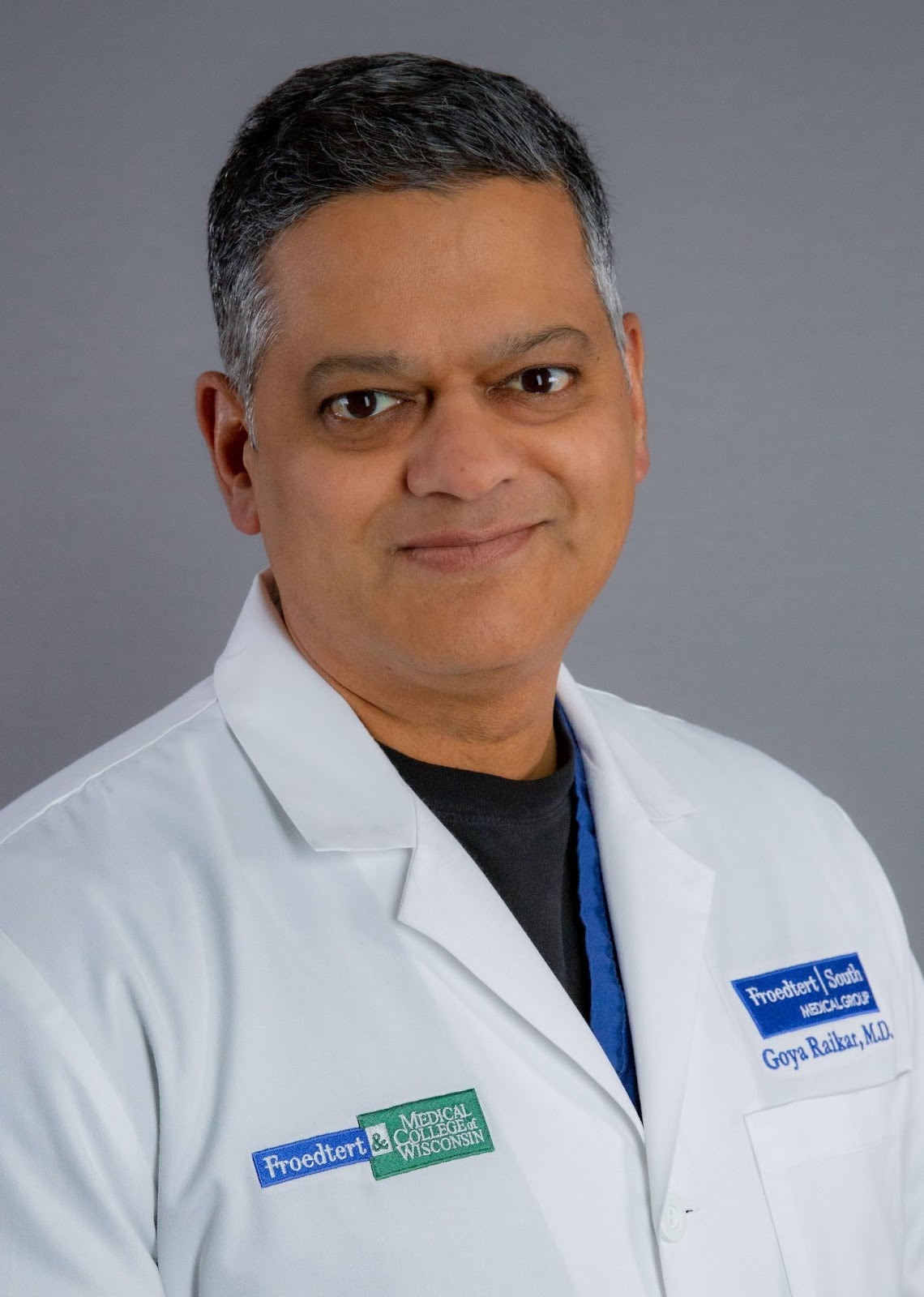
Dr. Goya Raikar, Chief Cardiac Surgeon at Froedtert South, performed the first robot-assisted heart surgery in Kenosha County. With twenty years of experience in the field, Dr. Raikar is one of the few surgeons in the country (and the only one in Wisconsin) currently performing this operation.This achievement is part of his ambitious and innovative career. He is widely known and recognized for advancing minimally invasive and robotic techniques that improve patient outcomes and accelerate recovery times. His expertise includes robotic mitral valve repair, coronary artery bypass grafting, adult congenital heart defect repair, cardiac tumors removals, and arrhythmia surgeries.
Dr. Goya Raikar is a proud student of two of the United States’ most prestigious medical institutions: the Mayo Clinic and the University of Wisconsin Hospital. AHis distinguished education, combined with decades of experience, has also naturally led to leadership and academic appointments at several major health systems, including the University of Oklahoma, Oklahoma Heart Hospital, and the Medical College of Wisconsin. He serves on the editorial board of the Heart Surgery Forum, and frequently mentors surgical teams nationwide in advanced cardiac techniques. When it comes to cardiothoracic surgery, and particularly robotic techniques, Dr. Raikar’s influence and leadership are unparalleled.
“I live, eat, and breathe cardiac and thoracic surgery,” Dr. Raikar says. “I don’t have the best work- life balance, but when I am away I play hard hiking and goofing around with my boys.”
Continuing a Family Tradition
Like many professionals deeply dedicated to their craft, Dr. Goya Raikar cannot imagine working in any other field or pursuing any other career. In his words, “It is a calling, not a job.” This passion for medicine and draw attraction to the field was shared by Dr. Raikar’s family, specifically his father, who practiced both medicine and surgery. As a second generation American from a small town Nebraska medical family, Dr. Raikar’s career has combined the healer’s calling with the ambition and work ethic embodied in the American Dream.
In pursuing that calling, Dr. Raikar trained at both the Mayo Clinic and the University of Wisconsin Hospital, and credits his time at both institutions with much of his expertise and long-term success. The Mayo Clinic trains its surgeons and medical professionals to prioritize the patient at all times—an approach that Dr. Raikar continues to uphold. He was greatly inspired by his mentors at these institutions, specifically Dr. Pailero, the Mayo Clinic’s Head of Thoracic Surgery, to which Dr. Raikar was a junior resident; and Dr. Schaff, the lead Cardiovascular surgeon and one of the most gifted surgeons Dr. Raikar had the privilege to be around and learn from.
“Everything is geared around how to make sure patients get the best surgical care in an efficient manner,” Dr. Raikar says. “That is how I was educated and I still think that way.”
Ever since his first serious robotic heart surgery in the mid 2000’s—the first robotic assisted heart surgery in Minnesota—Dr. Raikar has moved from accomplishment to accomplishment and milestone to milestone. He’s proud to have the first team in Minnesota perform a robotic heart surgery, perform the first TAVR explant in the world at WVU, and sow the seeds of innovation at Froedtert South. Now, as a professor, he’s able to mentor residents, fellows, and visiting surgeons alike, passing his expertise on.
“At the National Conference, the Society of Thoracic Surgery will be part of the largest robotic valve series in the world,” he says. “My former partner will be the oncoming lead surgeon for the northern American organization.”
Cutting-Edge Surgical Technology
Dr. Raikar’s name is tied very closely with his work pushing the frontiers of robotic-assisted surgery, and that technology is something that many patients may not be aware of or familiar with. While the technology has existed, in the broader medical context, its use in cardiothoracic surgery is relatively newer and constantly evolving. Dr. Raikar has been drawn to the technology ever since he was first exposed to it.
“When I was a young surgeon in CA with the Stanford group,” he recalls, “we were doing small incision mitral surgery, and I thought there should be a better way to do this.That is when the robot became available.”
Robotic surgery, also known as robot-assisted surgery, is designed to enable skilled surgeons and their teams to perform procedures more precisely and flexibly than they’d be able to do otherwise. The technology comprises a complex system with multiple arms, one of which bears a camera while the others carry surgical instruments. The surgeon controls the various arms while seated at a control console near the operating table, which gives them the ability to navigate the surgical site precisely.
The camera arm and control arms give the surgeon a closer view of the site and tighter control of the movements needed to perform the operation, greatly reducing the scale of the operation, which delivers several benefits. Robotic surgery allows the surgeon to operate through incisions a fraction the size of those in traditional human surgery, to the point where many can be called minimally invasive. As a result, patients’ bodies are put under significantly less strain, which leads to reduced pain, shorter recovery times, less noticeable scarring, and a much-reduced rate of infection.
Dr. Raikar is a proud proponent and user of this technology, but robotic assistance does not make a great surgeon. Existing passion, expertise, and focus are what make the greatest difference. In his words, the difference between a good surgeon and a great one isn’t technology: "It's a combination of technical skills, mental acuity, and core belief that we have to do the best for our patient.”