A useful image tool should not be judged only by how dramatic its demos look. It should be judged by whether it makes ordinary visual work less painful. That includes removing distractions from product photos, improving weak source material, preserving consistency across repeated edits, and helping users turn one approved image into several usable variants. Seen from that angle, an AI Image Editor becomes interesting for a simple reason: it attempts to organize many of those routine editing demands inside one platform.
That kind of design responds to a real pattern in visual production. Most people do not need a spectacular image once. They need solid images repeatedly. They need to fix, adapt, polish, and reuse material under time pressure. The challenge is not a lack of imagination. It is the cumulative cost of revision.
This is where PicEditor deserves attention. It is not presented as a single-purpose effect generator. It is presented more broadly as an AI-powered environment for image editing, enhancement, transformation, and even motion-oriented extension. The product makes more sense when understood as a workflow hub rather than a one-click trick.
Many tools can remove a background, sharpen an image, or generate a styled variation. Those capabilities are no longer rare on their own. The better question is how a platform combines them, and whether that combination reduces real workflow complexity.
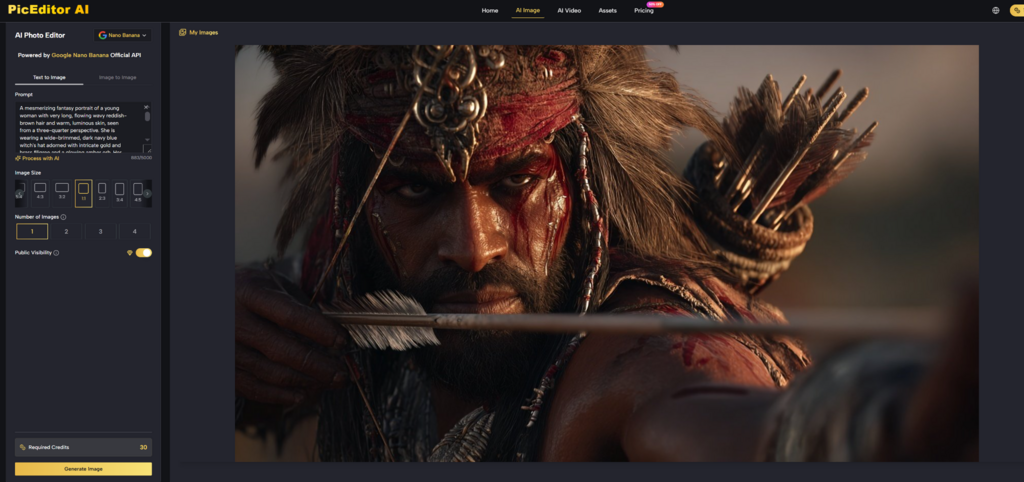
PicEditor appears to answer that question by bringing multiple categories of image work into a unified interface. According to the official presentation, users can enhance images, retouch, upscale, remove backgrounds, erase unwanted objects, explore style shifts, and move into image animation paths from the same ecosystem. That matters because users often do not know at the start which edit will solve the problem best.
A user may think they need simple enhancement, then realize the composition still looks weak. They may then want cleanup, then a different background, then a more polished style. A fragmented tool stack makes those pivots expensive. A unified system makes them more natural.
The same product can serve very different goals. A seller may need cleaner catalog images. A marketer may need variant assets. A creator may need reference-based style continuity. A designer may need fast concept changes before committing to manual refinement. The platform becomes more valuable when it accommodates these different intents without forcing users into the same narrow workflow.
From the structure of the product, three priorities stand out: range, accessibility, and iterative control.
The first priority is scope. PicEditor is not limited to basic corrective editing. It is positioned across enhancement, generative editing, style change, and motion extension. That broader scope gives it more strategic value than a tool that solves only one editing problem.
The second priority is usability. PicEditor relies on a simple workflow: upload the image, choose the modification path, and describe what should happen. This reduces the distance between visual intent and execution. Users are not required to understand a deep manual editing process just to test an idea.
This is one of the clearest changes AI tools have introduced into creative work. Instead of interacting mainly through technical controls, users interact through description. That does not remove the need for judgment, but it changes where the difficulty lives. The challenge is less about software operation and more about giving precise visual direction.
The third priority is optionality. PicEditor does not appear to depend on a single model identity. It surfaces multiple model paths, which suggests that the platform is designed around matching different engines to different tasks. In my view, this is an important strength because visual requests vary widely. Realistic editing, stylization, context-aware changes, and animation do not always respond best to the same system logic.
Rather than seeing the platform as a collection of features, it may be more useful to see it as a sequence of decisions.
The first step is to upload the existing image. That sounds simple, but it reveals a lot about the product philosophy. The platform is built around the assumption that many users begin with source material rather than empty intent.
The next step is to choose the relevant editing route. This is where the platform asks the user to identify the nature of the task. Is the image weak because it lacks clarity, because an element should be removed, because the style feels wrong, or because the scene needs a broader transformation?
The third step is prompt-based. The user describes the desired outcome, and the system interprets the instruction. This may sound straightforward, but it is often where the quality of the result is decided. In tools like this, clarity is usually more useful than flamboyance.
In my experience, good prompt-based editing often comes from setting boundaries. Keep the face consistent. Preserve the product shape. Replace the background but maintain lighting logic. Improve sharpness without changing composition. These are the kinds of instructions that make AI editing feel less random and more directed.
The product feels most useful in contexts where one source image needs to support several downstream outcomes.
When the same person, product, or character appears repeatedly, consistency becomes a business requirement rather than a creative preference. The platform highlights reference-based pathways, which may be especially helpful for teams that need continuity across multiple outputs.
Commercial images often need refinement more than invention. They need to look clearer, cleaner, and more presentation-ready. A tool that accelerates those revisions can become practical even if final approval still depends on human review.
One of the more notable aspects of PicEditor is that it includes motion-oriented extensions rather than stopping at static revision. That matters because visual content increasingly moves between still and motion formats. A single asset can serve broader distribution if the platform makes those transitions more accessible.
This is a larger industry shift. A still image is no longer always the final deliverable. It is often the base layer for more edits, more variants, and sometimes a motion outcome. Platforms that understand this shift are better aligned with how modern visual work actually expands.
The platform is easier to evaluate when compared against the simpler tools many users already know.
A balanced assessment should also include the areas where expectations should remain measured.
This is typical of generative editing. A first pass may solve the main problem but introduce a smaller new one. That does not make the tool ineffective, but it does mean users should expect some refinement rather than instant perfection.
The platform simplifies execution, but it does not erase the importance of instruction quality. Users who are specific about what must stay the same and what should change usually get more stable outputs.
If the image is going into a paid campaign, a product listing, or a public brand environment, human review remains essential. AI can accelerate revision, but credibility still depends on editorial judgment.
The strongest case for PicEditor is not that it automates image editing. Many tools now claim that. Its stronger case is that it reflects the actual demands of modern visual work: users need to revise faster, test more directions, preserve consistency, and sometimes move from still image to motion without rebuilding everything in separate systems.
That makes the platform feel more relevant than a simple feature checklist would suggest. It fits a workflow in which images are never fully finished after the first draft. They are assets under continuous adaptation. A tool that accepts that reality and shortens the path between revision requests can be genuinely useful. In my view, that is the most convincing way to understand its potential. It is not here to remove creative judgment. It is here to make that judgment easier to apply, more often, at the pace current visual work demands.