For decades, young women have gambled with their looks, crossing their fingers that a viral lipstick or a bold dye job would miraculously suit them.
Then came the TikTok boom. Overnight, social media flooded with flawless "AI makeovers." Girls were swapping their hair from jet black to neon pink in a split second. The #TryBeforeYouDye hashtag blew up, promising an end to bad beauty choices. But let us be brutally honest: are these tools actually a magic wand, or just another fake filter hoax designed to sell you something?
We decided to cut through the hype. To find out what actually works, we put a top-tier AI Color Analysis platform to the ultimate test. We looked at everything from tracking the messy edges of new hairstyles for women to matching deep skin tones. Here is the raw, unfiltered truth.
Before we dive into the glitchy edges and the spot-on shade matches, we need to understand why everyone is suddenly obsessed with testing their looks on a screen first.
The anxiety of permanent change is real. Once you bleach your hair or buy a luxury foundation that oxidizes orange, you are stuck with it. The best AI color analysis tools stepped in to act as a safety net. They promised a risk-free zone where you could make a wild mistake and fix it with a single tap.
Here is the catch: not all tech is built the same. There is a massive gap between a heavy Instagram filter that slims your nose and blurs your pores, and a smart AI tool built for real style previews. A cheap filter changes your bone structure; it lies to you. A true AI Color Analysis engine does not alter your face shape. It maps your unique facial traits to give you a harsh, realistic preview of how a specific color will clash or click with your natural base.
Hair is notoriously the hardest thing for a computer to fake. Strands fly everywhere, lighting shifts, and roots tell a different story than the ends. We wanted to see the honest pros and cons of swapping hair shades virtually.
When the tech works, it feels like pure magic. The strongest feature of a solid tool is its ability to accurately overlay trendy colors based on your raw data. If you upload a clear photo, an AI hair color analysis does not just paint a flat block of color over your head. It reads the highlights and lowlights.
If you want to know if that trending "Platinum Cold Fog Brown" will wash you out, run your photo through an AI Hair Color Changer. The instant visual effects are striking. The AI Color Analysis algorithms respect the natural fall of your hair, laying the new shade over your existing texture. It gives you the immediate visual proof you need before you let bleach anywhere near your scalp.
Now for the brutal truth. The tech is not flawless. If you have thick, curly hair, or messy flyaways, the AI sometimes struggles to find the edge. You might see a faint "halo" effect where the background bleeds into your new dye job.
Furthermore, you have to remember what the tool is actually for. If you use an AI Hairstyle Changer, it will show you the physical volume of a bob versus long waves. But the color tools are strictly there to show you the instant shade match. They will not tell you if the dye will fry your ends. The AI Color Analysis shows you the look; your stylist still has to do the heavy lifting.
Brands like LVMH and L'Oréal are dumping millions into AR makeup tech. They know you will not buy a forty-dollar lipstick unless you know it pops. But does the tech hold up for everyday users sitting on their couch?
Historically, cheap beauty filters failed women of color. They would slap a bright pink blush on deep skin, and it would look chalky, ashy, and completely fake. A proper skin tone analysis fixes this. Modern AI reads the deep warmth or cool undertones of your face before it applies the makeup. If a peach blush clashes with your deep olive skin in real life, a good AI will make it clash on screen, too. It refuses to lie to you.
This is where the tools earn their keep. The main strength here is the instant visual payoff. You do not have to guess if a bold red lip will overpower your face. You fire up an AI Makeup Generator and you see it instantly.
An AI makeup generator gives you the immediate freedom to swipe through fifty shades of eyeliner in three minutes. While it cannot replicate the sticky, matte feel of real lipstick, the AI Color Analysis perfectly mimics how the light hits the pigment on your specific skin. It is the ultimate try-before-you-buy hack.
If you use the tools wrong, they will trick you. It is that simple. Garbage data in means garbage results out. Here is how to stop the AI from fooling you into a bad beauty choice.
The biggest mistake users make is treating these tools like a toy. They blindly slap neon green hair onto their selfie and wonder why it looks awful. You must know your base first.
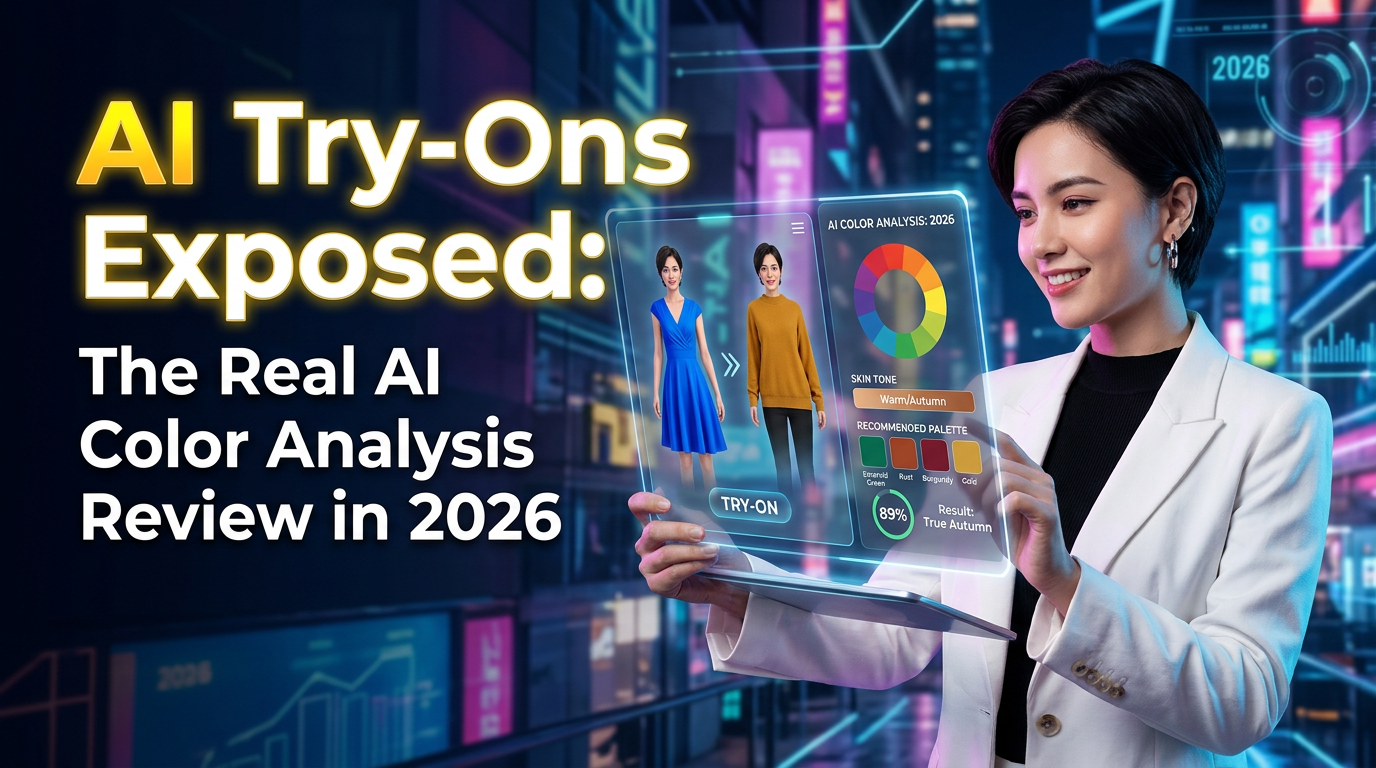
You need an AI seasonal color analysis to tell you if you are a True Winter, a Bright Spring, or a Soft Autumn. Once you know your exact 16-season type, you stop guessing. You only test the shades that belong in your winning palette. This turns the AI Color Analysis from a silly game into a razor-sharp styling weapon.
The AI cannot read what it cannot see. If you upload a blurry selfie taken in a dark bathroom with yellow lighting, the tool will fail. It will misread your skin, warp the hair color, and give you a fake result.
If you want an accurate read on how to determine skin undertone, you must face a window. Stand in bright, natural, indirect daylight. Wipe off your makeup. Pull your hair back. Give the AI Color Analysis a clean, honest slate, and it will give you a flawless, honest preview.
So, is the virtual makeover trend a hoax? Absolutely not. But it is not magic, either. It is a highly effective shield against bad beauty choices, but only if you use it correctly.
If you feed it bad lighting and ignore your natural season, you will get tricked. But if you start with your true 16-season base and use the tools to test realistic shades, you will never cry in a salon chair again. By leaning into a strict, data-driven AI Color Analysis, you take the power back. You get to see the future of your face, instantly, risk-free, and entirely on your own terms.