
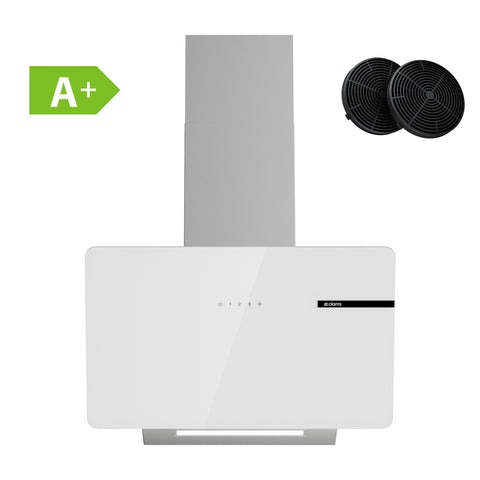
Maintaining a hygienic, odor-free, and cozy cooking space requires proper kitchen ventilation. The recirculating cooker hood with carbon filter is one of the many choices that have drawn interest due to its versatility and ease of use. Recirculating hoods filter and cleanse the air before redistributing it into the kitchen, in contrast to conventional ducted hoods that release the air outside. Well-known models such as the Ciarra One provide contemporary features and efficient odor elimination, but are they really worth the money? To assist you in making a decision, we examine the advantages, drawbacks, and important factors in this post.
Cooking odors, smoke, and grease are drawn in by a recirculating cooker hood with a carbon filter, which filters the air via carbon and grease. While the carbon filter neutralizes smoke and absorbs smells, the grease filter captures particles and oils. External ducting is not necessary since clean air is discharged back into the kitchen after filtering.Because of their design, recirculating hoods are perfect for kitchens, flats, and rental properties where ducting installation is difficult or impossible. A good example is the Ciarra One, which combines effective carbon filtration with strong suction for contemporary kitchen configurations.
Installation flexibility is one of the main benefits of a recirculating hood. It can fit in almost any kitchen, even small or leased rooms, since it doesn't need exterior venting. Odor management is an additional advantage. Traditional hoods without filtration do not maintain the kitchen area as fresh as carbon filters, which are particularly designed to absorb cooking odors.
Another argument in favor is energy efficiency. Because recirculating hoods don't force air through lengthy ducting, they use less energy. When used in conjunction with models such as the Ciarra One, consumers benefit from efficient suction without significantly increasing their power use.
Recirculating cooker hoods with carbon filters have drawbacks despite their advantages. In comparison to ducted hoods, they are often less efficient in eliminating heat and moisture. Remaining humidity may still be present in kitchens that are used for heavy or frequent cooking, particularly grilling or frying. Reduced performance and persistent odors in the kitchen might result from not replacing the filters.
Another aspect is suction power. Recirculating hoods may not be able to match the high extraction power of professional ducted systems, especially in big kitchens, even if versions like the Ciarra One deliver robust airflow.
Cleaning and maintaining a recirculating cooker hood with a carbon filter regularly is crucial to maximizing its performance. Carbon filters should be changed as directed by the manufacturer, often every six to twelve months, and grease filters should be cleaned every few weeks. Grease accumulation may be avoided by cleaning the hood's interior and external surfaces, which keeps it operating effectively.
The life of the motor and filters may also be extended by using the right fan speed for the various cooking tasks. Maintaining the fresh, odor-free air delivery of your Ciarra One or any other recirculating hood requires regular maintenance.
Recirculating cooking hoods with carbon filters are a good investment for the majority of homes. They provide minimal maintenance operation, flexible installation options, and superior odor control. They are often the only practical choice for kitchens without exterior ducting, flats, or rental areas.
Models like the Ciarra One are especially attractive for modern kitchens since they combine high suction, efficient filtration, and trendy style. For daily cooking and odor control, they may not be able to completely replace the effectiveness of a ducted system in big or frequently used kitchens. Still, many homeowners value the performance and convenience they provide.
A useful and effective kitchen ventilation option is provided by recirculating cooker hoods with carbon filters, particularly premium ones like the Ciarra One. They work well at eliminating odors and are simple to install and maintain, so that they may be used in a range of kitchen configurations. The advantages of flexibility, efficiency, and cleanliness make them a desirable option for the majority of homes, even if they may not be as effective at extracting heat and moisture as ducted systems.
Especially for flats and contemporary houses where ducting is not a possibility, investing in a recirculating hood guarantees that your kitchen remains pleasant and fresh with less effort and more convenience. Your Ciarra One recirculating cooker hood with carbon filter may provide dependable and effective kitchen ventilation for many years with regular maintenance and filter changes.