Garden State Artists Embrace Technology to Navigate Modern Music Industry
The New Jersey music scene has always punched above its weight. From Bruce Springsteen's anthems about working-class life to the punk energy of Asbury Park, from Whitney Houston's powerhouse vocals to Bon Jovi's arena rock, the Garden State has produced some of America's most influential artists. But for every musician who makes it to stadiums and sold-out tours, thousands of talented New Jersey artists struggle to get their music heard beyond local venues and regional followings.
That's changing as independent musicians across New Jersey—from Jersey City to Cape May, from the Asbury Park music scene to the Philadelphia suburbs—adopt technology specifically designed for the modern music industry. Smart link platforms built for musicians are helping Garden State artists present themselves as professionally as major label acts, track which promotional strategies actually work, and convert social media followers into streaming listeners and concert ticket buyers.
The transformation is visible in how New Jersey musicians approach their careers. Artists who once printed flyers and relied on local radio are now running data-driven promotional campaigns, pitching their music to Spotify's editorial team with professional materials, and using geographic analytics to identify which Shore towns or North Jersey cities have their strongest fan concentrations. The tools enabling this shift weren't built by major record labels—they're platforms created specifically to help independent artists compete in an industry that historically favored those with major label backing.
New Jersey's music infrastructure remains robust. Legendary venues like the Stone Pony in Asbury Park, the Starland Ballroom in Sayreville, and the Wellmont Theater in Montclair continue hosting both national touring acts and emerging local talent. Summer concert series along the Jersey Shore—from Sea Isle City to Point Pleasant Beach—provide performance opportunities for regional artists. Radio stations like WDHA, WRAT, and college stations at Rutgers, Seton Hall, and Montclair State still support local music.
But the pathway to reaching audiences has fundamentally changed. A decade ago, New Jersey artists built careers through persistent gigging at venues up and down the Garden State Parkway and Route 280, hoping A&R representatives from New York City labels would discover them. Today, streaming platforms and social media have theoretically democratized access—any artist can upload music to Spotify and reach global audiences.
The reality is more complex. While barriers to distribution have fallen, competition has intensified exponentially. Spotify adds roughly 100,000 new tracks daily, making standing out nearly impossible without strategic promotion. New Jersey artists now compete not just with other regional musicians but with artists worldwide, all fighting for the same playlist placements and algorithmic recommendations that drive streams.
This dynamic has created demand for tools that help independent artists navigate digital music platforms more effectively. Smart link technology—centralized landing pages that route fans to music across all streaming platforms while capturing data about listener behavior—has become essential infrastructure for serious independent musicians.
Smart link platforms solve a practical problem that New Jersey musicians face constantly: fans consume music across different platforms. Some prefer Spotify, others use Apple Music, many watch music videos on YouTube, and Shore music fans might follow artists on SoundCloud or Bandcamp. When artists share their music on Instagram, TikTok, or Facebook, they need a way to give fans access regardless of their preferred platform.
The traditional approach was listing multiple links—"Listen on Spotify: [link] / Apple Music: [link] / YouTube: [link]"—which creates friction. Fans have to identify which link matches their preferred service, click the correct URL, and hope it works on their device. Many simply don't bother, especially when browsing on mobile devices while walking the Sea Isle City boardwalk or sitting on the beach in Ocean City.
Smart Links for Musicians provides a single URL that automatically routes listeners to their preferred platform. A fan in Atlantic City clicks the link on their iPhone, and it opens directly in Apple Music. Someone in Hoboken using Spotify on Android gets routed there instead. A fan in Tom's River watching on desktop might land on YouTube. The technology handles device detection, app installation checking, and geographic routing automatically.
This routing functionality is table stakes—the real value comes from data that smart links capture. Every click provides information: which platforms fans prefer, where they're located geographically, when they're most engaged, which social media posts drive the most traffic. For New Jersey artists trying to build regional followings or identify which Shore towns to prioritize for summer bookings, this geographic data is invaluable.
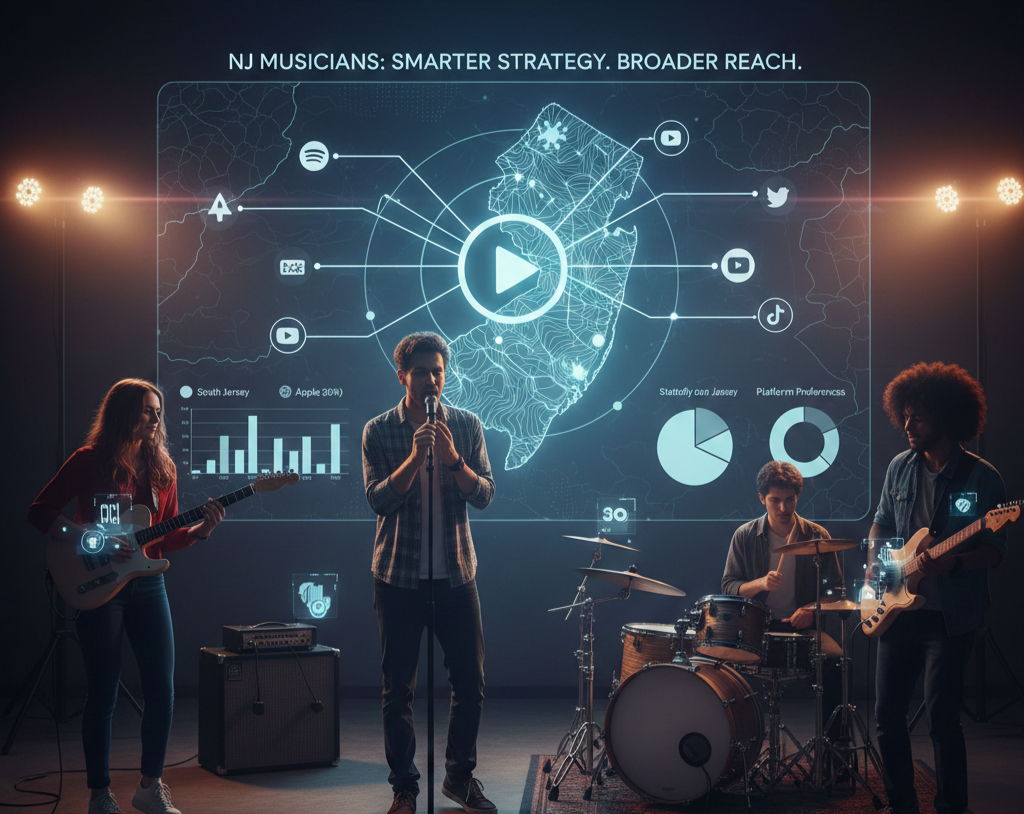
Consider a hypothetical indie rock band based in New Brunswick. They've been playing shows around central New Jersey—venues in New Brunswick, Asbury Park, Princeton, Somerville—but haven't expanded much beyond that region. Using smart link analytics, they discover that 30% of their streaming traffic comes from South Jersey—particularly Camden, Cherry Hill, and the surrounding suburbs.
This data transforms their booking strategy. Rather than continuing to play the same New Brunswick venues repeatedly, they start targeting South Jersey rooms they'd never considered. They book shows at the Bourbon Street Bar in Berlin, the Flying Fish Brewing Company in Somerdale, and reach out to venues in Collingswood and Haddonfield. Those shows expose them to audiences who were already streaming their music but didn't know the band toured. The geographic concentration they discovered through smart link data becomes the foundation for expanding their live following.
Or consider a singer-songwriter from Ocean County who primarily performs at Shore venues during summer season. Smart link data reveals unexpected listener concentration in North Jersey—Montclair, Hoboken, Jersey City. This artist had assumed their audience was primarily Shore-based because that's where they performed, but streaming patterns tell a different story. Armed with this knowledge, they start pursuing venues in North Jersey, discovering a completely new audience segment.
These aren't theoretical scenarios—they're the types of strategic insights that New Jersey musicians are gaining from data that wasn't previously accessible. Smart link platforms make invisible patterns visible, allowing artists to make informed decisions rather than relying on assumptions about where their audience exists.
The Jersey Shore music scene operates on a distinct seasonal rhythm. Memorial Day through Labor Day represents peak season when beach towns swell with tourists and second-home owners. Venues from Cape May to Sandy Hook book live music nightly, creating hundreds of performance opportunities for regional musicians.
Historically, Shore bookings were relationship-driven. Musicians who knew venue owners or booking managers secured summer residencies or regular slots. Newer artists struggled to break into established venue rotations, even when they might have significant fan followings in specific Shore communities.
Smart link technology changes this dynamic by providing objective data about fan concentration. An artist can approach a venue in Sea Isle City with concrete evidence: "My streaming analytics show I have 800 monthly listeners in Cape May County, with particular concentration in Sea Isle City, Ocean City, and Avalon. Here's the data showing consistent growth in this region over the past six months."
This data-driven pitch is more compelling than "I think I'd do well at your venue" because it provides evidence of existing local following. Venue owners making booking decisions appreciate concrete information about an artist's actual draw in their market. Smart link data transforms the pitch from hopeful speculation to statistical probability.
For Shore musicians, this capability is particularly valuable because summer season competition is intense. Demonstrating local following through data helps artists differentiate themselves from hundreds of other musicians seeking the same slots.
New Jersey artists often struggle with professional presentation not because they lack talent but because they lack infrastructure. An artist working day jobs to support their music career doesn't have time to maintain perfectly coordinated social media profiles, keep every streaming platform bio updated, or ensure all promotional materials reflect consistent branding.
The result is fragmented presentation: Instagram bio has one link, Twitter has different information, Facebook page is outdated, and Spotify artist profile hasn't been updated in months. When music industry professionals—playlist curators, booking agents, music journalists—encounter these inconsistencies, they interpret them as lack of seriousness about the career.
Smart link platforms address this by centralizing artist presence. One link that works everywhere means artists only need to update information in one place. Tour dates, new releases, press photos, streaming links, social media connections—everything lives on one professionally designed landing page that looks cohesive regardless of where fans discover it.
For New Jersey artists competing for attention alongside major label acts, this professional presentation matters enormously. When a playlist curator at Spotify evaluates submission from an independent artist versus a major label artist, professional presentation influences perception of whether the artist is ready for playlist inclusion. Smart links level that playing field by providing infrastructure that was previously accessible only to artists with label backing.
Spotify's editorial playlists—curated collections like New Music Friday, Rock This, Chill Hits—can transform independent artists overnight. A single placement on a moderately sized editorial playlist might generate 10,000-50,000 streams within weeks. For New Jersey artists, these placements provide exposure beyond their regional fanbase to listeners nationwide and globally.
The challenge is that Spotify receives tens of thousands of playlist pitch submissions weekly. The editorial team can't listen to everything, so they filter based on presentation quality and demonstrated momentum. Artists who submit generic pitches with vague descriptions get ignored. Artists who craft compelling, specific pitches supported by data have significantly better placement odds.
This is where tools like the Spotify Editorial Pitch Generator help level the playing field. Rather than New Jersey artists guessing what information Spotify's team wants, specialized tools structure pitches to address exactly what curators need to know: genre positioning, release story, promotional strategy, and existing momentum indicators.
An artist from Princeton submitting to Spotify can reference their smart link data showing 15,000 total plays across platforms, strong engagement rates, and growing listener base in the Philadelphia and New York metro areas. They can explain their promotional plan—radio promotion to WXPN and WFUV, social media campaign, East Coast tour supporting specific artists. This context helps curators understand why the track deserves consideration.
Without these tools, New Jersey independent artists were competing against major labels whose marketing departments craft sophisticated pitches as part of standard operating procedure. Now independent artists have access to similar capabilities, making competition more about music quality and artist momentum than access to label infrastructure.
Asbury Park's music scene has experienced remarkable revitalization over the past decade. The iconic Stone Pony continues anchoring the boardwalk music district, joined by newer venues like the Wonder Bar, House of Independents, and the Asbury Park Yacht Club. The city hosts festivals like Sea.Hear.Now that attract national attention, and the reopened Paramount Theatre brings larger productions back to the city.
This vibrant local scene produces talented artists who historically struggled to build careers beyond regional recognition. The challenge wasn't talent—it was translating local following into streams, regional attention into national awareness, and live performance success into industry opportunities.
Contemporary Asbury Park artists increasingly use digital tools to extend their reach beyond the Shore. They perform at the Stone Pony and Saint, building local credibility, then use smart links and social media to convert attendees into streaming followers. They analyze their data to identify unexpected listener concentrations—perhaps discovering substantial followings in Richmond, Virginia or Portland, Maine—then book tours targeting those markets.
The integration of physical local scene participation with strategic digital presence represents a model for how New Jersey artists can maintain connection to the state's rich musical heritage while building careers that extend nationally. Artists aren't abandoning the local venues and regional followings that provided their foundation—they're using technology to amplify that foundation into broader opportunities.
While Asbury Park dominates discussions of New Jersey music heritage, the state's northern urban corridor—Jersey City, Hoboken, Newark, Montclair, Paterson—has its own vibrant music ecosystem. These cities' proximity to New York City creates unique dynamics where New Jersey artists are simultaneously independent from Manhattan's music industry while benefiting from its infrastructure and audiences.
Artists in these North Jersey communities face different challenges than their Shore counterparts. They're competing directly with Brooklyn and Manhattan acts for venue slots, media attention, and audience attention. Standing out requires not just talent but strategic positioning and professional presentation.
Smart link technology helps North Jersey artists demonstrate cross-river appeal. When pitching Manhattan venues, artists can show that their following extends throughout the New York metro area, including significant listener concentrations in Brooklyn, Queens, and the Bronx alongside New Jersey. This data proves they're not just local Jersey City artists but regional acts with legitimate draw across the entire metro area.
Similarly, when North Jersey artists pitch New Jersey venues, they can demonstrate Manhattan following—proving they attract audiences who will travel from Brooklyn or Lower Manhattan to Hoboken or Jersey City for shows. This bi-directional appeal makes North Jersey artists attractive to venues on both sides of the Hudson River.
The financial reality of pursuing music in New Jersey is challenging. The state's high cost of living—particularly in North Jersey and Shore communities—means artists need substantial income to sustain themselves while building their careers. Most independent musicians work full-time jobs, relegating music to nights and weekends.
Smart link platforms provide ROI that justifies their cost by helping artists make more informed decisions about where to invest limited promotional budgets. Rather than blindly spending money promoting shows or releases without understanding what works, artists can track which promotional channels generate actual engagement.
A Montclair-based artist running Instagram ads to promote a new single can see exactly how many people clicked through to streaming platforms and which platforms they preferred. If Facebook ads generate more clicks at lower cost than Instagram, that data informs future budget allocation. If promotion targeting Philadelphia suburbs outperforms New York City targeting, the artist adjusts accordingly.
This granular understanding of what works prevents wasted spending—crucial for musicians funding their careers from day job salaries. Every dollar spent on ineffective promotion is a dollar that could have funded studio time, professional music videos, or tour expenses.
Additionally, the professional presentation that smart links enable can create revenue opportunities that wouldn't otherwise exist. Artists with professional materials are more likely to secure higher-paying private events, corporate gigs, and festival slots that provide significant income. The difference between a $200 venue gig and a $2,000 corporate event often comes down to professional presentation rather than musical ability.
New Jersey musicians still value radio play—stations like WDHA's "Homegrown" show and various college radio programs provide important credibility and exposure. But radio is now one channel among many, no longer the exclusive gatekeeper it once was.
The contemporary reality requires artists to maintain presence across radio, streaming platforms, social media, and physical venues simultaneously. This multi-platform requirement would be overwhelming without centralized tools that manage everything from one dashboard.
Smart link platforms help artists coordinate across all these channels. When they release new music, a single link works for radio promotion, social media posting, email newsletters, and website updates. When radio stations play their tracks and direct listeners to "find the artist online," fans land on professional landing pages that provide access to everything—streaming platforms, social media, tour dates, merchandise.
This integration matters because music discovery is increasingly non-linear. A fan might hear an artist on WDHA, search them on Spotify, follow on Instagram, then attend a show at the Starland Ballroom six months later. Artists need infrastructure that supports this complex journey rather than treating each platform as isolated.
One encouraging trend in the New Jersey music scene is increased collaboration and knowledge-sharing among artists. Online communities, local music organizations, and informal networks help musicians share strategies about what's working.
When Jersey City artists discover that smart link analytics help identify booking opportunities, they share that knowledge with artists from Trenton or Atlantic City. When someone figures out an effective approach to Spotify playlist pitching, that information spreads through local music communities. This collaborative spirit reflects New Jersey's broader cultural identity—artists supporting each other rather than viewing success as zero-sum competition.
Organizations like the New Jersey State Council on the Arts, Jersey Shore Music Foundation, and various local arts councils provide resources and education about music industry best practices. These organizations increasingly incorporate digital strategy and tool literacy into their programming, recognizing that contemporary music careers require both artistic talent and business/technical knowledge.
For New Jersey musicians evaluating whether smart link platforms and related tools are worth investment, the relevant metrics aren't vanity numbers—total streams or follower counts that look impressive but don't translate to sustainable careers. Instead, artists should track:
Geographic Concentration: Are listeners concentrated enough in specific markets to justify touring investment? A scattered 10,000 monthly listeners across the entire country is less valuable than 2,000 concentrated in the Delaware Valley and North Jersey.
Engagement Rates: What percentage of people who click through to streaming platforms actually save tracks or follow the artist? High click-through with low engagement suggests promotional targeting problems.
Conversion to Live Attendance: Are streaming followers showing up to concerts? This is the ultimate validation that digital presence translates to real-world support.
Revenue Per Fan: What's the lifetime value of converting a casual streaming listener into an engaged fan who attends shows, buys merchandise, and supports crowdfunding campaigns?
Time Efficiency: How much time does professional presentation infrastructure save compared to manually updating multiple platforms separately?
These metrics provide concrete evaluation criteria for whether digital tools are actually helping build careers or just generating impressive-looking but meaningless numbers.
New Jersey's musical legacy didn't happen accidentally—it emerged from combination of talented artists, supportive venues, enthusiastic audiences, and proximity to major media markets. That foundation remains solid, but the tools available to artists have evolved dramatically.
Smart link platforms and related technology won't replace talent, live performance, or the hard work of building genuine fan relationships. But they provide infrastructure that helps talented New Jersey artists compete more effectively against major label machinery, make data-informed decisions about where to focus effort, and present themselves professionally despite limited budgets.
For Garden State musicians willing to embrace these tools strategically, the opportunities are significant. An artist from Toms River can build following along the entire Jersey Shore. A band from Morristown can identify unexpected listener concentrations in unexpected markets and tour accordingly. A singer-songwriter from Camden can demonstrate cross-river appeal that opens doors in Philadelphia and New York simultaneously.
The New Jersey music scene's next generation of success stories will likely combine the state's rich musical heritage—the authentic storytelling, working-class grit, and regional pride that have always characterized Garden State music—with strategic use of technology that previous generations didn't have access to.
The tools exist. The venues and infrastructure remain viable. The audiences are there, consuming music voraciously across streaming platforms. What's required is New Jersey musicians recognizing that building contemporary music careers requires both artistic excellence and professional business approach—and that technology specifically designed for independent artists can provide capabilities that were previously exclusive to major label acts.
From Sea Isle City to Jersey City, from the Pine Barrens to the Palisades, talented New Jersey musicians are using these tools to compete, grow, and build sustainable careers. The Garden State's next musical legends are likely already performing at local venues and building their followings—armed with both talent and technology that gives them fighting chance in an industry that's never been more competitive or more accessible.