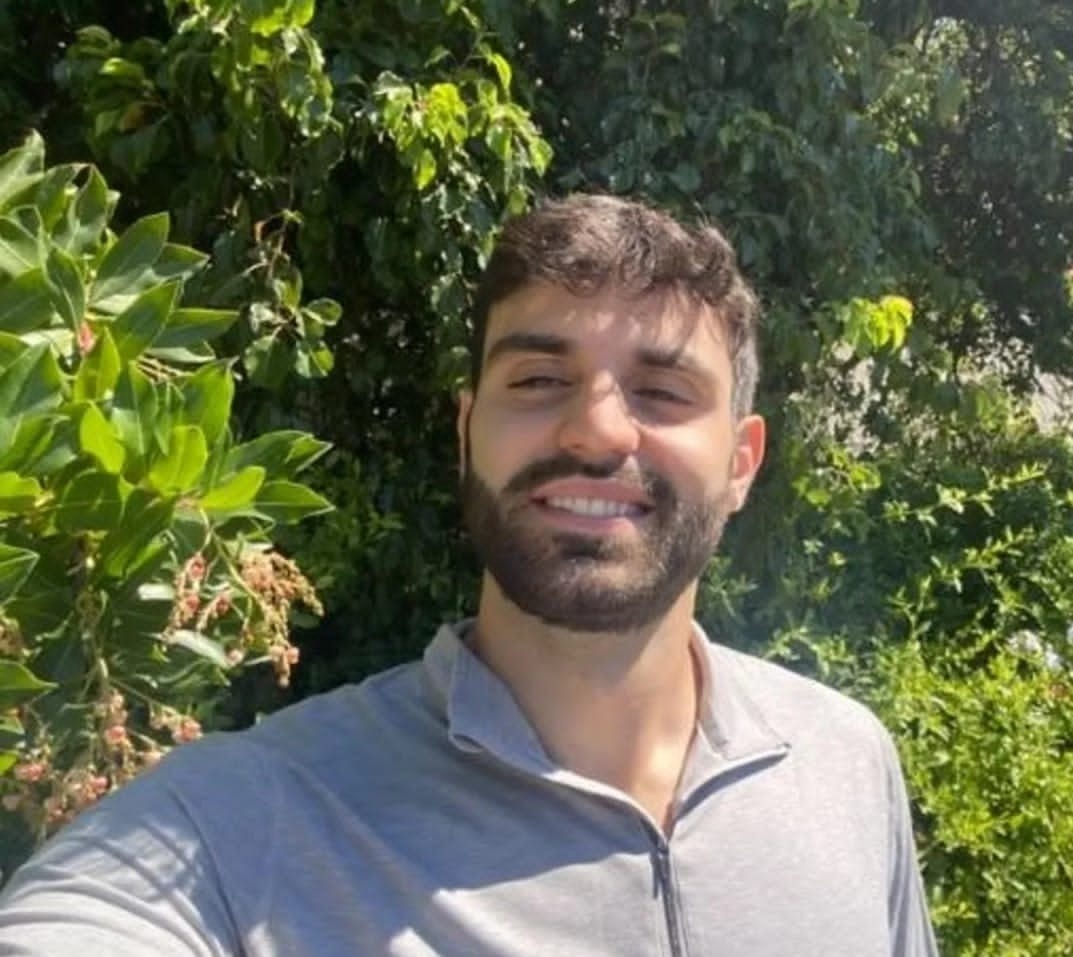
When Shai Hamu walks into work each morning as a garage door technician, his mind often drifts to places far removed from mechanical repairs. The aspiring accountant thinks about Syrian refugees maintaining cultural traditions in makeshift camps. He considers how Rwandan communities rebuilt trust after genocide. He reflects on children mining cobalt in the Congo while consumers thousands of miles away enjoy their smartphones.
For Hamu, these are not distant humanitarian issues. They are a mirror reflecting what anthropology has taught him about gratitude.
“Anthropology forces you to sit with uncomfortable truths,” Hamu said. “But it also shows you how people create meaning and maintain dignity under impossible pressure. That changes how you see your own life.”
At twenty-something, Hamu’s worldview is already unusually layered. He has served as a soldier overseas, backpacked through Sri Lanka, Indonesia, and Malaysia, and worked as a financial analyst before returning to school to pursue accounting. His experiences, he said, have given him what he calls a “ground-level” understanding of how communities organize around hardship.
Anthropology, for him, is not only an academic subject but a practical philosophy – one that reshapes how people in relative comfort can understand gratitude.
“Studying human suffering and resilience isn’t about comparison or guilt,” he said. “It’s about perspective. It’s about realizing that peace, safety, and stability are cultural achievements, not guarantees.”
The Rwandan Genocide of 1994 remains one of the fastest and most devastating atrocities in human history, claiming more than 800,000 lives in just 100 days. Yet what happened afterward, Hamu said, is where anthropology finds its richest lessons.
Rwanda rebuilt itself through Gacaca courts – community-based justice systems that blended accountability with reconciliation – and through Ubuntu, a philosophy emphasizing shared humanity.
“You see resilience not as an abstract concept but as an actual cultural practice,” Hamu explained. “Communities that were completely torn apart found ways to coexist again. That’s not something you can appreciate until you understand the cultural mechanisms that made it possible.”
Anthropology, he added, helps uncover those mechanisms. While news headlines often portray tragedy as spectacle, anthropological study looks deeper, revealing how societies construct meaning through suffering.
He cites the legacy of slavery in the United States as another example. Beyond the historical facts of oppression, anthropologists study how enslaved people created new cultural formations under constraint including musical traditions, spiritual practices, and kinship networks that preserved humanity amid dehumanization.
“Anthropology shows slavery not just as something done to people but as a context where people still exercised agency and creativity,” Hamu said. “That distinction matters when you’re trying to understand human capacity.”
He believes this capacity for meaning-making is what transforms endurance into resilience. “Culture is a survival mechanism,” he said. “It gives people tools to endure what logic says they shouldn’t be able to.”
While historical examples provide distance, modern crises bring anthropology’s lessons closer to home. The Syrian Civil War, now in its second decade, has displaced more than 13 million people, creating the largest refugee population since World War II. In the midst of that upheaval, Hamu notes, anthropologists studying refugee camps have documented something remarkable: the persistence of culture.
“A Syrian mother teaching her daughter traditional recipes in a refugee camp is performing cultural survival,” Hamu said. “She’s saying, ‘We are still us.’ That’s not nostalgia. That’s resistance.”
For Shai Hamu, this perspective reframes gratitude. It is not simply the act of feeling fortunate by comparison; it is the recognition that stability itself is fragile and must be sustained.
“The ability to plan for next month, to assume your home will still be standing, to trust that education will lead to opportunity – those are not universal experiences,” he said. “They’re privileges built on functioning institutions and cultural cohesion.”
His own travels across Southeast Asia reinforced that insight. In Indonesia, he witnessed gotong royong, a cultural principle of mutual cooperation that guides communities to rebuild together after disasters. In Malaysia, he saw how people of different faiths coexist through shared marketplaces, storytelling, and food traditions. “Every system has its own logic shaped by history and environment,” he said. “Stability itself is a cultural achievement, not a natural state.”
Perhaps nowhere is the divide between comfort and struggle more visible than in global labor practices. Child labor remains entrenched in cobalt mines, garment factories, and agricultural sectors that feed consumer markets across the developed world. “These are families making decisions within structural inequalities that benefit consumers in stable countries,” Hamu said. “Understanding that doesn’t mean accepting it. It means recognizing complicity and responsibility.”
That awareness, he said, reshapes how gratitude functions in daily life. Gratitude becomes inseparable from accountability – the recognition that one’s comfort is often tied to the suffering of others.
“Being grateful for what you have should also make you more aware of what others lack,” he said. “That awareness should change how you live.”
At first glance, anthropology and accounting appear to occupy different worlds. Yet for Shai Hamu, they both study the same thing: human systems. “Accounting examines financial behavior. Anthropology studies cultural behavior. Both seek to understand why people make the choices they do,” he said.
His work experience as a financial analyst overseas helped him see the human side of numbers. “A small business owner’s approach to risk can’t be understood through spreadsheets alone,” he said. “You have to understand who they are, what they value, and what experiences shaped their relationship with money.”
Now pursuing an accounting degree while working full time, Hamu hopes to combine his analytical training with cultural insight. His goal is to help small business owners take control of their finances, not just by interpreting data but by understanding the context behind it. “Numbers always tell human stories,” he said. “The question is whether you’re willing to really understand those stories or just process the data.”
This mindset ties back to his central belief that gratitude must become active. “Witnessing hardship should make you more intentional,” he said. “If you have stability, use it. Build something with it. Gratitude is not a feeling – it’s a responsibility.”
As Hamu reflects on his travels, studies, and professional aspirations, a pattern emerges: gratitude, in his view, is less about comfort and more about consciousness. It is the understanding that every privilege including education, safety, opportunity exists because others have fought, built, or endured to make it possible.
“Anthropology doesn’t ask you to feel guilty or minimize your own struggles,” Hamu said. “It asks you to see clearly, understand deeply, and recognize your place in the human experience. That recognition can be uncomfortable, but it’s the foundation of real gratitude.”
For him, that awareness guides everything from how he approaches school and work to how he interacts with others. It means buying more consciously, consuming less carelessly, and helping clients not just balance books but find stability.
“The Rwandan communities rebuilding trust, the Syrian families preserving culture in camps, and the Congolese miners hoping for their children’s education – they’re not objects of pity,” he said. “They’re teachers. Their resilience shows us what it means to be human under pressure and what responsibility comes with being human without it.”
To Shai Hamu, gratitude is not something you express once a year. It is a daily act of recognition, a practice of awareness, and a call to action.
“Anthropology teaches us that every culture, no matter how broken, finds a way to rebuild,” he said. “That should remind us to be grateful not just for what we have, but for the people who taught us what endurance looks like.”