
Introduction
In the field of surgery, precision is the key. Each instrument serves a distinct use, and the correct instrument can drastically influence the surgical procedure and the patient's recovery. One of the most commonly utilized tools is the tissue forceps and forceps for dressing. At first sight, these instruments may appear similar, but their construction, function, and the purpose for which they are designed differ quite a bit.
Knowing these distinctions is vital for medical students, surgeons, nurses, and all others who are involved in surgical care. As a reputable manufacturer of surgical instruments, Peak Surgicals offers high-quality forceps designed for outstanding performance.
Understanding Surgical Forceps
What Are Surgical Forceps?
The Surgical Forceps are hand-held instruments that are designed to hold, grasp and manipulate tissues and other materials in surgical procedures. They can be tweezers-like (thumb forceps) or scissor-like, with hinges and locks.
Primary Functions Across Surgeries
The majority of forceps are used to fulfill some or all of the following purposes:
What Are Tissue Forceps?
Structure and Design
Tissue forceps are designed to grasp the biological tissues that are removed during surgery. They typically comprise:
These features allow the surgeon to keep a firm grip without exerting too much pressure.
Common Uses
Tissue forceps are great for:
Examples of Tissue Forceps
What Are Dressing Forceps?
Structure and Design
Dressing forceps were designed to work with non-biological substances. The design of these forceps usually includes:
This will ensure they don't harm dressings or other delicate materials.
Common Uses
Dressing forceps are employed for:
Examples of Dressing Forceps
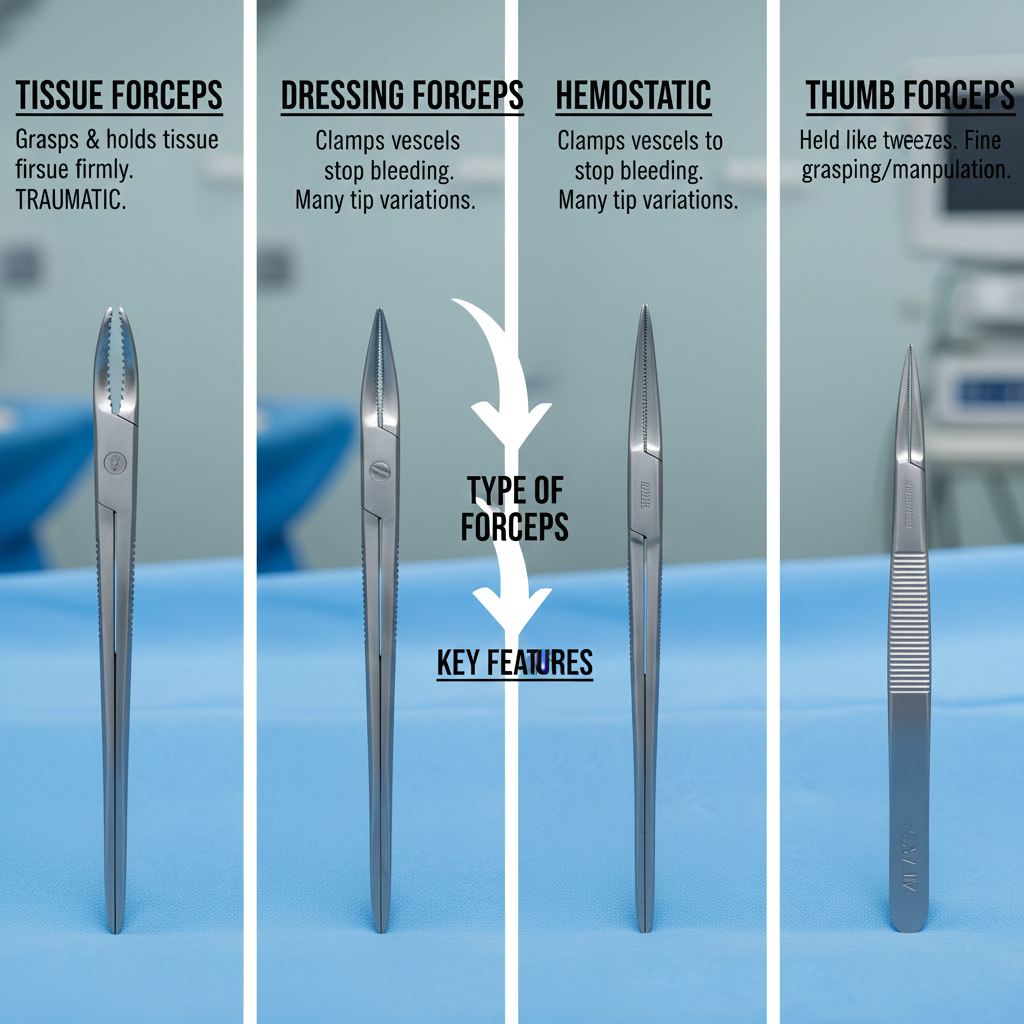
Key Differences Between Tissue and Dressing Forceps
Structural Differences
Tip Design
Application in Surgeries
Grip and Control
Impact on Tissue Handling
Utilizing forceps for dressings on tissue could result in slippage. The forceps used to apply dressings could cause tears in the materials.
How to Choose Between Tissue and Dressing Forceps
Understanding the Procedure
If the forceps touch human tissue, tissue forceps are needed. For wound care or gauze handling, dressing forceps are the best choice.
Evaluating Tissue Type
Ensuring Safety and Efficiency
The best choice reduces the risk of complications and speeds up surgery.
Specialty Uses in Different Surgical Fields
General Surgery
Both types are commonly used for dressing adjustments, suturing and for incision management.
Orthopedics
Tissue forceps are utilized to grasp fascia or bone membranes. While dressing forceps assist in applying dressings postoperatively.
Gynecology
Tissue forceps are used to handle vaginal or uterine tissue, while dressing forceps aid in cleaning and packing.
ENT
The micro-tissue forceps play a vital for the nasal and ear structures. Forceps for dressing are used to handle ear wicks or cotton.
Plastic Surgery
Fine tissue forceps minimize bleeding; dressing forceps can be used to apply sterilized dressings.
Dental and Oral Surgery
Both types of forceps aid in the suturing process and also dressing control in sensitive regions.
Why Material Quality Matters
Stainless Steel Grades
High-quality instruments are made using:
Corrosion Resistance
Steel that is properly tempered resists rusting and retains its sharpness.
Durability and Performance
High-quality forceps keep their correct alignment, are bend-resistant and can withstand repeated sterilization.
Why Peak Surgicals Is the Top Supplier of Forceps
Peak Surgicals has earned global confidence due to its exceptional quality and consistency in its work.
Premium German-Grade Stainless Steel
This ensures long-lasting life with corrosion resistance and outstanding performance.
High Precision Manufacturing
Hand-finishing and computer-guided engineering provide unparalleled precision.
Smooth and Accurate Tip Alignment
Essential for delicate operations and the safety of handling.
Wide Range of Forceps Types
Peak Surgical manufactures an extensive selection of:
Trusted Worldwide by Surgeons
Surgeons trust Peak Surgicals to find instruments that provide reliable and consistent accuracy.
Maintenance and Care Tips
Cleaning and Decontamination
Wash immediately after use to avoid the build-up of debris.
Inspection and Alignment
Examine tips, serrations and handles often.
Sterilization Standards
Use autoclaves with approved procedures to ensure the integrity of your instrument.
Proper Storage
Please keep it in a dry, clean area to keep it from wear and corrosion.
Common Mistakes in Using Surgical Forceps
Using Dressing Forceps on Tissue
This could cause the tissues to become damaged and slip.
Not Matching Forceps to Procedure
The wrong choice can reduce effectiveness and increase risk.
Ignoring Grip Comfort
Surgeons prefer ergonomic designs for long procedures.
Buying Low-Quality Instruments
Metal that is not of high quality can impact the quality, durability, precision, and security.
The Role of Forceps in Successful Surgical Outcomes
Reduced Tissue Trauma
Utilizing the correct forceps will help keep healthy tissue.
High Precision and Control
A proper tip alignment improves surgical precision.
Improved Efficiency in the Operating Room
Surgeons perform faster and more effectively by using the right equipment.
Conclusion
Forceps for dressing and tissue might appear similar; however, their purposes are very different. Tissue forceps are designed to grip and manipulate biological tissues, whereas dressing forceps are ideal to handle wounds as well as non-living materials. The use of the right forceps will ensure safety, speedier and more efficient surgical procedures.
Peak Surgicals remains a top supplier of forceps for dressing and tissue, with unbeatable craftsmanship, durability and dependability. The world's surgeons have confidence in Peak Surgicals for high-performance tools made to meet the highest medical standards.
FAQs
1. Why are forceps for tissue toothed?
To ensure an energizing grip on slippery tissue without putting too much pressure.
2. Forceps to dress be used to clean tissue?
They are not able to cause tissue damage because of their smooth tips.
3. Which brand is the most reliable in terms of forceps of the highest quality?
Peak Surgicals is widely recognized for its high-end surgical forceps.
4. How often should surgical forceps be checked?
After each procedure, and before each sterilization cycle.
5. What is the best material for forceps?
German-grade stainless steel provides superior strength and durability. It also has a high resistance to corrosion.