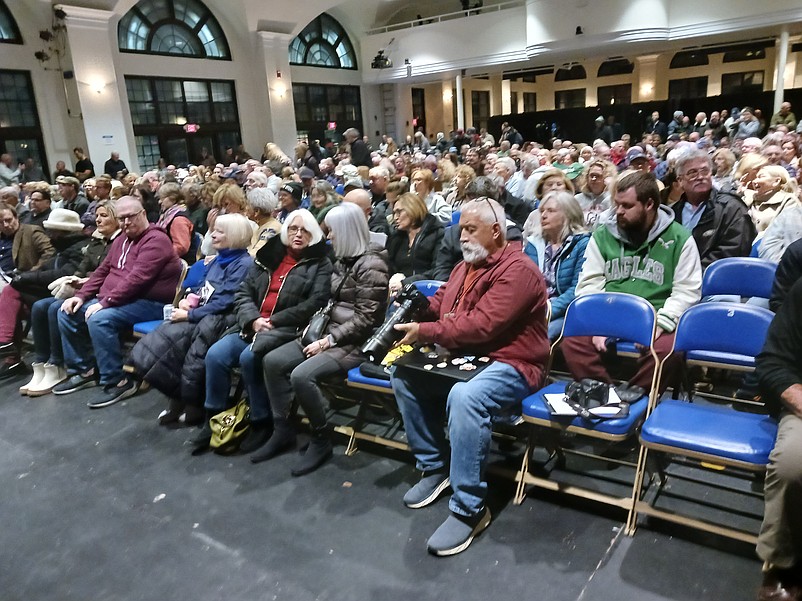
Hundreds of people pack the Music Pier auditorium for the City Council meeting.
Culminating an emotional four-hour meeting Thursday night attended by hundreds of residents and business owners, Ocean City officials took a critical first step for a proposed $150 million luxury resort hotel on the Boardwalk.
City Council voted 4-3 to approve a resolution to ask the city’s planning board to consider declaring the former Wonderland Pier amusement park site as an area “in need of rehabilitation.”
The rehabilitation designation would trigger a process that could possibly lead to a zoning change to permit a 252-room hotel proposed by developer Eustace Mita at the Wonderland property at Sixth Street. Currently, the city’s zoning laws do not allow hotel construction in that section of the Boardwalk.
There is no guarantee that a hotel will be built or even given final approval, but the rehabilitation process does create a legal pathway for the project.
By a 6-1 vote, Council rejected the same Wonderland resolution on Aug. 21, but this time around went in the opposite direction. Council President Terry Crowley Jr. cast the deciding fourth vote to approve the measure.
“We’ve been elected to lead, and not moving this forward right now is not leading and it’s not taking into account the business owners and the residents,” Crowley said while capping the vote shortly after 10 p.m., four hours after the meeting began at the Ocean City Music Pier auditorium.
Hotel supporters at the meeting erupted in cheers and applause following the Council vote in favor of the Wonderland resolution.
Among the Council members, Crowley, Pete Madden, Jody Levchuk and Tony Polcini voted for the resolution, while Dave Winslow, Sean Barnes and Keith Hartzell were opposed.
 Members of City Council sit on the stage of the Music Pier during the meeting.
In voting no for the resolution, Winslow, Barnes and Hartzell all said they preferred to give a recently formed advisory subcommittee enough time to conduct a comprehensive study of the zoning requirements for the entire Boardwalk’s commercial areas instead of just concentrating on the former Wonderland site.
“This is not a long process, folks. This is a very short timeline,” Winslow, the nine-member subcommittee’s chairman, assured the audience.
Winslow explained that the subcommittee has been busy carrying out its duties and expects to make formal recommendations for the Boardwalk’s zoning in the spring.
Crowley used his appointment power to form the subcommittee in October. Its mission is to take a holistic approach in studying the Boardwalk’s commercial zoning requirements in concert with the city’s master plan. In casting the deciding vote for the Wonderland resolution, Crowley said he believes that the subcommittee and the rehabilitation designation can complement each other.
Mita and the city’s business community had lobbied for Council to move forward with the rehabilitation process to expedite the development of the hotel in place of Wonderland Pier. They argued that the subcommittee process would be too slow in moving the project along.
Mita did not attend the meeting Thursday, but his attorney, Stephen Nehmad, said that Council’s vote was pivotal in plans for the hotel.
“Hopefully, we can move forward with negotiating an agreement with the city,” Nehmad said in an interview afterward.
Without the rehabilitation designation, the abandoned Wonderland site would likely remain blighted – an “insidious” process that could possibly thwart any sort of redevelopment plan, Nehmad said.
“Blight begets blight,” he said in the interview.
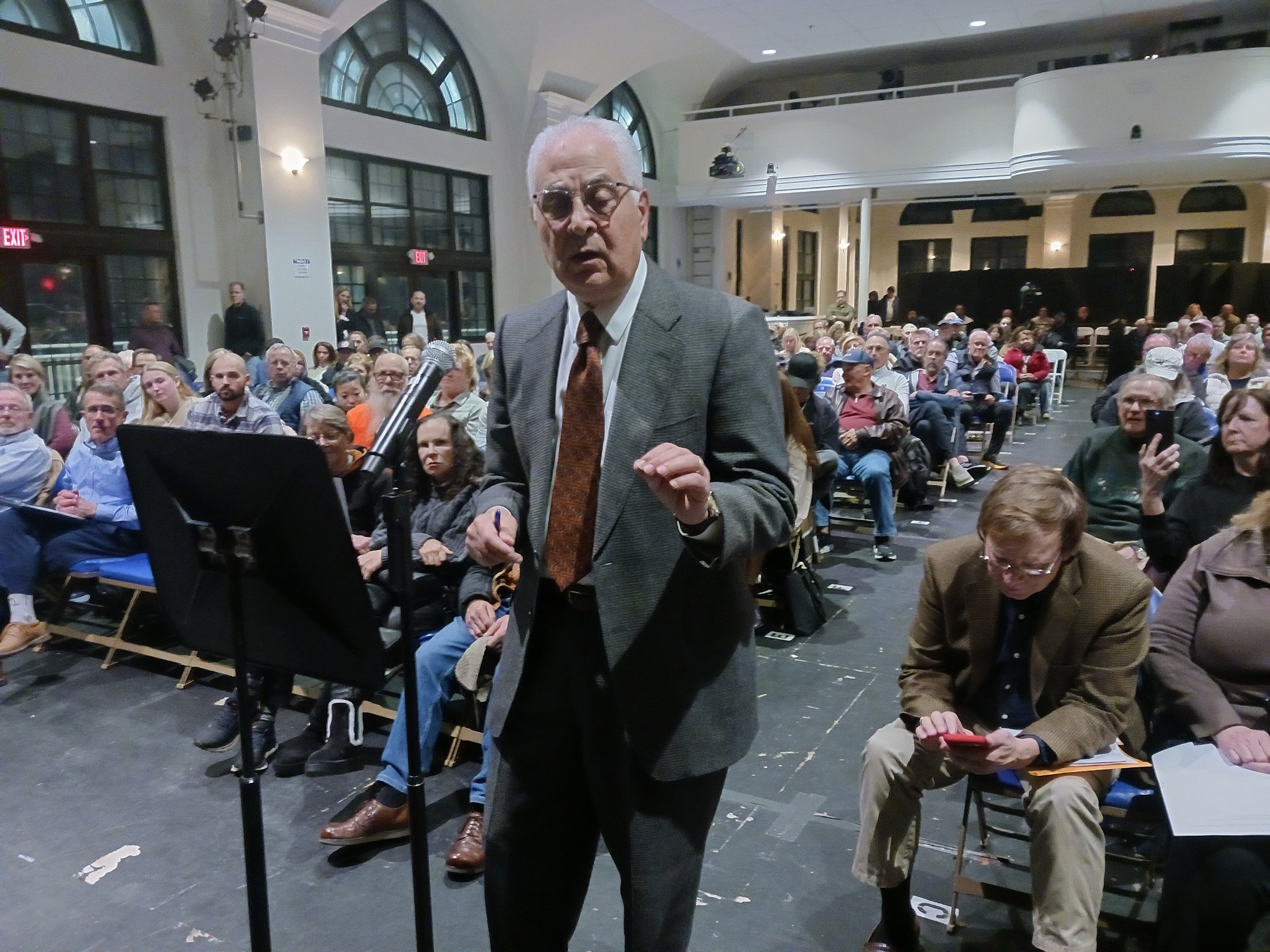 Stephen Nehmad, the attorney representing hotel developer Eustace Mita, is hopeful of reaching a development agreement with the city.
Mita had warned that he would walk away from the hotel project and sell the property if Council did not approve the Wonderland resolution. During a news conference Wednesday ahead of the Council meeting, he called it a “seminal vote.”
“If we get the yes vote, I think that the hotel is the best thing for Ocean City,” he said at the new conference.
The next step calls for the planning board to make a recommendation to Council within 45 days on whether the Wonderland property should be declared in need of rehabilitation.
Council would be free to accept or reject the planning board’s recommendation as part of a process that would ultimately lead to a redevelopment agreement with Mita – if the hotel project is given final approval.
During the news conference, Mita estimated that it would take about two years to develop the hotel if the rehabilitation designation for the Wonderland property goes smoothly.
Hotel opponents, though, have repeatedly raised the specter of a costly and lengthy legal battle to stop the hotel project from ever being built. Warnings about lawsuits were heard again during Thursday’s Council meeting.
The meeting was moved from its regular location in Council chambers at City Hall to the Music Pier’s large auditorium to accommodate what was expected to a big turnout among the hotel’s supporters and opponents. Hundreds of people sat in the audience.
More than 80 members of the public spoke for a little over three hours both in favor of and against the hotel in the buildup to the Council vote. Supporters believe the hotel would be a catalyst for economic growth, while opponents maintain it would overwhelm the surrounding neighborhoods and would not blend in with Ocean City’s family-friendly image.
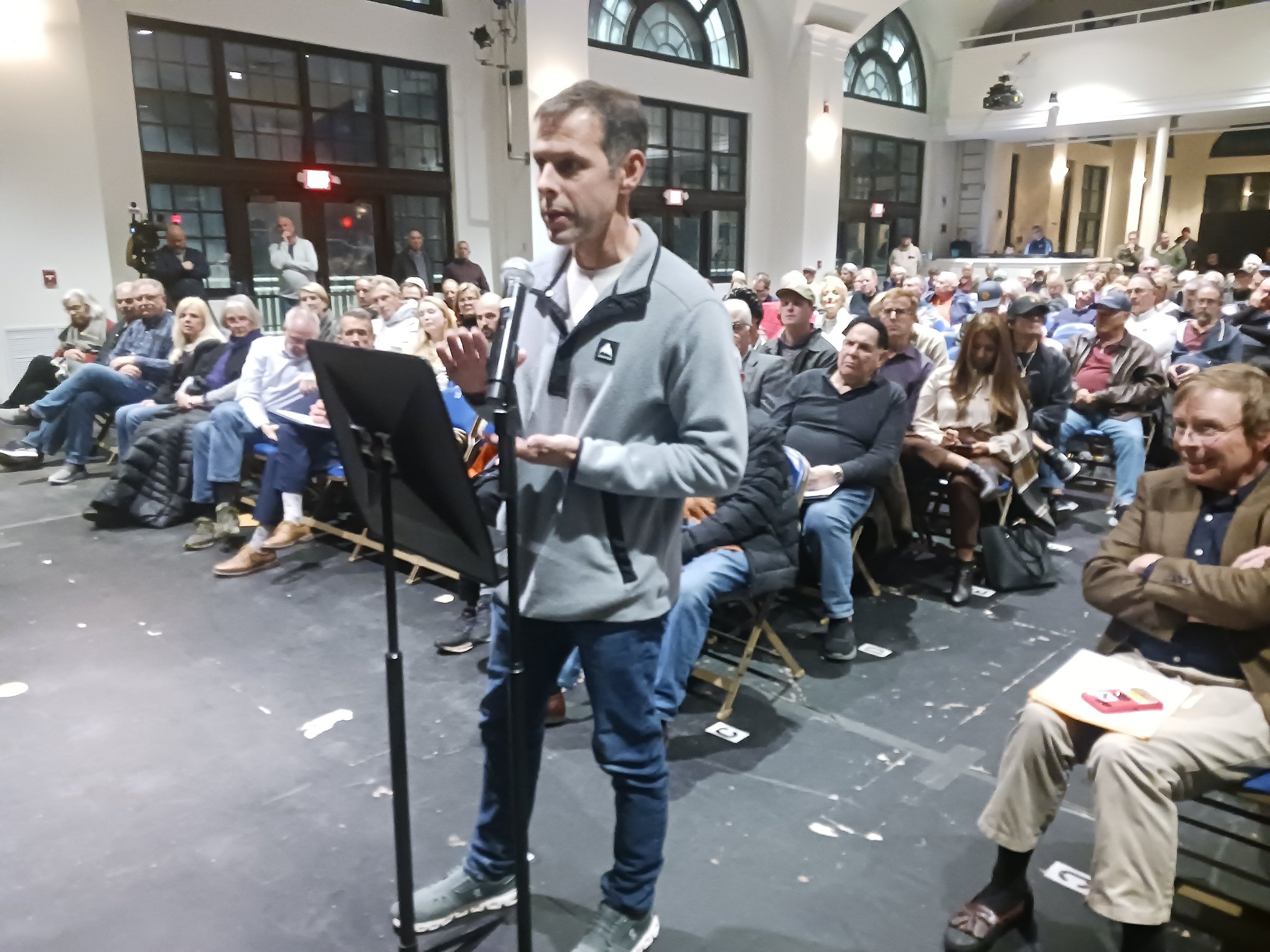 Wes Kazmarck, president of the Boardwalk Merchants Association, says the proposed hotel project gives the city more hope.
The Boardwalk Merchants Association, Downtown Merchants Association and Ocean City Regional Chamber of Chamber gave their unanimous support for declaring the Wonderland site in need of rehabilitation.
The business community believes that Mita’s hotel is needed to rejuvenate the northern end of the Boardwalk, which has been suffering lately from a series of store closings blamed on Wonderland’s absence.
Wes Kazmarck, president of the Boardwalk Merchants Association, described himself as “ecstatic” following the Council vote
“This is serious hope for the Boardwalk and Ocean City. “Without it, no hope. Zero. None,” Kazmarck said in an interview.
The majority of the people who spoke during the meeting were hotel supporters, although opponents were also amply represented.
Hotel supporters said the project is urgently needed to boost the Boardwalk and the entire city with more tourism and economic activity.
“If this is not a pressing issue, I don’t know what is,” said Mark Raab, whose family is a major Boardwalk property owner.
Raab told Council that his family is having trouble retaining store tenants in the buildings it owns on the Boardwalk because of a drop off in business on the north end caused by Wonderland’s closing.
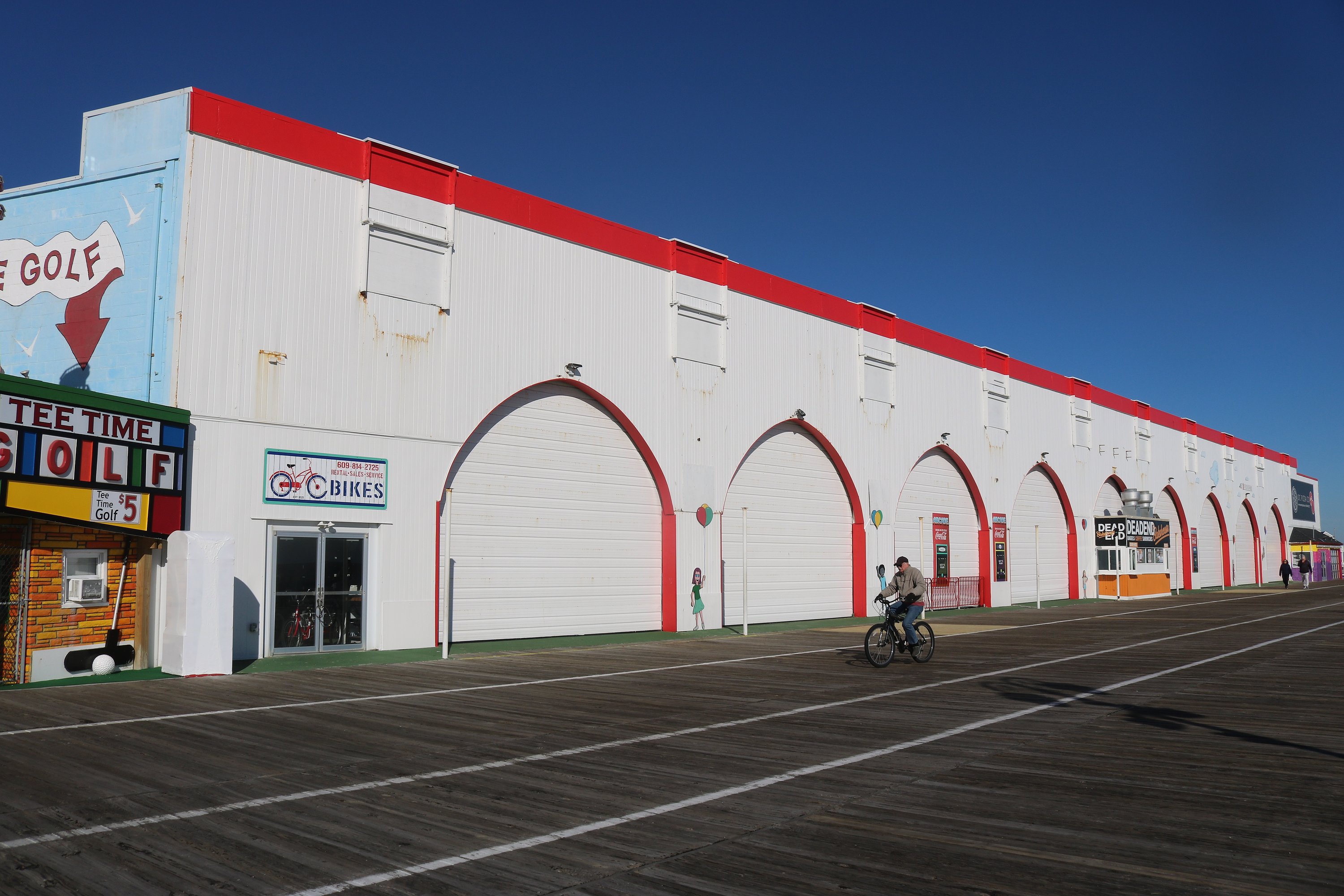 The former Wonderland Pier's sprawling facade overlooks the Boardwalk at Sixth Street.
Wonderland Pier had been owned by Mayor Jay Gillian’s family since the 1960s. Despite its history and iconic status, the amusement park closed in October 2024 following years of financial difficulties, leaving a vacant site at Sixth Street.
Mita bought the Wonderland site in 2021 for a reported $14 million to save it from a sheriff’s sale after Gillian defaulted on an $8 million mortgage. He allowed Gillian to operate the amusement park until it shut down last year.
When Wonderland closed, Mita proposed his hotel in place of the amusement park. The project has deeply divided the community among hotel supporters and opponents in the past year. Building to a crescendo, those divisions were evident during the emotional Council meeting Thursday.
Bill Westerman, owner of the George’s Candies, George’s Ice Cream and George’s Surfside Grille businesses on the Boardwalk, predicted that a no vote on the Wonderland resolution would have decimated the shops north of Eighth Street.
“Hotels are the lifeblood of the Boardwalk,” Westerman said while touting Mita’s project.
Hotel proponents repeatedly expressed fear that the Wonderland site would remain vacant for years to come unless Mita steps in to develop his estimated $150 million project.
“We have a fabulous town, and let’s add to it,” Linda Carnuccio, former owner of Cousin’s Restaurant in Ocean City, said of the hotel.
Hotel opponents and skeptics called on Council to continue to let the zoning subcommittee do its work instead of following the rehabilitation route. They said the subcommittee process would be fair, transparent and would ultimately lead to the best results for the entire Boardwalk.
“The city needs to continue demonstrating its mutually beneficial independence by staying the course. It’s the best method and leads to the best solution for our merchants and the wholesome spirit of our community,” Ocean City resident George Bauer said of the subcommittee process.
 An architectural rendering depicts the proposed resort hotel on the Ocean City Boardwalk.
Jim Kelly and Bill Merritt, leaders the anti-hotel community group Ocean City 2050, argued that there was no need to rush the hotel along through the rehabilitation designation. Merritt called the hotel “a polarizing project.”
Kelly maintained that the master plan-subcommittee process is the best way to oversee Wonderland’s redevelopment, as well as the zoning requirements for the entire Boardwalk.
“The master plan builds a better project. Rehab builds one hotel,” Kelly said.
Ocean City resident Dave Hayes, another hotel opponent, drew comparisons between Mita’s project and the community’s fight against another high-rise hotel development 20 years ago.
Hayes said the local businesses used the same “scare tactics” 20 years ago about weakness in the tourism market to promote the high-rise construction project, but ultimately failed.
“Although the high-rise was supported by the business community, residents overwhelmingly rejected it. No high-rises have been built in Ocean City since then because developers know we don’t want them and we’ll stop them,” Hayes said.